Imago
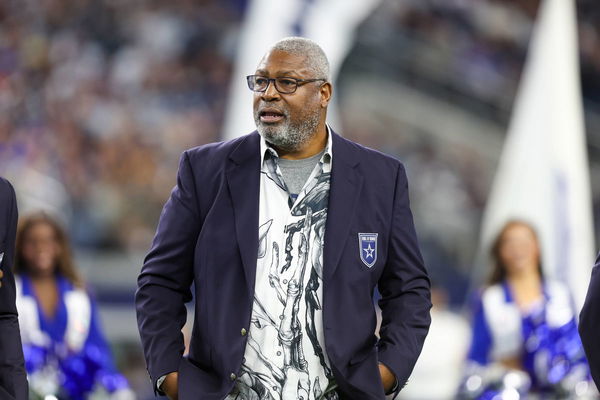
ARLINGTON, TX – OCTOBER 29: Charles Haley attends the induction of DeMarcus Ware into the Dallas Cowboys Ring of Honor during the game between the Dallas Cowboys and the Los Angeles Rams on October 29, 2023 at AT&T Stadium in Arlington, TX. Photo by George Walker/Icon Sportswire NFL, American Football Herren, USA OCT 29 Rams at Cowboys EDITORIAL USE ONLY Icon231029056
Imago
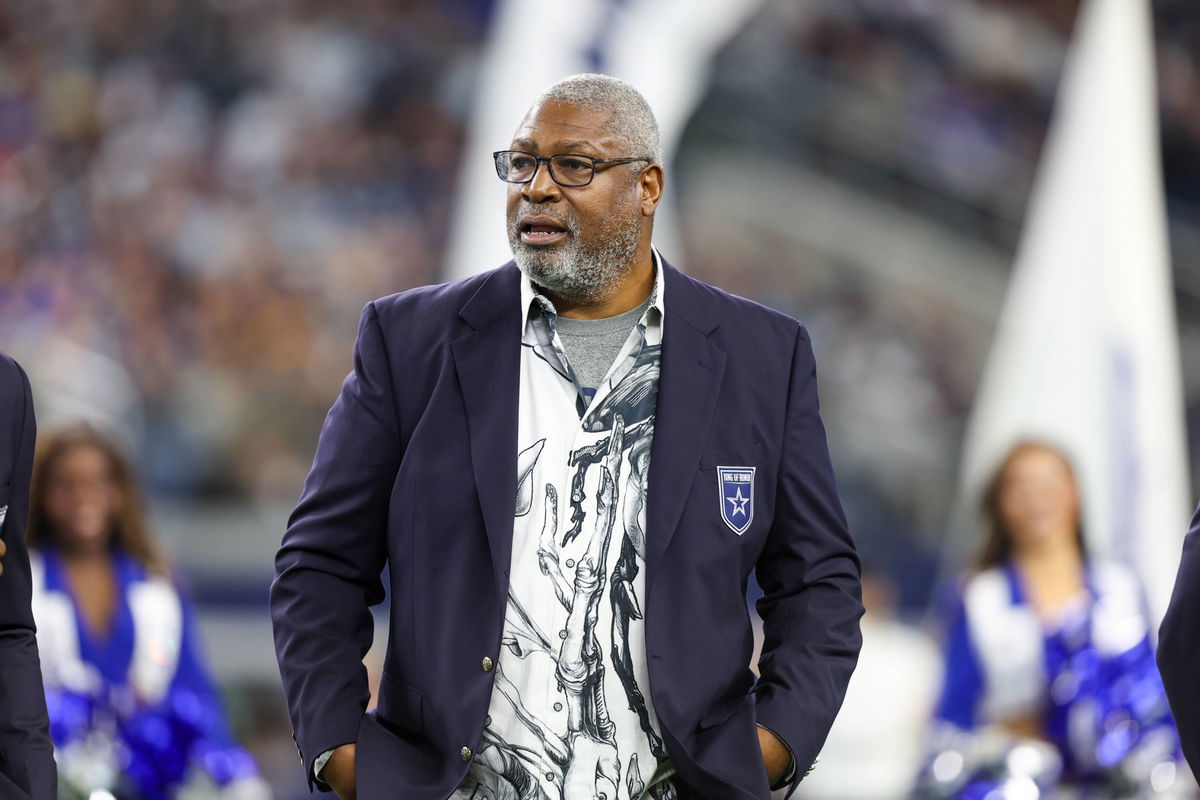
ARLINGTON, TX – OCTOBER 29: Charles Haley attends the induction of DeMarcus Ware into the Dallas Cowboys Ring of Honor during the game between the Dallas Cowboys and the Los Angeles Rams on October 29, 2023 at AT&T Stadium in Arlington, TX. Photo by George Walker/Icon Sportswire NFL, American Football Herren, USA OCT 29 Rams at Cowboys EDITORIAL USE ONLY Icon231029056
Imago
ARLINGTON, TX – OCTOBER 29: Charles Haley attends the induction of DeMarcus Ware into the Dallas Cowboys Ring of Honor during the game between the Dallas Cowboys and the Los Angeles Rams on October 29, 2023 at AT&T Stadium in Arlington, TX. Photo by George Walker/Icon Sportswire NFL, American Football Herren, USA OCT 29 Rams at Cowboys EDITORIAL USE ONLY Icon231029056
Imago
ARLINGTON, TX – OCTOBER 29: Charles Haley attends the induction of DeMarcus Ware into the Dallas Cowboys Ring of Honor during the game between the Dallas Cowboys and the Los Angeles Rams on October 29, 2023 at AT&T Stadium in Arlington, TX. Photo by George Walker/Icon Sportswire NFL, American Football Herren, USA OCT 29 Rams at Cowboys EDITORIAL USE ONLY Icon231029056
Charles Haley’s Hall of Fame résumé speaks for itself. Five Super Bowl rings, relentless production, and a reputation as a tone-setting defensive force. But just as prominent as the accolades was the edge. For much of his career, Haley carried the label of the bad guy: unapologetic, intense, and rarely concerned with how he was perceived. This week, he sat down with fellow Hall of Famer Drew Pearson. During their conversation, Pearson asked whether the Dallas Cowboys‘ legend would be willing to share his experiences with today’s players. Haley’s response, however, felt less like nostalgia and more like a blunt assessment of the current NFL mindset.
Watch What’s Trending Now!
“Let me tell you, I go over, I watch them play. I go over and give them an assessment of what they’re doing wrong,” Haley told Pearson. “The stance, the body. You know what they tell me? ‘Oh, it’s too late. I can’t change now.’ Half of them said, you know, before they even tried, they said they can’t do it. So everyone that say I can’t, I don’t talk to no more. I wouldn’t try to help. You ain’t got time for that.”
That assessment aligns with who Haley was as a player. When he entered the league, he was considered thin for a pass rusher by today’s standards. At 6’5” and around 230 pounds, he didn’t resemble the 260- to 280-pound edge prototypes that dominate the modern game. Still, he was anything but overmatched.
Haley’s length was a weapon. His long arms allowed him to keep offensive linemen off his chest and control contact. And despite routinely facing blockers who weighed 280 to 320 pounds (often nearly 100 pounds heavier), he could jolt them backward at the snap. Run or pass, it didn’t matter. He won with leverage, burst, and technique.
The résumé backs that up. In a career that spanned over a decade, Haley won five Super Bowls, earned five Pro Bowl selections, surpassed 100 career sacks, and became the first player in league history to win five championships. The production, the rings, the reputation, they all reinforce the point. Decades later, the edge remains.


Imago
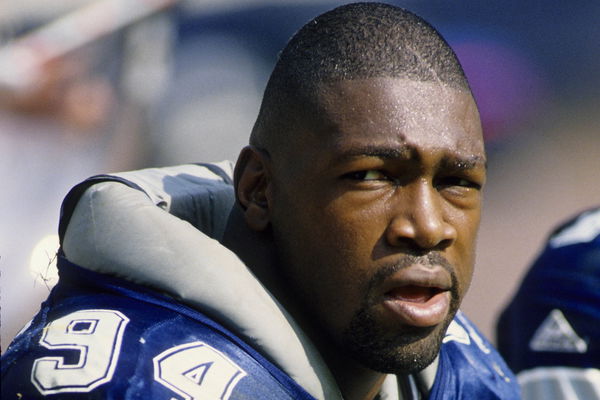
US PRESSWIRE Sports Oct 23, 1994 Tempe, AZ, USA FILE PHOTO Dallas Cowboys defensive end Charles Haley 94 on the bench against the Arizona Cardinals at Sun Devil Stadium. The Cowboys defeated the Cardinals 28-21. Tempa Arizona UNITED STATES, EDITORIAL USE ONLY PUBLICATIONxINxGERxSUIxAUTxONLY Copyright: xUSAxTODAYxSportsx 5085520
So when Haley looks at today’s players and says the problem isn’t athleticism but willingness to adjust, it’s coming from experience. He openly acknowledges that modern players are bigger, stronger, and faster than he was. His frustration is different. It’s about resistance to coaching, refusal to tweak technique, and an unwillingness to admit flaws.
Pearson echoed that sentiment from a receiver’s lens, noting that small technical errors continue to cost teams and that accountability doesn’t always follow. Haley took it further.
“I go and tell them, ‘You know what, you’re the worst. You were the worst player out there.’ And that really unless you do A, B, and C, see, not only do I tell them the problem, but then I tell them how to solve the problem,” Haley added. “And especially the offensive line, they have no agility. They need to work on their agility. If you watch them, they have no balance. And you know what? Nobody wants to listen. I’ve never seen athletic people like this playing defensive end and not being successful.”
In essence, Haley isn’t questioning talent. He is questioning the mindset. On paper, it can sound like another retired legend critiquing the modern era. But coming from someone who consistently overwhelmed larger opponents and forced offenses across the league to adjust to him, the critique carries weight. It’s less about complaining. And more about standards.
Meanwhile, while Haley’s tough mentality and his assessment of the players are well-documented, the Cowboys legend hasn’t shied away from addressing the softer side. Haley, this week, has also addressed the mental health issues he’s been dealing with.
Charles Haley talks about his mental health issues
On the field, Charles Haley built his legacy with the San Francisco 49ers and the Cowboys, capturing five Lombardi Trophies along the way. His teams combined for a 153–66 record, including 19–6 in the postseason, with 10 division titles and seven NFC Championship Game appearances.
The résumé is airtight. Yet beyond the wins and championships, Haley has long acknowledged a far more personal battle that unfolded away from the spotlight.
“I’ve been dealing with mental illness all my life,” Haley said. “That’s why I never had friends, because I didn’t want people to see the 13-year-old kid inside of me screaming for help. And I thought if I had friends, people would figure that out.”
Haley has spoken publicly about those struggles before. For years, however, he avoided asking for help, even as teammates sensed something wasn’t right. It wasn’t until he entered a dual-diagnosis treatment center and had his medication properly regulated that he began to find stability and real healing.
In many ways, the same intensity that fueled his dominance also masked what he was carrying internally. Today, Haley’s willingness to speak openly adds another layer to his legacy, one defined not just by rings but by resilience.