Imago
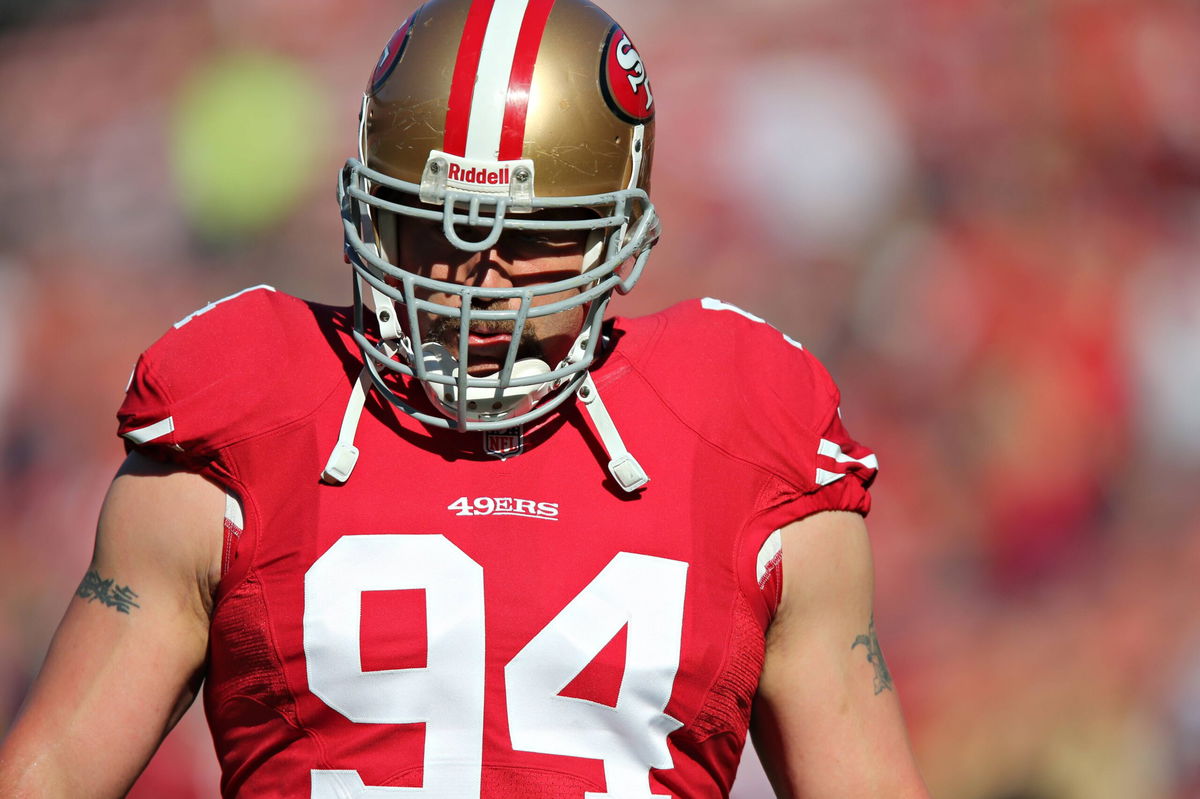
Dec. 1, 2013 – San Francisco, California, United States of America – December 1, 2013: San Francisco 49ers defensive end Justin Smith (94) during warmups prior to the start of the NFL American Football Herren USA football game between the St. Louis Rams and the San Francisco 49ers at Candlestick Park in San Francisco, California. The San Francisco 49ers defeated the St. Louis Rams 23-13. NFL American Football Herren USA 2013: Rams vs 49ers DEC 1 – ZUMAc04
Imago
Dec. 1, 2013 – San Francisco, California, United States of America – December 1, 2013: San Francisco 49ers defensive end Justin Smith (94) during warmups prior to the start of the NFL American Football Herren USA football game between the St. Louis Rams and the San Francisco 49ers at Candlestick Park in San Francisco, California. The San Francisco 49ers defeated the St. Louis Rams 23-13. NFL American Football Herren USA 2013: Rams vs 49ers DEC 1 – ZUMAc04
Essentials Inside The Story
- As of 2026, there are 387 members inducted into the HoF
- Critics argue that 4 to 8 inductees per year reduces the prestige of the honor
- HoF debates intensified when Bill Belichick was surprisingly left off the first-ballot list
Justin Smith had a solid career with the Cincinnati Bengals and an even stronger one with the San Francisco 49ers before retiring in 2015. Yet, despite being eligible for more than half a decade now, he still hasn’t earned a spot in the Pro Football Hall of Fame. But ask him about his potential induction, and the NFL legend would rather question the Hall’s selection process instead.
Watch What’s Trending Now!
“The one thing I will say, as far as should I be in the Hall of Fame? I think there’s going to be like two or three guys that go in the Hall of Fame every four or five years,” Smith said. “I don’t think it should be a six dudes in every year game show. I just think back when I watched football, like if I think of a Hall of Famer, I think of Reggie White, somebody that changed the game in such an undeniable way.”
Smith’s criticism echoes a long-running debate around the Hall. While the institution aims to preserve its prestige, critics argue that the growing number of annual inductees has made what was once an extremely exclusive honor feel less rare.
The Hall currently inducts roughly four to eight individuals into Canton each year. That number includes players, coaches, and contributors. While the structure helps represent multiple eras of the game, it’s also an aspect that frustrates Smith. And he isn’t alone in raising the issue.
View this post on Instagram
Deion Sanders voiced a similar opinion a few years ago when discussing how the Hall distinguishes between different levels of greatness.
“My jacket got to be a different color. There needs to be a starting 11, there needs to be an upper room,” Sanders said back in 2022. “My head doesn’t belong with some of these other heads that’s in the Hall of Fame. What do they call it, the bust? I call it the head. Put my head up where it’s supposed to be. I’m sorry, I’m saying what you’re all thinking, and a lot of Hall of Famers are thinking the same thing. This is becoming a free for all now.”
Additionally, the Hall’s selection process is far more layered than many fans realize. Each year, NFL reporters, historians, and football experts help shape the early stages of the selection process before the final class is announced around the time of the Super Bowl.
Candidates can fall into four major categories: Modern-era players who retired within the last 25 years, senior players whose careers ended more than 25 years ago, coaches who can be inducted within a year of retirement, and contributors such as team owners or executives.
From there, the Hall typically selects between four and eight inductees annually. In the process, around five modern-era players are enshrined in Canton. Even with that structure in place, though, the process has continued to draw criticism from former players. They believe the criteria for greatness should be far stricter.
The selection itself goes through multiple stages. A large pool of former players is initially compiled. From there, screening committees narrow the modern-era candidates down to 50 names.
Following that, the official 50-person selection committee evaluates the candidates. They reduce the list to 25 semifinalists and then 15 finalists before the final vote takes place ahead of the Super Bowl each year.
For HOF enshrinement, a candidate must receive at least 80 percent of the vote from the committee. The final class is then announced during NFL Honors, with the selected group later enshrined in Canton.
Even with such an extensive process, debates about who belongs and who doesn’t continue almost every year. Smith himself is still waiting for his opportunity, while the Hall faced another wave of criticism this year when eight-time Super Bowl champion Bill Belichick was surprisingly not a first-ballot inductee.
As of 2026, the Hall includes 387 members since its founding in 1963. Considering the thousands of players who have appeared in the NFL over that span, the Hall remains selective by most standards.
Still, the annual class system guarantees that several new names enter each year and that structure continues to spark debate about how exclusive the honor should truly be.
In that sense, Smith’s comments simply add another voice to a long-running conversation about the Hall’s process. And judging by his remarks, the former 49ers star doesn’t seem overly concerned about when or if his own name eventually makes the list.
The Hall of Fame is not the highlight of Justin Smith’s life
The 49ers engineered one of the NFL’s best defensive runs when Justin Smith and Patrick Willis anchored the unit. And while Willis ultimately earned Pro Football Hall of Fame honors, Smith made it clear that it’s no longer the highlight of his life.
“I said ‘Go up, show up, yell a jacket, give a speech,’ that ain’t the highlight of my life.”
Many would argue that the reason Smith hasn’t earned Hall of Fame honors is that he never won a Super Bowl ring. But that was also the case for Willis, who still earned the honors in 2024.
And while there are several reasons why Smith should remain in the Hall of Fame conversation, there are also a few blemishes that may have affected his enshrinement. For starters, Smith’s biggest strength was longevity and consistency across his 14-year career.
He stayed durable, played through multiple seasons, and remained a steady pass rusher. The numbers support that. He recorded 880 total tackles and 87.0 sacks. Smith was particularly dominant in 2011, earning All-Pro nods at both defensive tackle and defensive end in what remains one of the most impressive defensive seasons in modern NFL history.
That said, he didn’t reach that level of dominance until he arrived in San Francisco. Smith wasn’t a bad player with the Cincinnati Bengals either. He posted five or more sacks in six of his seven seasons there. But he remained slightly miscast as a 4-3 defensive end. On top of that, Smith also didn’t necessarily change the game.
There isn’t a signature “Justin Smith move” that revolutionized defensive play. Simply put, had Smith played his entire career the way he did in San Francisco, he likely would’ve been a shoo-in for the Hall and maybe even part of the conversation for the top 10 defensive linemen ever.
But ultimately, Smith has made it clear that it’s no longer the highlight of his life. He finished his career as one of the best edge rushers in franchise history. And for now, that seems to be the recognition he’s content leaving behind.
Related Newsletters