
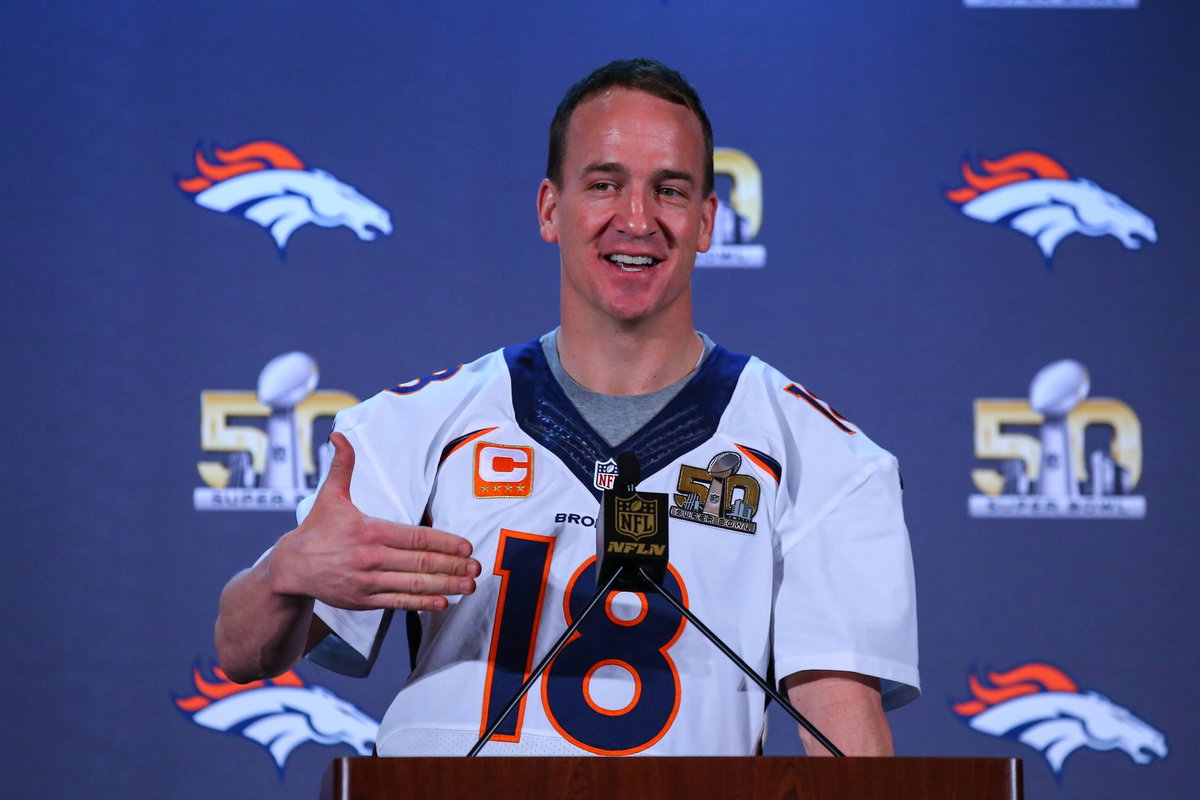
Peyton Manning is called “The Sheriff” for a reason. Coined by Jon Gruden during a 2009 Monday Night Football game, the former Denver Broncos quarterback laid down the law and directed his offense at the line of scrimmage. Years after his retirement, Manning still continues to haunt those who faced off against him. The former Arizona Cardinals safety Tyrann Mathieu is one of those whom Manning humbled.
Watch What’s Trending Now!
“When Peyton Manning changed the play, he about to gash your a**. Someone who I would want to play against. I wanted a fairer shot at Peyton Manning,” shared Mathieu on the In The Bayou With Tyrann Mathieu podcast. “I only played against Peyton once. I believe it was my second year in the NFL. I was with Arizona, went up there. Mind you, I was still coming off the ACL. I had to f*** my knee up, man. I had to do everything up my knee. But bro, he lit our a** up. It was the first time I got on a football field, and I didn’t feel like I was the smartest one on the field. It was clear that he was way smarter than I was.
“Getting to the line of scrimmage, changing a play. So it was like every time I lined up, I’m thinking I’m getting prepared for a certain look that I watched on film and then he get to the line and change the f****** play. Like what I’m supposed to do now? Like, I don’t know what the f*** y’all doing now. These kids nowadays, they’ll change the play and check the ball out. When Peyton Manning changed the play, he about to gas your a**. You would book that. Yeah, I couldn’t wait to get off that field.”
There was a time when quarterbacks largely operated according to their coaches’ instructions. They received the play, directed their teammates, and carried out the assigned strategy. But Manning helped change that relationship between the quarterback and the coaching staff.
Rather than simply executing a predetermined call, he became increasingly involved in deciding what the offense should run. The system Tony Dungy introduced with Manning allowed the quarterback to choose between multiple plays depending on what he saw before the snap. Manning’s ability to read defenses and make those adjustments turned the approach into a major success. His performances helped change expectations for the position, paving the way for quarterbacks to become the primary decision-makers on the field.
Manning brought the no-huddle offense in 2012.
He showcased his command of the offense in the first half against Seattle, finishing with 177 passing yards on 16 completions from 23 attempts. Manning was particularly effective during two extended scoring drives, helping the offense cover 80 or more yards on both occasions. The quarterback used the hurry-up approach for much of each possession, maintaining the offensive rhythm and preventing the defense from comfortably adjusting.
Mathieu shared that he would be hitting the gridiron after doing his homework on Manning only to find the quarterback reach the line of scrimmage, read the defensive alignment, and change the play entirely.
Mathieu later played with the Kansas City Chiefs and even won a Super Bowl, but the scar that Manning left is still fresh.
His reliving of the memories is what led former Indianapolis safety Darius Butler to share his experience with Manning.
“I’ll never forget. Playing against 18 my rookie year. I felt like I was an extra in a movie. 0 control over the outcome of whatever was about to happen 😂😂😂,” Butler joined in the comment section.
The real challenge of facing Manning was that defenders could never be entirely certain what was coming next. A defense might line up expecting a running play, only for Manning to recognize a weakness and switch to a passing option. By the time defenders adjusted to the new call, the quarterback could already have identified an opening in the coverage and prepared to take advantage of it.
That’s how Manning is still remembered over the years.