
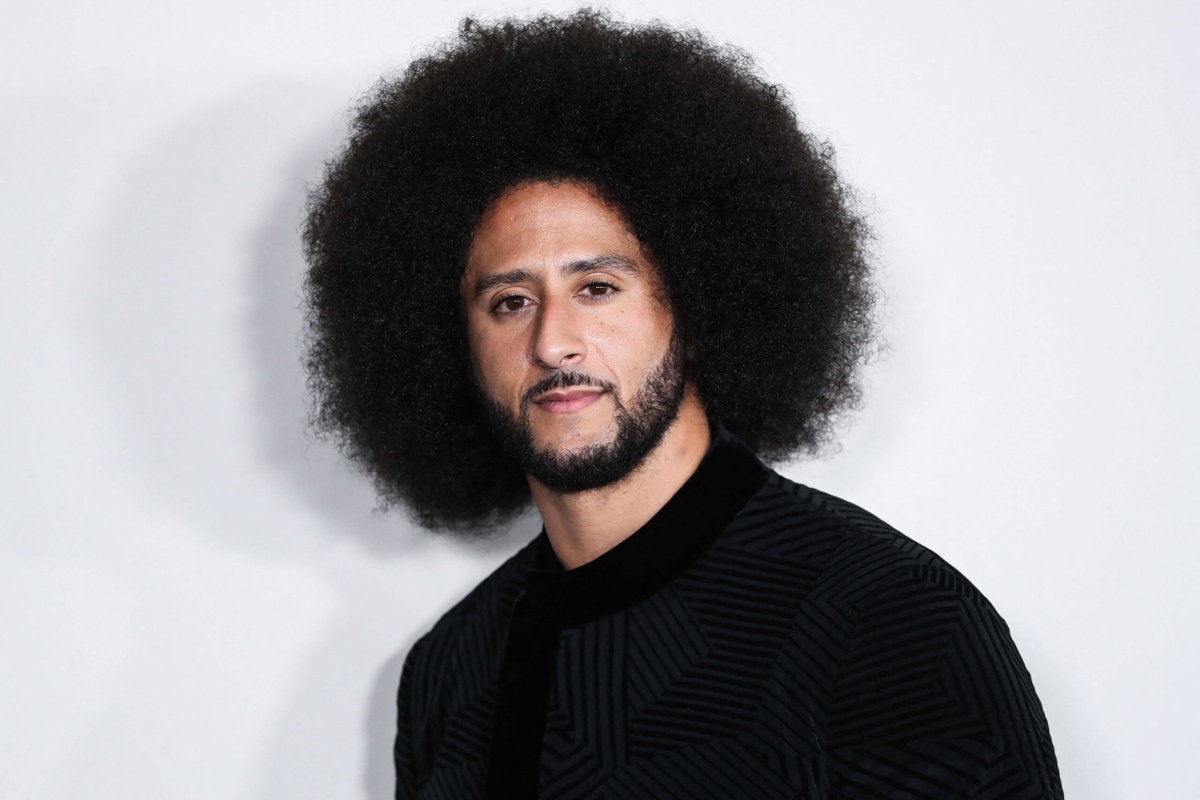
Long before Colin Kaepernick became synonymous with taking a knee, his relationship with the San Francisco 49ers’ front office was already becoming complicated. After helping lead the franchise to consecutive NFC Championship Games, Kaepernick eventually found himself benched, requesting a trade and admitting that his relationship with the team’s decision-makers had deteriorated.
Watch What’s Trending Now!
By the time Kaepernick began his national anthem protest in 2016, the quarterback was already on a very different path with San Francisco than the one that began when the 49ers traded up to draft him in 2011. He left the NFL soon after, while the tensions from his 49ers tenure remained largely behind closed doors, especially his rocky relationship with the former 49ers general manager Trent Baalke.
Now, a decade after he first started his protest, Kaepernick sat down with longtime Bay Area columnist Scott Ostler for an interview. When Ostler asked whether he had any problems with Baalke at that time, Kaepernick revealed that the problems started even before the 49ers drafted him in the second round of the 2011 NFL draft.
“I don’t think Trent was a fan of mine before I walked in the door. In part because, from my understanding, Harbaugh stood on the table and was like, “We need to draft him.” I think there was a power struggle, or a sense of toes being stepped on,” he said. “I know Trent didn’t agree with me playing over Alex. Also, coming off the 2013 season, I had talked to Harbaugh about ways that we could get better, talked about going to the combine with him to look at receivers together, trying to turn over every stone to get over this hump to win a championship.
“Harbaugh’s like, “I love it, let’s do it.” Then I get a call from Trent. He says, “Hey, you shouldn’t be going to the combine with Harbaugh. You need to call him and tell him you’re not going. Also, don’t tell him we had this conversation.” To me, that kind of encapsulates how he operated. Those kinds of things, I would say, are manipulative tactics. I don’t think they’re beneficial for anybody. I know other players had issues [with Baalke] as well. I don’t view him as a good person.”
During the 2011 NFL Draft, San Francisco moved from No. 45 to No. 36 to draft Kaepernick, giving the Denver Broncos its second, fourth, and fifth-round picks (Nos. 45, 108, and 141). Evidently, ex-49ers head coach Jim Harbaugh was impressed with the quarterback, as Kaepernick became the first major move of the Harbaugh era.
At that time, however, Baalke praised Kaepernick ahead of his rookie season.
“Jim asked him to change a lot of things, his footwork, different things like that, just to see how he responded,” said Baalke. “He showed the ability to process everything and make those changes very quickly.”
When Kaepernick was drafted in 2011, Alex Smith was still expected to be the starter. Harbaugh had publicly supported Smith returning, and Smith even organized informal offseason practices during the lockout. Kaepernick himself acknowledged that Smith had a significant experience advantage.
Colin Kaepernick eventually took over after Smith suffered a concussion in 2012. Even then, the decision was initially viewed as temporary. Even after suffering a concussion, Smith was expected to reclaim his job. After Kaepernick took over the job, however, he led the 49ers to Super Bowl XLVII and then another NFC Championship Game a year later.
His performance earned him a six-year contract extension ahead of the 2014 season, worth up to $126 million, including $54 million guaranteed in potential guarantees and $13 million fully guaranteed. In the 2015 season, however, after a 27-6 collapse against the St. Louis Rams in Week 8, Kaepernick lost his starting job to backup Blaine Gabbert.
He missed the rest of the season due to a shoulder injury, and after protesting against police violence by taking a knee during the national anthem, Colin Kaepernick eventually lost his job not only with the 49ers but in the NFL as well. During an interview with Ostler, Kaepernick revealed that it cost him financially, as he lost over $150 million.
“I am often asked, “Would you do it again?” And the answer is yes,” he said about the protest. “Because the impact I know it’s had, the trajectory that has allowed myself and the organizations, other people in the communities, to be able to go out and do more, I don’t think that can be overstated.
“It was costly. It cost me my football career that was 20-plus years in the making, something I loved dearly. And it cost me financially — $150-plus million, which is not a light load there. I think ultimately that where I want to see us as a society go, I don’t think I would have been able to have the same impact or help put people in position in the way that I was able to if I didn’t take that action.”
This month marked a decade since Colin Kaepernick started his peaceful protest for the first time in 2016. While it cost him his NFL career, the 38-year-old still remains an active civil rights activist.