Imago
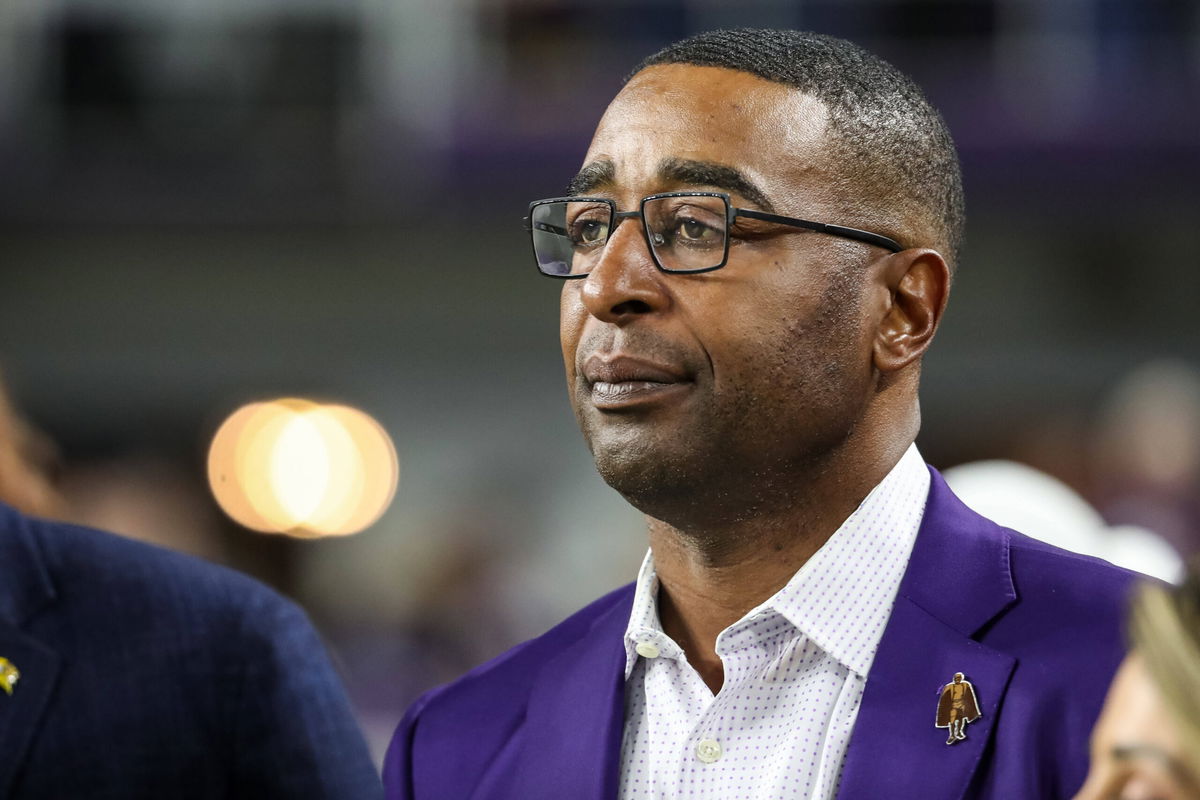
NFL, American Football Herren, USA Green Bay Packers at Minnesota Vikings Dec 23, 2019 Minneapolis, Minnesota, USA Hall of Fame wide receiver and Minnesota Viking former player Cris Carter looks on prior to a game between the Vikings and the Green Bay Packers at U.S. Bank Stadium. Minneapolis U.S. Bank Stadium Minnesota USA, EDITORIAL USE ONLY PUBLICATIONxINxGERxSUIxAUTxONLY Copyright: xBracexHemmelgarnx 13833298
Imago
NFL, American Football Herren, USA Green Bay Packers at Minnesota Vikings Dec 23, 2019 Minneapolis, Minnesota, USA Hall of Fame wide receiver and Minnesota Viking former player Cris Carter looks on prior to a game between the Vikings and the Green Bay Packers at U.S. Bank Stadium. Minneapolis U.S. Bank Stadium Minnesota USA, EDITORIAL USE ONLY PUBLICATIONxINxGERxSUIxAUTxONLY Copyright: xBracexHemmelgarnx 13833298
Imago
NFL, American Football Herren, USA Green Bay Packers at Minnesota Vikings Dec 23, 2019 Minneapolis, Minnesota, USA Hall of Fame wide receiver and Minnesota Viking former player Cris Carter looks on prior to a game between the Vikings and the Green Bay Packers at U.S. Bank Stadium. Minneapolis U.S. Bank Stadium Minnesota USA, EDITORIAL USE ONLY PUBLICATIONxINxGERxSUIxAUTxONLY Copyright: xBracexHemmelgarnx 13833298
Imago
NFL, American Football Herren, USA Green Bay Packers at Minnesota Vikings Dec 23, 2019 Minneapolis, Minnesota, USA Hall of Fame wide receiver and Minnesota Viking former player Cris Carter looks on prior to a game between the Vikings and the Green Bay Packers at U.S. Bank Stadium. Minneapolis U.S. Bank Stadium Minnesota USA, EDITORIAL USE ONLY PUBLICATIONxINxGERxSUIxAUTxONLY Copyright: xBracexHemmelgarnx 13833298
Essentials Inside The Story
- ESPN's superstar-first budget ignores rank-and-file talent, creating a media middle-class crisis.
- Cris Carter leverages his Ohio roots to lobby Florida for livable coaching wages.
- A unanimous Senate vote signals a legislative victory for grassroots football funding.
NFL legend Cris Carter says life at ESPN has changed, and not necessarily for the better if you aren’t at the very top! The Hall of Famer, who worked as an analyst for the network until 2016, recently shared some blunt “real talk” about how the company handles its money. According to Carter, the network’s current business model focuses almost entirely on a few massive personalities, making it incredibly difficult for everyone else to move up the ladder or earn a high salary.
Watch What’s Trending Now!
On his Fully Loaded YouTube show, Carter described the network’s strategy with a harsh metaphor.
“Pay the eagles, starve the turkeys.”
He argues that ESPN has shifted its budget to prioritize “superstars” like Stephen A. Smith and Pat McAfee. By putting “all their eggs in those baskets,” Carter believes the network has less interest in paying fair wages to the “rank and file” analysts who fill the rest of the airtime.
Imago
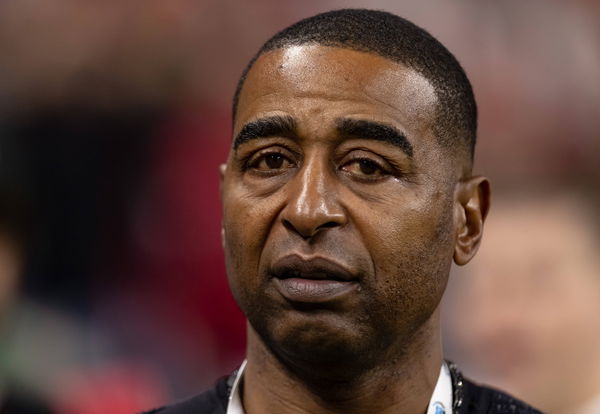
NCAA, College League, USA Football 2018: Big Ten Championship Northwestern vs Ohio State DEC 01 December 1st, 2018: Fox Sports host Cris Carter walks the sidelines before the 2018 Big Ten Championship game between the Northwestern Wildcats and the Ohio State Buckeyes on December 01, 2018 at Lucas Oil Stadium in Indianapolis, IN. Adam Lacy/CSM. Indianapolis Indiana USA EDITORIAL USE ONLY Copyright: xx ZUMA-20181201_zaf_c04_1319.jpg AdamxLacyx csmphototwo471449
Carter also noted that he has no interest in returning to his old job because the pay for most television analysts has dropped significantly. He compared today’s TV salaries to what radio hosts used to make, suggesting that the middle class of sports media is disappearing. In his view, ESPN is now content to hire “journeymen”—interchangeable, lower-paid talent—to fill the hours between their big-name shows.


To illustrate his point, Carter compared ESPN’s current roster to other networks like NBC. He pointed out that NBC is actively recruiting top-tier icons like Carmelo Anthony, Tracy McGrady, and Vince Carter for their new basketball coverage.
To Carter, this proves that while other networks are still investing in a deep bench of star power, ESPN is content to let a few “Eagles” soar while the rest of the staff struggles to get by.
Cris Carter is pulling back the curtain on the harsh realities of corporate sports media, proving the glamour doesn’t extend to the bottom of the call sheet. But his fight against the “pay the eagles, starve the turkeys” mentality isn’t just restricted to multi-billion-dollar television networks. He sees that same gross financial disparity playing out at the grassroots level of the sport, and he’s taking it directly to state lawmakers.
Cris Carter is fighting for the Rank-and-File in Florida
Last Wednesday, the NFL legend teamed up with former college head coach Jimbo Fisher to tackle a massive crisis in the Sunshine State: the poverty-level pay of Florida high school coaches.
Currently, Florida coaches are among the lowest-paid in the country, often receiving stipends of only $3,000 to $6,000 per year. For Carter, this mission transcends state lines. He credits his own high school coach at Middletown High School in Ohio, Bill Conley, for altering the trajectory of his life. During the visit, Carter highlighted that universal impact.
“Bill Conley, wherever you are, you are responsible for Cris Carter making it through the Pro Football Hall of Fame,” he said.
The push for better pay centers on two main pieces of legislation, SB 538 and HB 731. These bills aim to give school districts the flexibility to use booster club donations to increase coaching salaries. While the bills allow for higher pay, they strictly prohibit using those funds for severance packages. Another related bill, SB 178, would allow head coaches to spend up to $15,000 of their own money to support their players with essentials like food, transportation, and recovery services.
The movement gained significant momentum on Thursday when the Senate passed SB 538 with a unanimous 38-0 vote. Despite this victory, some goals remain unfulfilled. The Florida Coaches Coalition had hoped to secure a guaranteed minimum wage of $15 per hour for coaches, but that specific pay requirement was not included in the final versions of the bills.
The next steps for these changes will occur in March, when the House and Senate are expected to give their final approval. If the bills pass those hurdles, they will head to Governor Ron DeSantis’s desk for signature into law. If successful, these measures could fundamentally change how high school sports are funded and supported across the Sunshine State.
Related Newsletters