
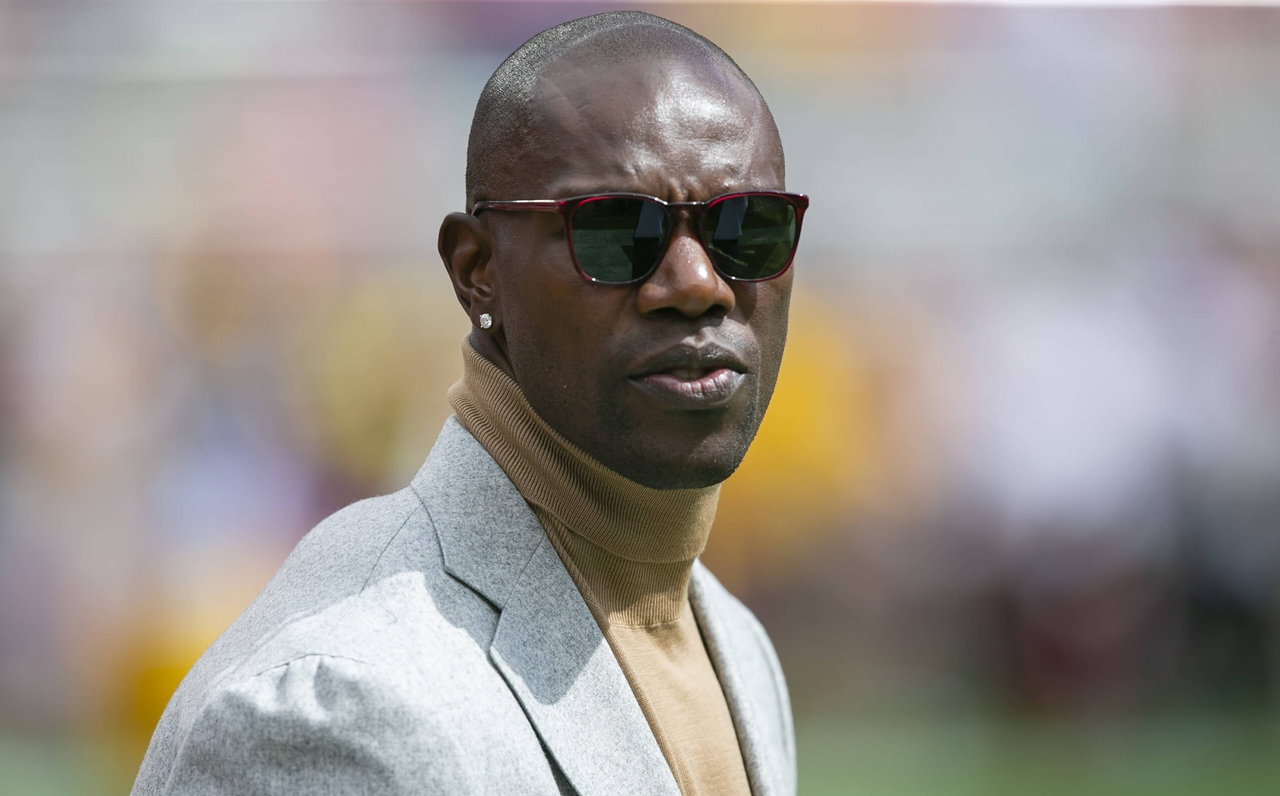
For more than a couple of decades, Terrell Owens and Randy Moss have been linked whenever the greatest wide receivers in NFL history are discussed. Both dominated the league during the same era. They eventually earned places in the Pro Football Hall of Fame. And yes, the NFL legends built statistical resumes that remain among the most impressive ever produced by a wide receiver.
Watch What’s Trending Now!
Yet the two have always represented somewhat different styles. Moss became synonymous with his extraordinary speed and ability to make explosive plays. Owens, meanwhile, built his reputation on his physicality and all-around approach to the position. At the same time, however, Moss was criticized by media members for not giving 100% all the time. And that is something that Owens believes makes him better than Moss.
“People always ask me: who’s the best receiver? Name your top two or three. And for me, I don’t go any further really than Jerry Rice and myself,” said Owens recently. “Randy was electric, dynamic, but he only did one thing well. Again, like I said, he didn’t play all the time. For me, I’m a complete receiver. I did it all.”
The comments echo an argument Owens has made since their playing days in the early 2000s. In a 2002 ESPN Magazine profile, Owens acknowledged that he is a better blocker and brings more to the table as a wide receiver than Moss.
“I feel I’m better than Randy,” said Owens. “I’m a more physical blocker, and I run routes over the middle. I just bring a lot more to the table than he does.”
There is a historical context for Owens’ comments about Moss’ approach to the game. In 2001, Moss told the Minneapolis Star-Tribune, “I play when I want to play,” while explaining that he didn’t necessarily play at his top performance level every time.
The remark became a significant part of the public perception surrounding the former New England Patriots wide receiver and his consistency, even though it was part of a broader comment about how he approached football.
Meanwhile, Terrell Owens’ claim that he was a more “complete” receiver also has specific meaning based on his earlier comments. His argument was not simply about career production. He pointed to his ability to work over the middle and contribute as a physical blocker, areas he believed gave him a broader role than Moss.
A 2002 San Francisco 49ers media guide even described Owens as “perhaps the most complete receiver in the NFL,” providing contemporary context for the way his game was viewed at the time.
At the same time, the factual record shows why Moss’ place in this discussion remains difficult to dismiss. Moss finished his career with 982 receptions, 15,292 receiving yards and 156 touchdowns, while Terrell Owens finished with 1,078 receptions, 15,934 yards and 153 touchdowns. Moss also averaged 15.6 yards per reception compared with Owens’ 14.8.
Most importantly, Randy Moss’ career was not limited to occasional deep catches. He twice topped 100 receptions, recording 106 catches in 2002 and 111 in 2003. He also produced 10 seasons with at least 1,000 receiving yards. Those numbers do not necessarily disprove Owens’ argument about versatility, because Owens was specifically talking about the broader responsibilities of a receiver.
However, they do provide factual context for the claim that Moss “only did one thing well.” But at the same time, whether Randy Moss was better than Terrell Owens can be subjective, as both receivers dominated during the same era.