Imago
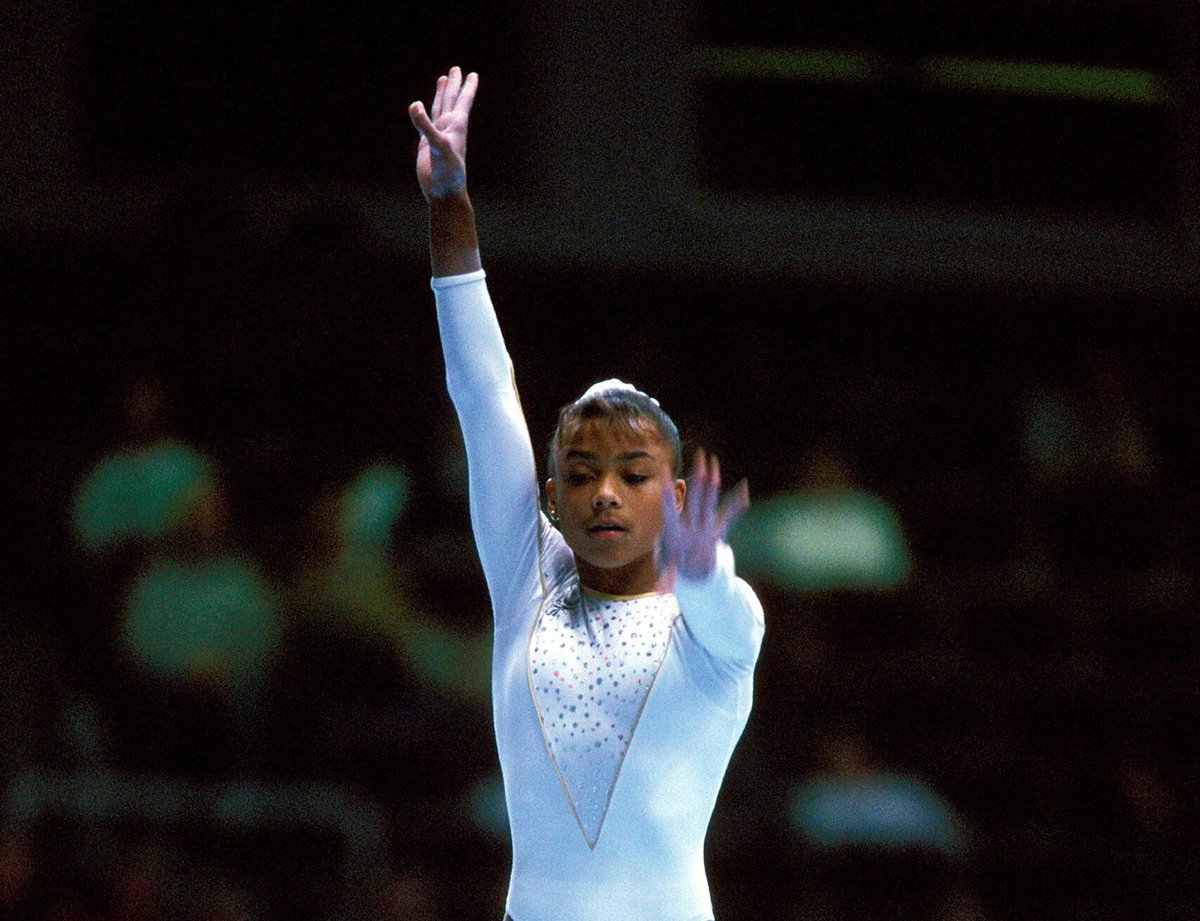
Bildnummer: 00736041 Datum: 18.11.1994 Copyright: imago/HJS Dominique Dawes (USA) – Schwebebalken; Vdia, hoch, Balken Weltmeisterschaft 1994, Kunstturnen, Geräteturnen, Mannschaftsweltmeisterschaft Dortmund Turnen WM Damen Einzel Deutschland Einzelbild Aktion Personen
Imago
Bildnummer: 00736041 Datum: 18.11.1994 Copyright: imago/HJS Dominique Dawes (USA) – Schwebebalken; Vdia, hoch, Balken Weltmeisterschaft 1994, Kunstturnen, Geräteturnen, Mannschaftsweltmeisterschaft Dortmund Turnen WM Damen Einzel Deutschland Einzelbild Aktion Personen
Dominique Dawes counts her most meaningful title not from a podium, but at home. The three-time Olympian and mother of four has traded elite gymnastics for a life centered on family. With husband Jeff Thompson, she is raising daughters Kateri and Quinn, and twins Lincoln and Dakota, who leap in the gym for fun, not medals. But Dawes still recalls how fear and perfection overshadowed the joy of her childhood, and she’s determined to give her daughters the happiness she once longed for.
Watch What’s Trending Now!
In a Youth Inc. interview, Greg Olsen asked Dominique Dawes about the intense expectations on young gymnasts. Reflecting on the 1996 Magnificent Seven (Shannon Miller, Kerri Strug, Amy Chow, Jaycie Phelps, and Amanda Borden), she recalled Strug at the vault runway, convinced her injured second attempt sealed the team’s first gold. While praising their talent, Dawes offered a different perspective:
“I think from a mother’s point of view, I would never want my daughter in her shoes. I would never want my daughter to feel that enormous amount of pressure or that physical pain that we knew she as well as the other six athletes on that team, we were all in pain were going through.”
Top Stories






She added, “I think that’s why I’m trying to do things different in the sport because while I am very blessed, I’m not complaining about what I accomplished and the people that I inspired along the way.”
Looking back, Dominique Dawes noted the extreme physical and mental demands her teammates faced, moments that symbolized both courage and the intensity of elite gymnastics. She began gymnastics at age six in 1982. By 16, at the 1992 Olympics, her electrifying back-to-back tumbling passes on floor earned her the nickname “Awesome Dawesome.” Spectators marveled at her gravity-defying flair and joyful smile, but behind it lay a far grimmer reality.
Now, as a parent of four children, she sees exactly how hard that pressure is for a child:
Imago
Credits: Instagram/@Dominiquedawesofficial
“But I know when I look at my journey in the sport of gymnastics and I look at my beautiful four children, I do not want them to endure what I endured.”
In her career, she had to deal with serious physical challenges. During her training, she had to fight painful tendinitis in both ankles and Osgood-Schlatter disease, but nonetheless, she managed to perform and help her team to take a medal before the 1992 Olympics. Now, Dominique Dawes strongly believes young athletes shouldn’t have to endure such intense routines:
“Young kids, in my opinion, should not be waking up at five o’clock in the morning and feeling that enormous amount of pressure and training five to seven hours a day, and then five hours on the weekend. Why? Because I think we’re not helping develop the whole child.”
And she has lived this reality. Dawes once said she “sacrificed her childhood to win an Olympic gold medal,” training in a “24/7 work, work, work” environment where self-worth could feel tied to results. The work habits were usually over 36 hours a week, and required physical, emotional, and psychological stamina, with little opportunity to have normal childhood experiences.
After a strain-filled, expectation-filled, and struggle-filled life, Dominique Dawes retired in 2000. However, rather than letting her experiences behind her, she made it her mission.
Dominique Dawes turned her past into a safe space for young athletes
After retiring, Dawes established the Dominique Dawes Academy to establish a safe, positive, and encouraging atmosphere where children can also acquire skills, gain confidence, and have fun in a movement without the emotional and physical stress that she experienced.
As she told Greg Olsen in an interview, “There were a lot of gymnasts with eating disorders because they were overly critical of their body, because people were obsessed with their body. There’s a lot of gymnasts who may have emotional toughness, but because of how we were coached throughout those decades, there are emotional scars because our emotional health was treated or neglected throughout our careers. Mental health as well.”
Dominique Dawes knows firsthand the challenges of judges scrutinizing her body in a sport that prizes narrow physical ideals. She has spoken openly about struggling with self-esteem and body image:
“[The judges were looking for] a body type that was not extremely muscular, not so much of a super stocky build, which is what I had… A lot of my routines [received] major deductions because of things I couldn’t control,” Dawes explained. “My legs weren’t what they were looking for with regards to lines. I wasn’t able to point my feet a certain way [because they are flat] and [received deductions] for my legs not coming together because they are bowed.”
These events directly shape her work to help young kids. “I want to make sure that young kids, boys and girls have a positive and empowering safe space to go to to be introduced to the sport of gymnastics…,” Dawes said. And this philosophy ensures kids can enjoy movement without fear, as her daughter does.
Even one of Dominique Dawes’ daughters is following in her footsteps, but without the pressure. The young child has been training in floor, beam, and bars, and even last year was performing a handspring on the high beam at the Dominique Dawes Gymnastics & Ninja Academy.
Dawes emphasized, “Not once have any of our coaches coerced, forced, or threatened my daughter to do a skill that she finds fearful.” For Dawes, the lessons of her past are a blueprint for change!