
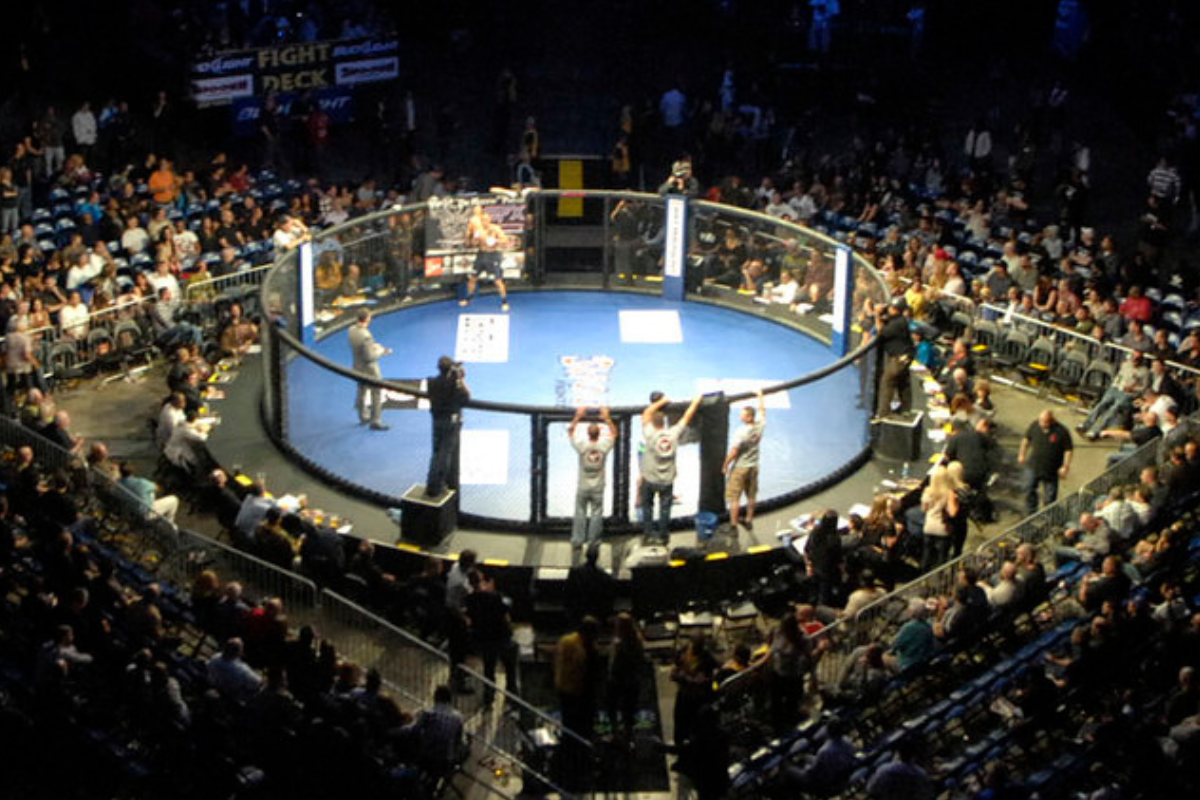
There’s a good chance new rules would regulate fights scheduled on cards for the latter half of this year. Sparked by incidents that unfolded in recent events, authorities are contemplating reviewing a few existing regulations that, more often than not, cause confusion and inconsistencies while allowing room for misconduct. That broader push for clarity is expected to take center stage at the upcoming conference.
Watch What’s Trending Now!
“This summer’s ABC Conference has some notable items on the agenda,” MMA Junkie’s Nolan King wrote. “The 2026 ABC Conference takes place Aug. 3-5 at Caribe Royal in Orlando after two days of official training courses. Although much will be discussed over the course of the three days, perhaps nothing more immediately impactful than potential changes to the Unified Rules of MMA.”
Citing information received from the California State Athletic Commission’s executive director, Andy Foster, King added that the exact wording of the new rules isn’t finalized yet. However, there are two specific rule changes that officials are seriously weighing and that, in all likelihood, will face formal voting.
King’s report begins with the existing regulations surrounding instances where a fighter ends up vomiting during a fight. Currently, a fighter could face disqualification if he throws up while the bout is still in progress.
A recent example from last month’s UFC 326 at the T-Mobile Arena illustrates the issue. On the preliminary segment of the card headlined by Max Holloway and Charles Oliveira’s rematch, the bout between former champion Cody Garbrandt and Xiao Long highlighted the confusion surrounding the rule.

Imago
March 4, 2023, Las Vegas, NV, LAS VEGAS, NV, USA: LAS VEGAS, NV – MARCH 4: R-L Cody Garbrandt battles Trevin Jones in their Bantamweight fight during the UFC 285 event at T-Mobile Arena on March 4, 2023 in Las Vegas, NV, USA. Las Vegas, NV USA – ZUMAp175 20230304_zsa_p175_188 Copyright: xLouisxGrassex
During the fight, the Chinese fighter hit Garbrandt in the groin – a foul. The kick was strong enough that the American ended up vomiting. Ideally, under the current wording, Garbrandt would have been disqualified for vomiting mid-fight. But in this particular case, it happened after the referee, Herb Dean, had already paused the fight.
Big John McCarthy later praised the proceedings in Vegas, writing, “The Cody Garbrandt vomiting situation was handled beautifully by @HerbDeanMMA and the NSAC Ringside Physician. Cody was fouled and a timeout was called by Herb. Cody has up to 5 minutes to recover from the foul. A bucket was brought in for Cody based upon him feeling nauseous due to the foul.
He did use the bucket, so it was imperative that the ringside physician at this point is controlling the physical activity and determining whether Cody can continue or does the fight need to be stopped and decided by a Technical Decision based upon the fight being in the 3rd round of a 3 round fight.”
Since Garbrandt didn’t throw up during active fighting, Dean allowed him to recover and resume fighting.
Taking the guesswork out for referees
Speaking with MMA Junkie, Dean later explained that, to avoid such situations, the vomiting rules should explicitly include different scenarios. They should clearly separate cases where a fighter vomits because of a foul, between rounds due to exhaustion, or during the fight because of a legal strike.
Right now, the rules treat vomiting in a generic way, leading to confusion and unfair decisions.
This is not the only area under review. Attention has also turned to a second rule, Nolan King speculated, because it could affect fights more often. It involves a referee’s decision to term an action as “intentional” or “accidental.” Currently, if the match official believes the foul was intentional and the opponent can’t continue, they can disqualify the fighter.
Likewise, if they adjudge a move as accidental, then the fight could be ruled a no-contest. But there’s a problem in this situation. It often puts significant pressure on referees to determine a fighter’s intent, which may not be clear in real time.
So the ABC (Association of Boxing Commissions) may consider changing the rule. This would ensure that referees are not limited to those two categories and can make more flexible decisions based on the situation.
In that context, should officials decide to update the rules, the changes will not take effect immediately. They first need to be officially approved through a vote at the ABC’s annual conference. Only after that will different state commissions begin applying the new rules in the coming months, potentially reshaping how fights are judged and decided.