

Something rare occurred in the UFC. For a person known for almost never accepting his guilt, Dana White did the unthinkable—offer his apologies. The anomaly occurred at the UFC 333 post-fight press conference when White responded to a reporter’s question surrounding Farid Basharat‘s release. The UFC CEO’s comments on the unbeaten fighter’s contract renewal drew huge backlash, prompting a strong rebuttal from Basharat. Reflecting on his remarks, White explained the typical dynamic that develops during roster cuts.
Watch What’s Trending Now!
“When I was talking to the media that night and I was saying reasons that you could not get re-signed, I wasn’t saying that about him,” White said. “I was just saying they were asking me what, you know, why didn’t he get resigned, and you know it’s and I said, ‘Well, it’s happened before. There’s lots of reasons why guys don’t get resigned.’ I wasn’t talking about him specifically. Okay.
“So, I actually saw his video on my Instagram, and I was like, ‘Oh, I didn’t mean to do that to that kid. ‘ And I saw you had said something like, You know, if you’re not going to resign me, don’t try to hurt my career. And in no way, shape, or form did I try to do that. I have no problems with him whatsoever, personally or professionally. And, you know, I’m sure with his record and what he’s got going on, he’ll get re-signed somewhere.”
White’s response centered around Basharat, but it also reflected on the general pattern surrounding roster cuts in the UFC. The promotion rarely offers a clear explanation of why a particular fighter was let go or not re-signed. But certain trends, including contractual clauses and comments from the fighters and UFC executives, including White, offer clues.
While terminations usually occur with the completion of a contract, re-signing may not happen if a fighter makes unreasonable financial demands that far outweigh their promotional value. Missing weights frequently and conduct-related issues are other reasons for releasing a fighter.
The most common ground for not renewing a contract remains the multi-fight losing streak. There are exceptions, like Tai Tuivasa, who hasn’t won a fight since 2022 but is still being allowed to continue.
Given the influx of prospects through Dana White’s Contender Series (DWCS), the UFC has to balance its roster, which is around 550-600 fighters, by reducing a good number of underperforming fighters. A notable example occurred in August when the UFC released around 9 fighters after a significant intake from the Contender series.
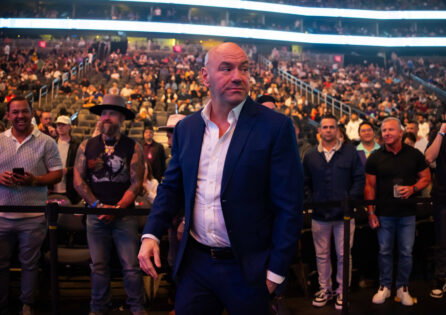
Imago
MMA: UFC 300 – Pereira vs Hill Apr 13, 2024 Las Vegas, Nevada, USA UFC president Dana White in attendance during UFC 300 at T-Mobile Arena. Las Vegas T-Mobile Arena Nevada USA, EDITORIAL USE ONLY PUBLICATIONxINxGERxSUIxAUTxONLY Copyright: xMarkxJ.xRebilasx 20240414_mjr_su5_008
Gatekeepers or fighters with long tenures but who are not progressing in the rankings and not delivering exciting finishes also feature in the roster cut list.
Fighters like Farid Basharat, Michael Venom Page, and Muhammad Mokaev likely pertain to the category where fighters failed to deliver the nail-biting performances the promotion expects.
Speaking about his exit, Basharat said, “I think the company, the UFC, is manufacturing a fan base that doesn’t appreciate good-quality fighting. Even if it’s a mismatch, even if it’s a low-level fight, as long as there’s blood, as long as it’s a first-round finish, we’re happy.”
When Dana White’s comments missed the mark
A similar pattern appears to have emerged in Mokaev’s case. Like Basharat, the Brave CF Flyweight champion was on a 7-fight winning streak in the UFC, yet he was released. In his case, unlike Basharat, who recorded 6 decision wins against 1 stoppage, Mokaev won the majority of his fights in the UFC via stoppages.
White likely aggravated the situation by offering a simple textbook explanation.
When a reporter at UFC Edmonton post-fight presser asked about Basharat’s exit, White responded, “When guys’ contracts are up—and this isn’t the first time this has happened—either guys aren’t good to deal with, or the matchmakers don’t want to deal with them, which could be turning down fights or whatever the reasoning is. If you’re 16-0 with seven wins in the UFC and don’t get re-signed, there’s definitely a reason.”
The response drew huge backlash. Many prominent figures, including Ariel Helwani, Demetrious Johnson, and Joe Rogan, reflected on UFC’s approach and questioned whether the promotion is now prioritizing entertainment over performance excellence.
It is not the first time White has made a scathing comment after a fighter was released.
Speaking about Mokaev at the UFC 304 post-fight press conference, he said, “The matchmakers aren’t big fans of his for many different reasons, and not just take there’s a lot of people who shoot takedowns in this business…a lot of guys that fight with that type of style, but it’s a lot more than just that…I think the PFL is going to get a great undefeated guy. Really good luck to him.”
In 2013, White offered a similar defense while addressing the exit of top-ranked contender Jon Fitch.
As it happened in Basharat’s case, the two instances drew huge backlash in the media, with many raising doubts over the UFC’s decisions.