
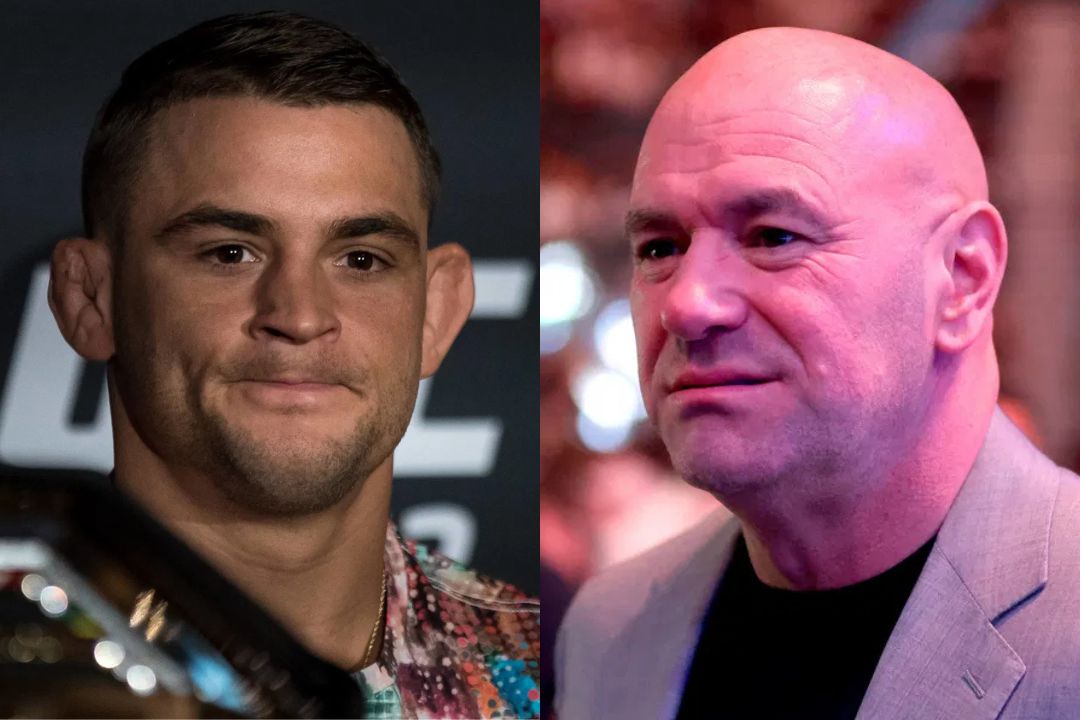
Dustin Poirier‘s admission of alcoholism and depression that followed his arrest at an Atlanta airport late last month has brought attention to a sensitive issue that not only confronts the UFC but also the broader mixed martial arts community because it particularly deals with a stage when a fighter is no longer active. That’s the period when inactivity and potential financial insecurities become more pronounced, especially when the person is already dealing with existing mental health issues.
Watch What’s Trending Now!
To deal with the matter, organizations often set up programs that continue to provide assistance even after the individuals have parted ways. In that context, with Dustin Poirier’s issue having gained considerable traction, the spotlight has fallen on the UFC. Does the biggest mixed martial arts promotion in the world have any program to support ex-fighters dealing with mental struggles? Speaking at the post-fight presser of UFC 329, Dana White addressed the matter when a reporter raised the issue about UFC having a wellness program for its ex-fighters, much like its sister company, the WWE.
“We do the same,” White told the reporter.
However, the reporter pressed for more details and asked White to speak about its wellness program.
“We don’t talk about that stuff,” White replied. “We do the same. Any guys that have problems, believe me, a lot do, and we take care of them.”
That’s a typical Dana White response, sharing only what needs to be shared. Beyond his reticence, there’s little knowledge about the kind of program the UFC runs for ex-fighters.
Imago
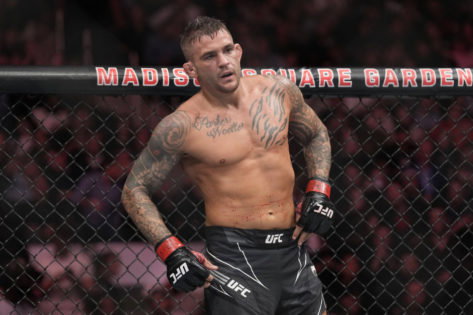
NEW YORK CITY, NY – NOVEMBER 12: L-R Dustin Poirier looks on during the UFC 281 event at Madison Square Garden on November 12, 2022 in New York City, New York, United States. Photo by Louis Grasse/PxImages Louis Grasse / SPP PUBLICATIONxNOTxINxBRAxMEX Copyright: xLouisxGrassex/xSPPx spp-en-LoGr-lrg2211121091204_UFC281_MAIN
Publicly available information shows that the WWE program the reporter mentioned assists persons dealing with medical, substance abuse, and mental health problems, and reportedly falls under the Former Talent Rehabilitation Program. The initiative forms a part of its broader WWE Talent Wellness Program and is supposed to cover the full costs of rehabilitation and counseling.
In the UFC, meanwhile, what is known is that the promotion has been working with the Las Vegas-based Cleveland Clinic Lou Ruvo Center for Brain Health since 2011. The partnership, reportedly involving $2 million in funding by the UFC, includes different kinds of tests and scans, including neurological, MRI, and cognitive assessments for both active and retired fighters.
The promotion also seems to have a relationship with a non-profit organization called Fightstory. Formed by former MMA champion Angela Lee, it aims to assist combat athletes with a comprehensive mental health toolkit that helps them deal with different kinds of challenges both inside and outside the cage.
The UFC’s Performance Institute is another component in that support structure where active fighters can liaise with the administration to seek a direct connection with the promotion’s empaneled medical team.
Taken together, even with Dana White’s rather circumspect response, the framework laid out by the UFC sounds good enough to deal with its current range of challenges.
The UFC’s mental health conversation is growing stronger
Notably, times have changed. Like Dustin Poirier, more and more athletes, including prominent names, have been speaking up openly about mental problems. Keeping a lid on issues before they spiral out of control, only because opening up might be seen as a sign of weakness, is not considered a thing of the past.
That shift has already become visible. Two years ago, speaking with Sky Sports on the MMA podcast, Paddy Pimblett, who incidentally scored a major win in the co-main event of UFC 329, spoke on the issue.
“I’ve always got a lot going on,” Pimblett said. “Whenever I start feeling negative and getting down, that’s when I get a bit of depression.
“Mentally, that side of things, it’s hard. I wasn’t in the best place five weeks ago. I actually messaged the place where I go to have a bit of counseling and messaged the woman I go and see and said, ‘Can I come and see you?’ Just to have a little chat and feel better. I need to share this because other people don’t.”
Viewed in that context, barring the usual exceptions, there has been an outpouring of support for Dustin Poirier, who seems to have been hit hard, even financially, as well, after reports suggested major brands were pulling out of partnership deals following his arrest in Atlanta.
Dana White’s words, while cryptic, should still come across as a positive development that more fighters, especially those who are no longer on the roster, should know about and take advantage of on time.