
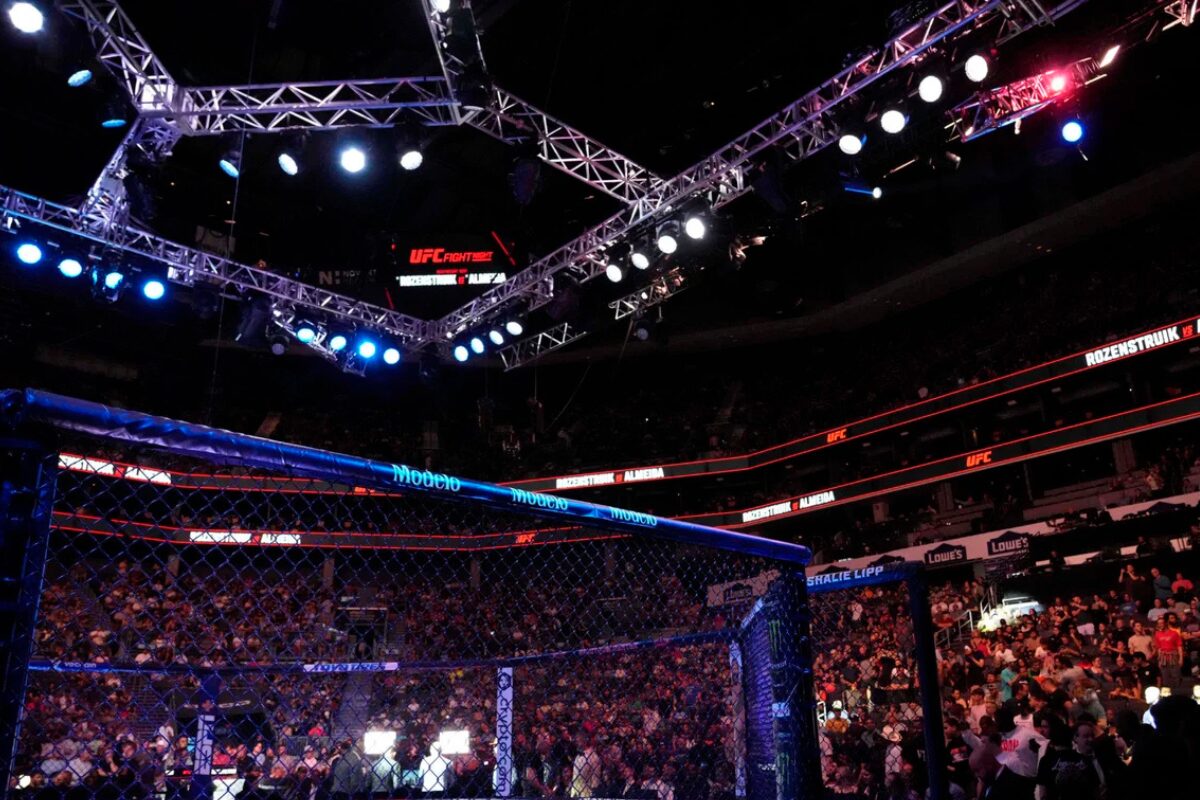
42-year-old Liz Carmouche has made her choice: the chance to win the inaugural PFL women’s flyweight title is worth more that a few strands of her hair. After all, she is already fighting at a weight 10 pounds below her preferred division. With just a few hours remaining before she steps into the cage to face Jena Bishop in the main event at Chicago’s Wintrust Arena, Carmouche reflected on the challenges of making weight during a recent appearance on The Ariel Helwani Show.
Watch What’s Trending Now!
“I think 135 makes a lot more sense. 125 is a crazy cut,” Carmouche told Helwani. “My muscle density, my bone density, my bone density just keeps going up. Like every little hit is a micro refraction that calcifies. My bone density keeps increasing.
“Therefore, my weight keeps increasing. And I can keep reducing calories, but that’s not going to change the build of my body. So 135 makes the most sense, but the performance I have at 125 makes it really hard to want to go up a weight class when I’ve done so well at this one.”
Footage showing Carmouche cutting her hair to make weights for the 125-pound clash with Bishop reflects the weight-cutting concerns she discussed on The Ariel Helwani Show.
Carmouche’s situation stems from the PFL’s current women’s weight class offerings. The promotion does not offer a women’s bantamweight division at 135 pounds. Its official roster includes men’s bantamweight and women’s flyweight at 125 pounds, but there is no separate women’s bantamweight or featherweight category.
The PFL’s women’s divisions have changed over time. When the promotion’s format debuted in 2019, it featured a 155-pound women’s lightweight division, with Kayla Harrison as its leading star.
In Carmouche’s case, she has competed primarily in two weight classes during her MMA career: bantamweight and flyweight. She challenged Marloes Coenen for Strikeforce’s bantamweight championship in 2011 before facing Ronda Rousey in the UFC’s first women’s fight, a bantamweight title bout, in 2013.
Imago
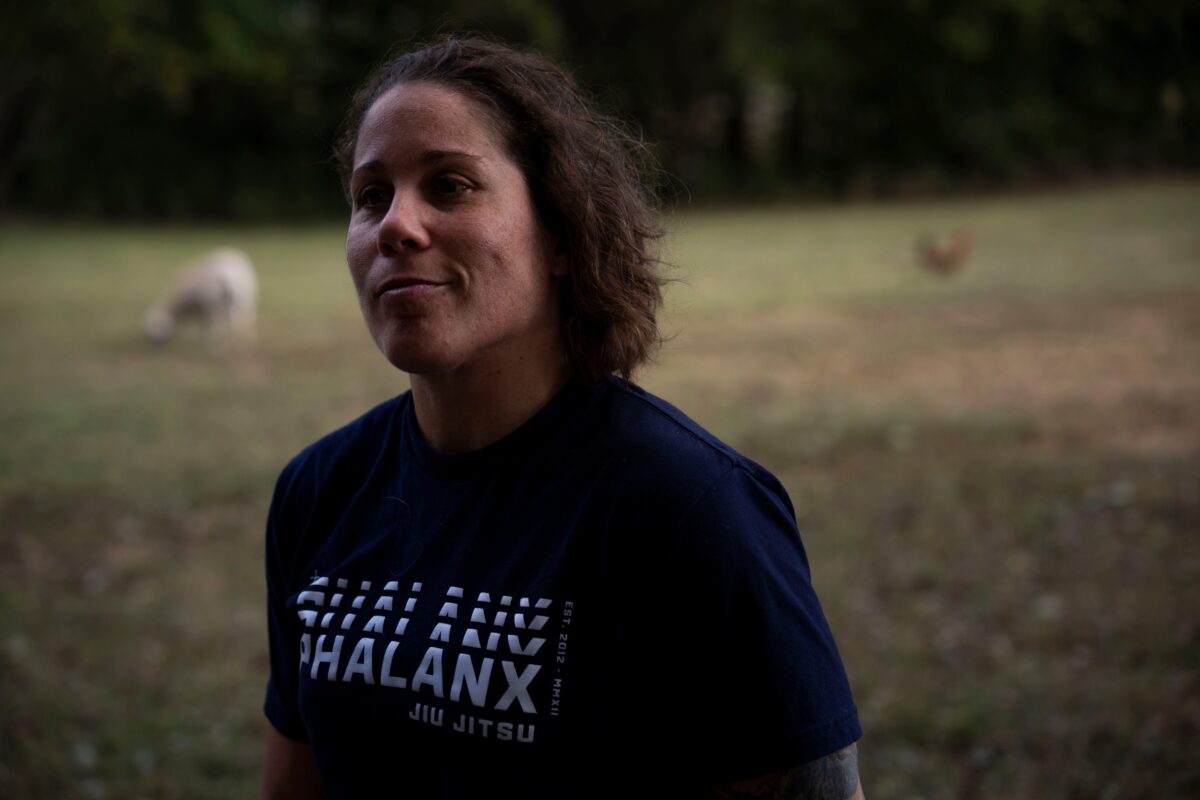
MMA champion, Liz Carmouche is interviewed by The Tennessean at her home in Gallatin, Tenn., Wednesday, Sept. 17, 2025.
Carmouche later moved to flyweight around 2018, continuing to compete at that weight through her championship campaigns in Bellator and her appearances in the PFL.
She had never missed weight before August 1, 2024, when she weighed 127 pounds before a non-title flyweight playoff semifinal against Taila Santos at PFL 7. Because the permitted limit was 126 pounds, Carmouche came in two pounds overweight.
Under the PFL rules, she forfeited 20% of her purse and received a one-point penalty in the PFL standings before losing to Santos by unanimous decision.
That was the first weight miss of her career. The experience provides context for the lengths Carmouche went to when she faced another weigh-in scare ahead of her bout against Bishop.
Although she ultimately registered 125 pounds, unverified reports suggested she had been 0.2 pounds over before cutting to make weight.
Carmouche is not the only female fighter to have faced weight-related challenges.
When the scales become the opponent
In July 2024, Tracey Cortez initially weighed 126.5 pounds ahead of her UFC main event against Rose Namajunas, then cut her hair and returned to the scale at 126 pounds. At the other end of the spectrum, Ketlen Vieira weighed at 152.2 pounds for her PFL championship matchup with Cris Cyborg in August 2026, exceeding the 145-pound limit by 7.2 pounds and becoming ineligible for the title.
At UFC Fight Night 270, Luana Carolina weighed in at 144 pounds for her scheduled bout against Melissa Mullins, eight pounds above the 136-pound allowance. As a result, the fight was cancelled. Carolina’s repeated weight problems contributed to her later release from the UFC.
By comparison, Maycee Barber missed weight half a pound, weighing in at 126.5 pounds before her scheduled bout against Erin Blanchfield at UFC on ESPN 68 in 2025. She incurred a 20% purse penalty. Their bout was ultimately cancelled because Barber was not medically cleared.
Kayla Harrison, who previously held the PFL’s lightweight championship from 2019 to 2021, has also spoken about the toll of cutting weight. Speaking to Ariel Helwani last year, Harrison described making weight for her last outing against Ketlen Vieira as “torture,” before adding on Instagram, “It’s one of the hardest things I’ve done in my career.”
Carmouche now faces similar weight-cutting challenges as she prepares to compete for the inaugural PFL women’s flyweight championship. What is perhaps more significant is that, win or lose, given the challenges she faces in making weight, what will be her next move?