

“To beat one of the best fighters in the world in home territory, you must operate at 110 percent. I didn’t do that, and it is my responsibility,” Paul Hughes remarked after suffering his third career loss, and his second in the PFL, to the same opponent, Usman Nurmagomedov. The comment stood in stark contrast to his earlier belief that their first encounter had been a closely contested duel. In that fight, Khabib’s cousin even had a point deducted for repeated groin kicks. Notwithstanding Hughes’ humility, the scorecards, 50-45, 49-46, and 48-47 for Nurmagomedov, still left many surprised.
Watch What’s Trending Now!
One of the judges at the PFL Champions Series 2 headliner essentially felt Nurmagomedov had taken all five rounds to claim the inaugural lightweight championship! Then just a day later, across the Atlantic, a similar confusion erupted at the highly anticipated UFC 320. On the Magomed Ankalaev-Alex Pereira 2 card, a bantamweight clash between Jakub Wikłacz and Patchy Mix ended with scorecards of 28-29, 29-28, and 28-29 in favor of the Polish fighter. The inconsistencies have invariably reignited the age-old debate over judging. And calls for greater accountability have begun to surface.
Putting the judges in the hot seat
The discussion took an interesting turn on Uncaged Network. Host Charlie Quinn and UFC lightweight Nazim Sadykhov sought guest Rafael Fiziev’s (Lightweight #10) thoughts on the contentious issue. The Azerbaijani fighter was slated to face former champion Charles Oliveira at UFC Rio but withdrew due to a knee injury. “You think we should have, you know, normal judges like we have now, or maybe some automated open scoring, or maybe we should know in between rounds if we’re up 10-9 or if we’re down 10-9. You think that, you know, maybe that’s a better idea, or just keep it as is?” Quinn asked.
Fiziev admitted the situation baffled him. In his view, the core problem was that judges had never fought themselves. “I think judges have to be fighters, you know. You cannot teach them how to fight; you can’t teach somebody how to score the fight,” he said.
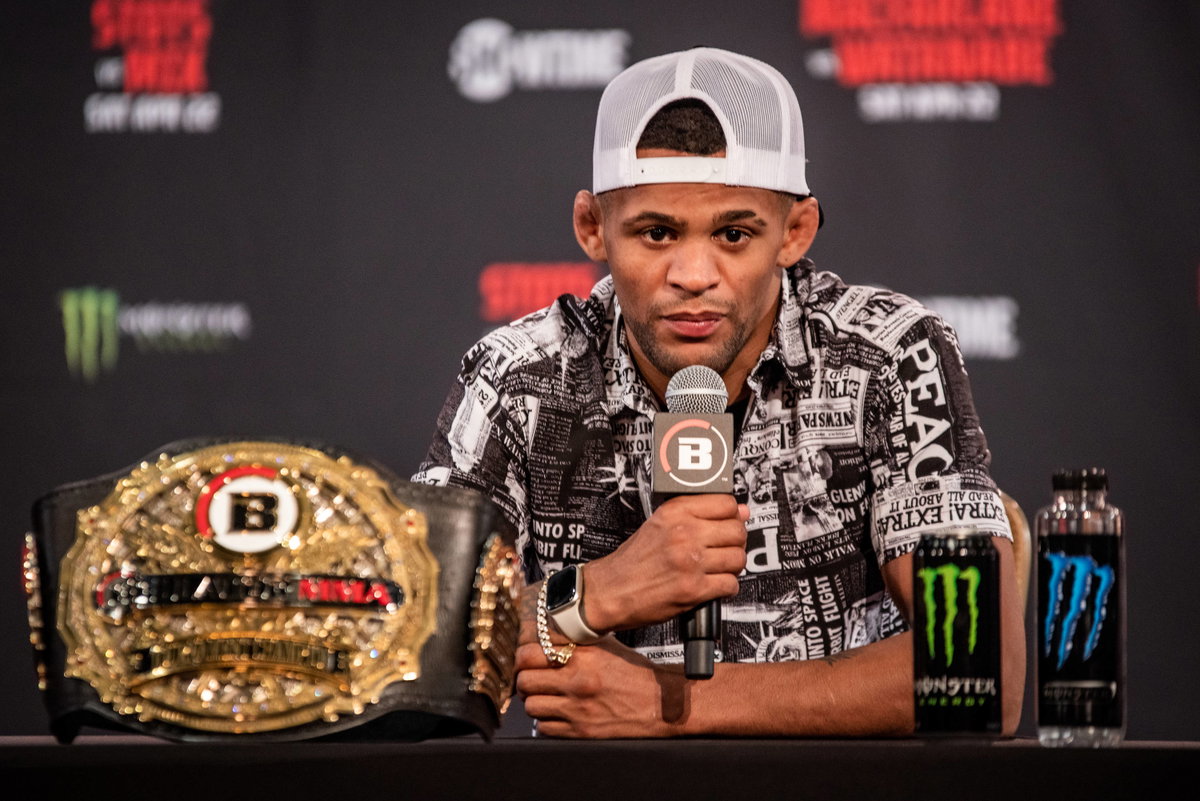
Imago
Kampfsport, MMA Pressekonferenz in Honolulu April 19, 2023, Honolulu, HI, Hawaii, USA: HONOLULU, HAWAII – APRIL 18: Patchy Mix addresses the media ahead of his Bantamweight Grand Prix Championship bout during Bellator 295 – Stots vs Mix at Blaisdell Arena on April 22nd, 2023 in Honolulu, Hawaii, United States. Honolulu, HI USA – ZUMAp175 20230419_zsa_p175_018 Copyright: xMattxDaviesx
Sadykhov agreed. “He has to know the sport. You can’t—you can’t teach somebody to score a fight.” He argued that judging suffers from human bias, especially toward popular fighters. Hence, ending fights decisively remains the only way to ensure fairness, he added.
“I think we need to hold judges accountable. I think if there’s iffy, you know, scorecards, we should interview them.” Charlie Quinn insisted.
Usman Nurmagomedov vs. Paul Hughes: The real fight was on the scorecards
Transparency, he emphasized, is key. Requiring judges to explain their decisions would expose incompetence or bias. It will help improve accountability. As an example, he cited the Hughes-Nurmagomedov fight: “One of the scorecards was 50-45. There’s, like, no way possible it was a 50-45. The other card was 48-47. It should never be that big a difference. It’s a big difference,” he said.

Imago
MOSCOW, RUSSIA – SEPTEMBER 10, 2020: Russian MMA fighters, UFC Lightweight Champion Khabib Nurmagomedov L and Usman Nurmagomedov at Abdulmanap Nurmagomedov Memory Tournament Fight Nights Global/GFC at Irina Viner-Usmanova Rhythmic gymnastics, Rhythmische Sportgymnastik, RSG Center. Sergei Savostyanov/TASS PUBLICATIONxINxGERxAUTxONLY TS0E682D
To understand Quinn’s point, one only needs to revisit Nurmagomedov’s own defense of the scores after his win over Hughes in their rematch. “You want to say this fight was close too? I feel I won every round, but it was a very tough fight with a tough opponent. I did not underestimate him; I think he underestimated me,” he said.
With the rise of artificial intelligence, judging in several sports hasve already undergone radical transformations. It may only be a matter of time before technology fully enters combat sports. So until then, as Quinn suggested, implementing mechanisms that hold judges accountable, especially for scorecards that seem questionable even to casual viewers, appears to be the need of the hour.
What’s your take? Are judges being given more leeway than they deserve?