
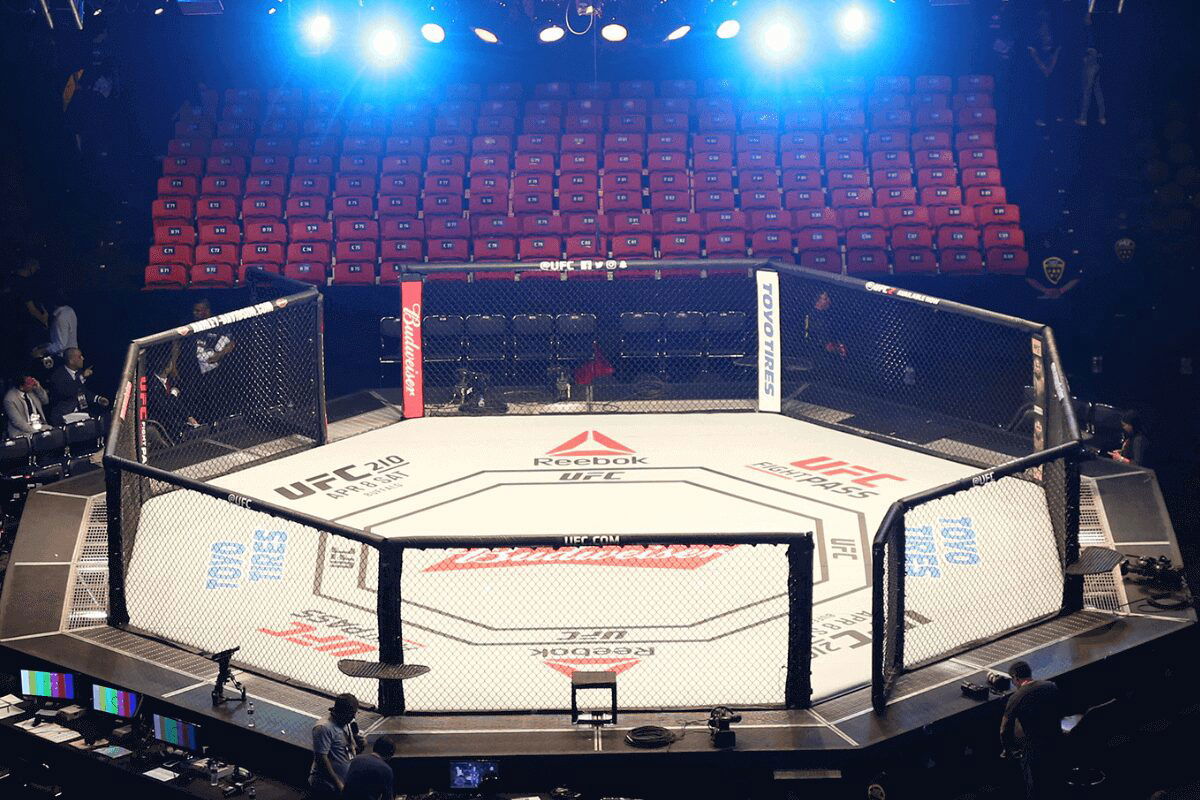
When it comes to the age-old wisdom about learning from mistakes, combat sport refereeing is no exception either. The third man inside the ring or a cage is also a human who, like everyone else, is bound to make mistakes. What is important is that they need to take the incident as a lesson and ensure it’s not repeated. In the latest interview with Theo Van, UFC referee Keith ‘No Nonsense’ Peterson laid the point out without any fluff.
Watch What’s Trending Now!
“Everyone makes (mistakes), and they do, and I do, but you know, make a mistake, admit it, and learn from it and move on. Admit it, and learn from it and move on,” the veteran match official said.
While he did not take any particular name, Peterson’s comments carry significance given the attention refereeing has drawn in recent days. While criticisms have been leveled against a string of referees, the decisions taken by veteran referee Herb Dean have become a focal point of several discussions.
The most recent case saw Dean face scathing criticism from fans for not penalizing Brazilian heavyweight Guilherme Pat during the fight against Steven Asplund at the Fight Night in Vegas this past weekend. Pat was observed holding the fence twice as the exchange with the American progressed.
Yet, instead of deducting a point for the foul, Dean reportedly issued a warning before resetting the fighters and allowing it to continue. While Asplund won the fight, Dean’s alleged hesitation drew questions surrounding accountability.
Imago
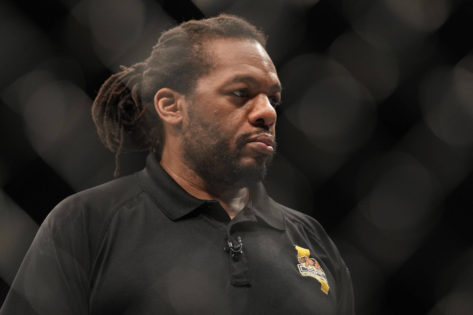
August 13, 2022, San Diego, California, San Diego, CA, United States: SAN DIEGO, CA – AUGUST 13: MMA referee Herb Dean during the UFC Fight Night: Vera v Cruz event at Pechanga Arena on August 13, 2022, in San Diego, California, United States. San Diego, California United States – ZUMAp175 20220813_zsa_p175_178 Copyright: xLouisxGrassex
The episode follows another controversy from UFC Baku last month. Fighting on the co-main event of the card headlined by Rafael Fiziev and Manuel Torres, Shara Magomedov was reportedly found pulling his opponent Michel Pereira’s hair in addition to an eye-poke incident. And just like in the recent Fight Night in Vegas, Dean simply issued a warning to Magomedov for the alleged infringements instead of deducting a point.
Perhaps the incident that put a major spotlight on Dean was the June 14 UFC Freedom 250 event. Unfolding at the South Lawn in the White House, the co-main event became controversial after Alex Pereira, who moved up a weight class to face Ciryl Gane, blamed Dean for his loss. According to the Brazilian star, the veteran referee failed to hold the French heavyweight accountable for illegal blows that landed on the back of his head.
Reportedly, Dean was supposed to officiate the July 11 return of Conor McGregor against Max Holloway. However, it later emerged that, in view of the recent incidents, the Nevada State Athletic Commission later replaced him with Mike Beltran.
Although former champion Dominick Cruz blamed him for the controversial stoppage against Henry Cejudo, Keith Peterson, nevertheless, considers himself lucky not to have many experiences in which he had to make a split-second decision, only to regret it later.
“I try not to read it totally into the early ones. I don’t have many where I’m like, ‘Oh, that was late.’ I got…I’m lucky that I don’t really have one where I’m like, ‘Wow, that’s not what I’m here to do.'”
“So I’m lucky. But you know, as you get more experience, you know, like, you’ll know when even, like, sometimes someone’s like, ‘Ah, I think that was a little early.’ And you’ll know right in your head it wasn’t a little early, like because you’re there right next to them. So you know you hear all the sounds.”
Peterson’s point, and likely that of many others, gains significance when viewed from the perspective of fighter safety.
Keith Peterson: Why every call inside the cage matters
The Unified Rules of Mixed Martial Arts that the UFC rigorously follows list fighter safety as the absolute highest priority to the extent that it overrides all other competitive considerations surrounding a fight.
As the final authority inside the cage, it is the primary duty of the referee to stop or break the fight if he finds a fighter unable to defend himself intelligently and taking unnecessary punishment.
The rule holds particular weight in cases where a foul has occurred during the progression of a fight. According to the protocol, the referee should pause the fight and prioritize the injured fighter’s condition first.
When viewed alongside the recent incidents, where fouls were supposedly allowed to continue when they could have been addressed with a point deduction, one could easily see what referees like Keith Peterson are highlighting.
Hesitation to penalize a fighter who commits a foul could put the safety of another fighter at considerable risk.
In light of recent events, the latest development revealed that Herb Dean was reportedly reviewing the criticisms leveled against him and working toward making some course corrections.
Veteran UFC referee “Big” John McCarthy said, “Herb is doing the right thing. He’s looking at the way he officiates. He’s looking at, ‘Are people starting to read that? You know what, I am a little lenient, and I don’t like to affect the fight. Maybe I’m going to start affecting the fight more.’ He’s looking at all those things just like he should, and that’s just part of the growing process of being an official.”
To set the record straight, in a fluid situation like combat sports, it becomes very hard to judge a situation, that too in split seconds. Taking that into consideration, it may not be fair to blame a referee for an act of omission.
What could, however, be a better way, as highlighted by Keith Peterson, is to study those errors in judgment and ensure they are not repeated when something similar occurs in a later fight.