
Reuters
Formula One F1 – Canadian Grand Prix – Circuit Gilles Villeneuve, Montreal, Canada – June 9, 2024 Williams’ Logan Sargeant and Ferrari’s Carlos Sainz Jr. in action during the race REUTERS/Mathieu Belanger
Reuters
Formula One F1 – Canadian Grand Prix – Circuit Gilles Villeneuve, Montreal, Canada – June 9, 2024 Williams’ Logan Sargeant and Ferrari’s Carlos Sainz Jr. in action during the race REUTERS/Mathieu Belanger
The F1 rules will go through a major change for the 2026 season. The sport seems to be moving towards a more sustainable approach as the engines will generate 50% power through electricity, and the remaining 50% will be through the ICE. This will be a major challenge for the engine manufacturers and will result in a huge change in the motorsports industry.


However, could it also affect NASCAR? The entire automotive industry seems to be moving towards electrification, but is that an indication that NASCAR has to follow the same path as well?
Watch What’s Trending Now!
How 2026 F1 rules create a benchmark for motorsports?
Formula 1 is regularly referred to as the pinnacle of motorsports. They have been using hybrid engines since 2014, and also saw the growth of Formula E, a completely electric racing series. However, the scenario with NASCAR is quite different. The cars are largely known for the growling sound the V8 engines make. Moreover, there is a certain character of these cars that the fans love.
Considering the 2026 F1 regulations, it wouldn’t be a surprise that the sport moves more towards electrification in the coming generations. But, it is tough to say if NASCAR has a similar future.
Undoubtedly, the sport also introduced EV prototypes earlier. Easy to say the fans didn’t love it. One of the first things was the sound that the cars lost. EVs don’t have an engine, and only make a high-frequency noise, generated by the motor that is powered by a battery. Owing to this, many fans claimed that the car lost the very character they love it for.
Please, for the love of all that is NASCAR, this can’t happen
— The Biscuit (@The_Biscuit_DFS) July 6, 2024
And then, fans aren’t the only ones. Earlier this year, Ford’s CEO Jim Farley mentioned that the sale of electric vehicles could possibly fall in the future. This reflected that even the average consumer was more inclined towards a combustion engine.
“I wouldn’t be surprised if EV sales in the U.S. go down to 5%,” he said.
NASCAR has had a long history of sticking to traditions. In fact, the Next Gen itself has been criticized a lot by the fans and drivers since its inception. So it is safe to say that NASCAR’s future seems far from electrification. But what does it mean for Formula 1?
Major changes in F1 regulations in 2026
As mentioned, the engine is the biggest challenge for the power unit manufacturers in F1. But the teams are also under equal pressure. Apart from the engine, the cars’ overall design has also been changed.
The DRS (drag reduction system) will no longer be featured in the cars. Instead, drivers will have an “overtake mode” to do the same. It will spike the energy supply from the battery; once again, moving more towards electrification.
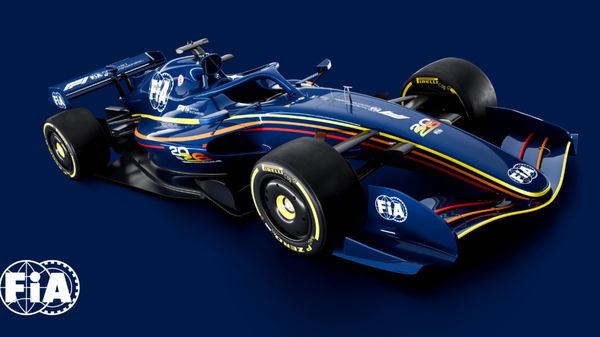
The cars will also have active aerodynamics and two separate driving modes for the drivers. They will be able to switch between these modes as per a circuit’s section, providing them with maximum and minimum downforce, as required.
Moreover, as F1 targets Net-Zero Emissions by 2030, the cars will be using 100% sustainable fuels for their engines.
It can be assessed that there might be a reduction in the exhaust sound from the cars; however, a recent demo from Honda proves otherwise. It promises a more growling and deep sound, which has increased the fans’ hopes.
While the changes in the F1 rules have fans eagerly waiting for the new regulations, NASCAR seems to be keeping its races and technology more traditional with the growling V8 engines around the track.
Written by

Edited by

Suyashdeep Sason