Imago
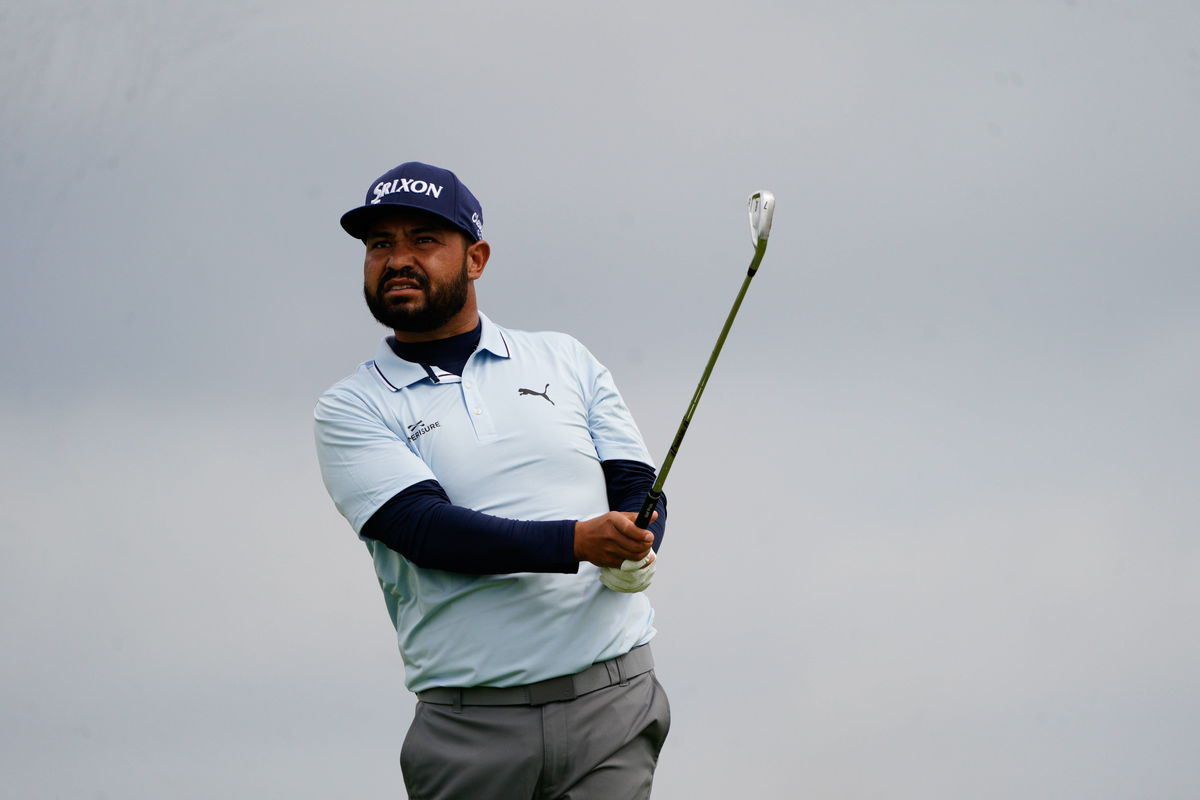
153rd Open Championship JJ Spaun USA at the 6th during the third round of the 153rd Open Championship, played at Royal Portrush Golf Club, Portrush, Co. Antrim, Ireland. 18/07/2025 Picture: Golffile Thos Caffrey All photo usage must carry mandatory copyright credit Golffile Thos Caffrey Portrush Royal Portrush Antrim Northern Ireland Copyright: xThosxCaffreyx *EDI*
Imago
153rd Open Championship JJ Spaun USA at the 6th during the third round of the 153rd Open Championship, played at Royal Portrush Golf Club, Portrush, Co. Antrim, Ireland. 18/07/2025 Picture: Golffile Thos Caffrey All photo usage must carry mandatory copyright credit Golffile Thos Caffrey Portrush Royal Portrush Antrim Northern Ireland Copyright: xThosxCaffreyx *EDI*
5 years ago, J.J. Spaun was actively trying to avoid certain wedge distances. Anywhere between 50 and 75 yards, he knew, would not be kind to him. A look at his ShotLink data confirmed his fear. He was “very poor” in those numbers. Today, however, he is ranked 5th on the PGA Tour in Strokes Gained: Approach the Green. Demonstrating his wedge shot on the new Skratch video, Spaun lets editor Ryan Barath in on his secret.
Watch What’s Trending Now!
“The difference is I’ve found a nice little recipe with my practice regimen,” he said in the video. “I like to bring my Trackman out. I have a combined setup where I religiously do wedges from 30 yards to about 110.”
Each shot is hit to a specific number and tracked by his Trackman. Based on that, the app scores him. As the camera rolls, Spaun walks Barath through it in real time. He stands tall, picks up a wedge, and swings. As the ball goes, he casually estimates the distance. Somewhere around 50 to 80, he says. The ball lands at 63 yards, four feet from the hole.
ADVERTISEMENT
“It says I gained 0.4,” Spaun noted calmly. “Anything in the positive strokes gained, you’re doing really well,” he explains to Barath as he prepares for another aim.
Top Stories
Bryson DeChambeau Visits PGA of America as LIV Golf’s Future Looks Bleak

Bryson DeChambeau Announces Career Move After $500M Demand Put LIV Golf in Worrying Spot

Brooks Koepka’s Frustrations With LIV Golf Finally Come to Light as US Open Winner Spills the Beans

‘Started Crying & Bawling’: Patrick Reed Addresses Family Setbacks That Made Him Walk Away from LIV Golf

PGA Tour in Troubled Waters as Pro Withdraws Minutes Before First Round of Torrey Pines Event

Pressure fuels J.J. Spaun
As he swings again, the ball lands at 51 yards and ends up under three feet. Spaun looks serious and dissatisfied, despite it being an objectively good result. “There’s pressure,” he admitted. “I’m feeling it already.”
ADVERTISEMENT
That pressure, however, is self-imposed. Spaun has set a strict norm. If he does not get a plus-two strokes gained total for his game, he’ll do it again. Especially if there’s anything in red, which are the negative strokes, J.J. Spaun will do it two times more. This ritual has earned him the title of “Combine Man” from his caddie.
Locking himself in, Spaun swings his wedge for one last time. The ball lofts and falls at 63.3 yards, just two feet from the pin. “I still got it,” Spaun smiled.
ADVERTISEMENT
For him, the Trackman is non-negotiable. The values produced on it are relative to the tour’s average, and as Spaun notes, his scores and his confidence are rewired. The result was immediate. In 2025, J.J. Spaun ranked 9th on the Tour from 50 to 75 yards. His average was just 10 feet 5 inches from the hole.
How good was JJ Spaun today?
He holed 18-of-19 putts inside 20 feet.
At Oakmont?!pic.twitter.com/neid5Q0HqV
— Jamie Kennedy (@jamierkennedy) June 12, 2025
But the Trackman isn’t the only help he takes.
ADVERTISEMENT
Spaun’s equipment is his extra hand
Naturally, the equipment comes in handy too. J.J. Spaun plays with Cleveland RTZ Tour Rack wedges. They’re built from a softer Z-Alloy steel, which gives the swing an enhanced feel and spin. His wedges have a custom bounce and grind with added toe and heel relief. The goal is for the club to get in and out of the turf as quickly as possible.
Spaun uses standard lofts. He has a 34.75-degree pitching wedge and a 60-degree lob wedge. These do matter, but Spaun makes it clear that methodology matters more to him than any medal. This is in contrast with players like Hideki Matsuyama, who leads the PGA Tour in Strokes Gained. Matsuyama also uses similar models (RTX instead of RTZ); he doesn’t necessarily rely on Trackman-guided practices.
ADVERTISEMENT
GolfPass instructor Martin Hall has noted that Spaun’s fundamentals are solid. But he pulls hard on the handle. This is a move many would question. Yet, he followed through with the same ritual and won his career’s first major at the 2025 US Open.
It worked when it mattered the most
At the Oakmont Country Club, Spaun’s R1 saw a 4-under 66. It was completely bogey-free, which made it the eighth bogey-free round ever at Oakmont. Eventually, Spaun gained strokes both off the tee and on approach. He scrambled perfectly, going 6-for-6 from various difficult positions. The course, meanwhile, kept demanding shots in the 50-75 yard range.
ADVERTISEMENT
As the final round approached, Spaun’s approach on the par-4 second hit the flagstick and rolled around 50 yards back off the green. This was exactly the kind of pitch the American had been practicing for weeks. Interestingly, he made a bogey there and scored a disastrous front nine of 40, which was the highest by a US Open champ in recent history. In the end, he steadied himself with several late birdies and took home the trophy, becoming the only player on the field to finish under par.
At 34, J.J. Spaun was ranked just 62nd in driving distance at 306.1 yards. The stats were pretty modest for a player seated among the top 10 in the world. But as he studied his shots more and more with systematic data analysis, targeted practice design, and pressure-tested methods, he was successfully able to overcome his limitations.
ADVERTISEMENT
ADVERTISEMENT
ADVERTISEMENT
Related Newsletters