USA Today via Reuters
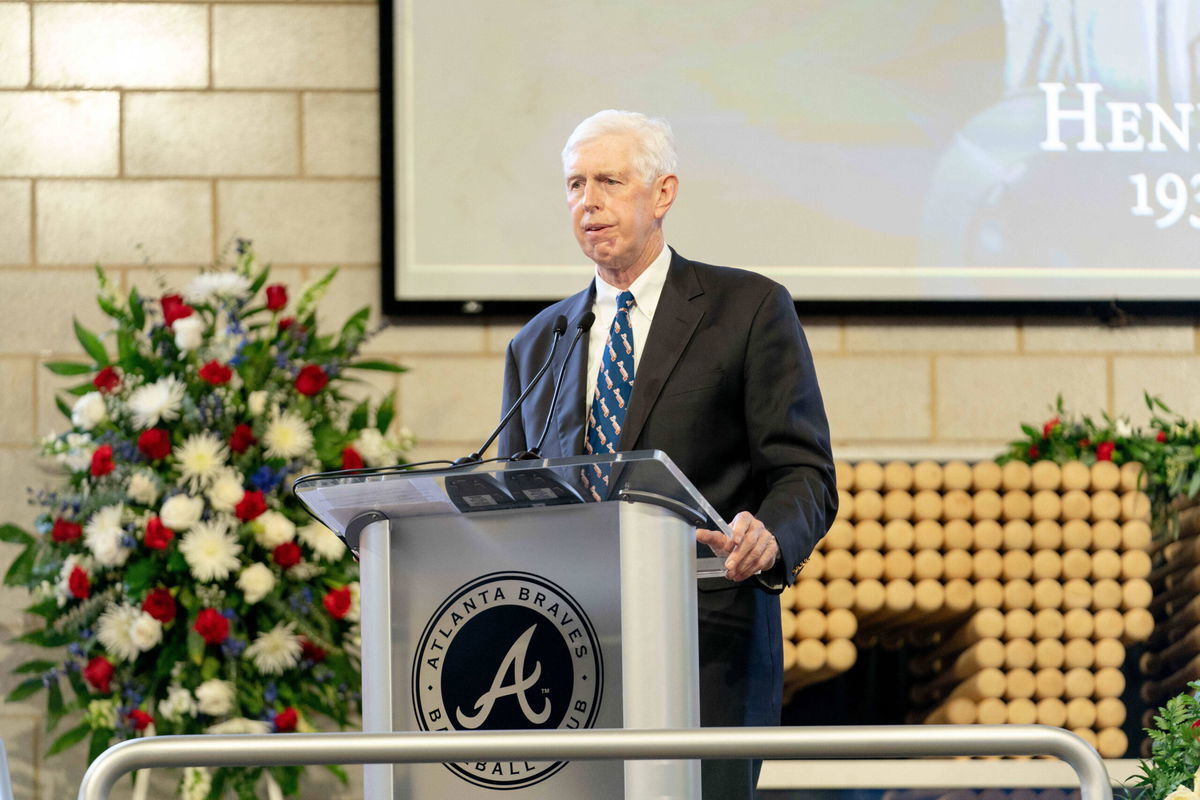
MLB, Baseball Herren, USA Hank Aaron Memorial, Jan 26, 2021 Atlanta, GA, USA Braves Chairman Terry McGuirk speaks during A Celebration of Henry Louis Aaron, a memorial service celebrating the life and enduring legacy of the late Hall of Famer and American icon, on Tuesday, Jan. 26, 2021 at Truist Park in Atlanta. Mandatory Credit: Kevin D. Liles/Pool Photo-USA TODAY Sports, 26.01.2021 13:04:29, 15484855, MLB, NPStrans, Truist Park, Celebration PUBLICATIONxINxGERxSUIxAUTxONLY Copyright: xKevinxD.xLilesx 15484855
USA Today via Reuters
MLB, Baseball Herren, USA Hank Aaron Memorial, Jan 26, 2021 Atlanta, GA, USA Braves Chairman Terry McGuirk speaks during A Celebration of Henry Louis Aaron, a memorial service celebrating the life and enduring legacy of the late Hall of Famer and American icon, on Tuesday, Jan. 26, 2021 at Truist Park in Atlanta. Mandatory Credit: Kevin D. Liles/Pool Photo-USA TODAY Sports, 26.01.2021 13:04:29, 15484855, MLB, NPStrans, Truist Park, Celebration PUBLICATIONxINxGERxSUIxAUTxONLY Copyright: xKevinxD.xLilesx 15484855
Rob Manfred has always had a big dream of wanting the MLB to have the broadcasting rights of all 30 MLB teams. It almost seems things might be taking a step towards his dream when teams like the Braves pulled out of the FanDuel Sports Network. But the Braves want nothing to do with Rob Manfred, and their latest move proves it.


“All nine MLB teams whose games are broadcast on FanDuel Sports Network are officially departing… eight of the nine expected to migrate to MLB Media,” said Tom Friend. “The Braves are expected to launch their own network.”
Watch What’s Trending Now!
Nine MLB franchises ended their broadcast deals with Main Street Sports Group, the struggling operator of FanDuel Sports Network, citing financial instability and missed rights payments.
The clubs were the Atlanta Braves, Reds, Tigers, Royals, Angels, Marlins, Brewers, Cardinals, and Rays. This step left almost one‑third of MLB teams free from RSN obligations amid fears of another bankruptcy. Teams terminated contracts to protect themselves and explore other broadcast alternatives before the collapse.
Several clubs may still renegotiate, but none extended deals beyond 2028, aligning with MLB’s long‑term goals.
The teams walked away primarily because Main Street repeatedly missed rights payments, including to the Cardinals and others, destabilizing local revenue streams.
Main Street had emerged from bankruptcy in early 2025 but faced renewed financial trouble and potential dissolution without a buyer. That uncertainty risked losing fixed RSN income that contributes roughly 20–30% of team revenue.
MLB’s own local media division stepped in for other teams in 2023–25 when RSN failures hit.
The departures reflected broader cord‑cutting trends eroding traditional regional cable models.
MLB Commissioner Rob Manfred publicly aims to consolidate control of all 30 teams’ local rights by 2028, a vision shared at a media summit.
Imago
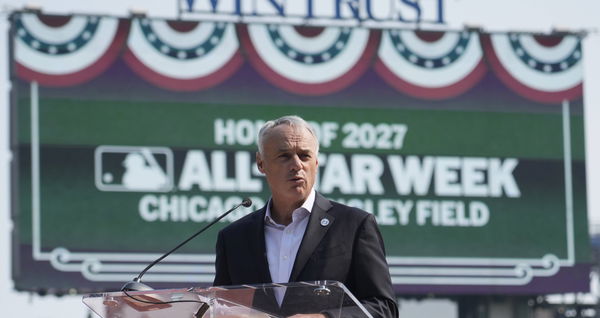
MLB, Baseball Herren, USA Chicago Cubs press conference, PK, Pressekonferenz Aug 1, 2025 Chicago, IL, USA Baseball commissioner Rob Manfred announces Major League Baseball and the Chicago Cubs will host the 2027 All Star game at Wrigley Field. Chicago Wrigley Field IL USA, EDITORIAL USE ONLY PUBLICATIONxINxGERxSUIxAUTxONLY Copyright: xDavidxBanksx 20250801_jla_bb6_168
The Main Street breakdown offered MLB a pathway to that goal by returning broadcast control league‑wide. MLB Local Media already produces broadcasts for teams like the Padres, Rockies, Guardians, and Twins.
Manfred’s plan would give MLB broader negotiating leverage with national streaming partners in 2028. Centralizing local rights could ease viewing and create larger unified broadcast packages.
But one of the teams that walked away, the Atlanta Braves, now plans to launch its own standalone network rather than join MLB Media or Main Street anew.
Reports indicate the Braves’ network might follow the Texas Rangers model, with direct cable, satellite, and streaming deals, plus an over‑the‑air partner. That strategy could involve national platforms like Amazon or Apple, while keeping local market access.
The Braves’ approach deviates from MLB’s consolidation aim while preserving direct control of local broadcasts. Fans will likely see this plan unfold ahead of the 2026 season.
Many Braves supporters recall the team’s national exposure in the TBS Superstation era, when Braves games aired coast‑to‑coast beginning in 1977 via satellite.
That national reach helped build a wide fanbase and earned the team the nickname “America’s Team” in the 1980s and 1990s. Braves broadcasts on TBS often posted a 2.0+ ratings share, rare for local team telecasts.
The TBS era brought unprecedented visibility to players and helped grow the franchise’s national footprint.
By launching their own network, the Atlanta Braves hope to echo that heritage rather than hand control entirely to MLB.
As the Braves plan their own network, MLB takes broadcasting control of 6 more teams
If you thought MLB was done reshuffling broadcast rights, think again. While the Braves plot their own network, the league quietly swoops in to control six more teams, signaling Manfred’s consolidation plan is moving faster than anyone expected.
In the 2026 season, six teams will have MLB produce and distribute their local game broadcasts: the Cincinnati Reds, Kansas City Royals, Miami Marlins, Milwaukee Brewers, St. Louis Cardinals, and Tampa Bay Rays.
This change comes after those teams abandoned regional FanDuel Sports Network deals because Main Street Sports Group failed to make scheduled rights payments in early 2026. With these additions, MLB will produce broadcasts for at least 13 teams, nearly half the league’s 30 clubs.
Fans in those cities finally have stable coverage as the chaotic RSN era collapses.
This move expands MLB’s reach beyond the Padres, Diamondbacks, Rockies, Twins, Guardians, Mariners, and Nationals already under league broadcasting control, giving fans direct local access.
Teams that lost RSN fees now get variable revenue based on streaming uptake, not fixed rights payments. For example, the Reds reportedly turned down a $42,000,000 RSN offer to go with MLB’s model instead.
The Cardinals set direct‑to‑consumer streaming prices, like $19.99 monthly or $99.99 seasonal, showing how fans will pay directly.
Financial strain from lost RSN cash is visible, especially for lower‑revenue clubs like the Royals, whose revenue issues limit payroll flexibility. A fragmented TV market means fans face new subscription choices through MLB apps rather than old cable bundles.
Looking forward, broadcast revenue stability will be central to talks before the collective bargaining agreement expires in December 2026, affecting future games.
This league control could ease access but may also reshape how teams sell rights going forward.
