After two decades starring in NASCAR through its biggest growth era, Steve Phelps’s departure didn’t happen quietly. Amid the fallout from a high-stakes antitrust lawsuit involving teams like Denny Hamlin’s 23XI Racing, NASCAR has gone through a lot. With controversial internal messages surfacing and the trial playing out just before Speedweeks, Phelps may have stepped down at the end of January, but Steve O’Donnell is here to save the day, and now Hamlin cannot help but feel optimistic about NASCAR’s future.


Hamlin’s thoughtful answer reflected more than just courtesy; it underscored a belief that the NASCAR leadership shift could spark renewed momentum for the sport.
Watch What’s Trending Now!
“I overall left there feeling that the direction and the vision that they’ve got for this upcoming season is good. I certainly am a believer in the direction that they’re going. Ultimately, the results will be seen in our TV audience and our people in the stands, and whether it resonates with them or not,” he said.
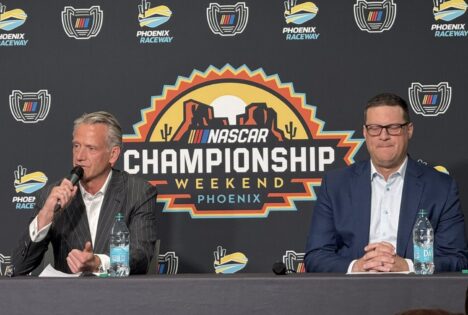
One of Steve O’Donnell’s biggest accomplishments was overseeing the introduction of NASCAR streaming on Amazon Prime Video.
While the organization has faced challenges with overall TV ratings in recent seasons, there are signs that changes in media strategy, many of which were championed operationally by Steve O’Donnell, are helping stabilize and even grow the sport’s audience in key ways.
After a decline in traditional broadcast viewership, NASCAR’s Cup Series races on Amazon Prime Video have drawn strong numbers, averaging around 2.1 million viewers per race, with some events topping 2 million and attracting notably younger audiences compared with traditional TV figures.
This suggests that NASCAR, being pushed into streaming, something O’Donnell has supported as part of modernizing NASCAR’s media approach, is paying off by reaching fans who aren’t tuning in through conventional channels.
Imago
via X (@AutoRacing1)
However, as the older generation found it difficult to access the stream, the media strategy still had its benefits. While some traditional ratings metrics have dipped, the story is more nuanced: NASCAR is still drawing significant audiences, especially where younger fans are tuning in, and digital platforms are increasingly critical to sports visibility.
Before becoming president in 2025, O’Donnell served as NASCAR’s chief operating officer and was central to implementing stage racing, the playoff format, and developing the Next Gen car, all major competitive elements that shape how the sport feels on race day.
O’Donnell has also championed expanding NASCAR’s international presence, for example, the Mexico City race last year, and improving the fan experience at tracks nationwide, signaling a vision for growth and modernization that blends with evolution.
Hamlin’s confidence in NASCAR’s direction underlines a broad optimism among team owners that the sport has hit a reset point, a moment to refocus on competitive relevance and reconnect with its core audience.
However, as the lawsuit has settled down and everything remains stable as of now for Hamlin, the 45-year-old cannot help but predict the future of his struggling 23XI Racing star.
Hamlin casts a shadow over 23XI Racing driver’s NASCAR future
Denny Hamlin isn’t hiding behind big optimism when it comes to Riley Herbst. The 23XI Racing co-owner is openly backing his driver, but he’s making it crystal clear: the No. 35 Toyota needs to show real progress this season and soon.
The time invested in Herbst is for the long haul, but that commitment comes with expectations that can’t be ignored by Hamlin.
At a recent preseason media event, he addressed the pressure surrounding Herbst directly, admitting that last season’s performance simply wasn’t acceptable for a team with championship aspirations.
“We signed a multi-year agreement with Riley because we want to see where it goes in the second year,” he said. “At this point, he’s got enough starts where learning the car shouldn’t be the main focus anymore. And certainly I want to see a gain in performance. Needs to be challenging inside that top 10, top 15 – that’s where we expect our cars to run.”
Herbst heads into the 2026 Cup season with a target on his back after a rookie year that never truly took off. He finished 35th in the standings, never cracked the top 10, and managed just eight top 20 finishes.
After a promising start at Daytona, the results steadily slipped during the West Coast stretch, and the final 31 races included only four top 20 showings and 10 finishes outside the top 30.
Those numbers have naturally led to criticism and doubts about whether he’s ready for a full-time Cup ride.