Imago
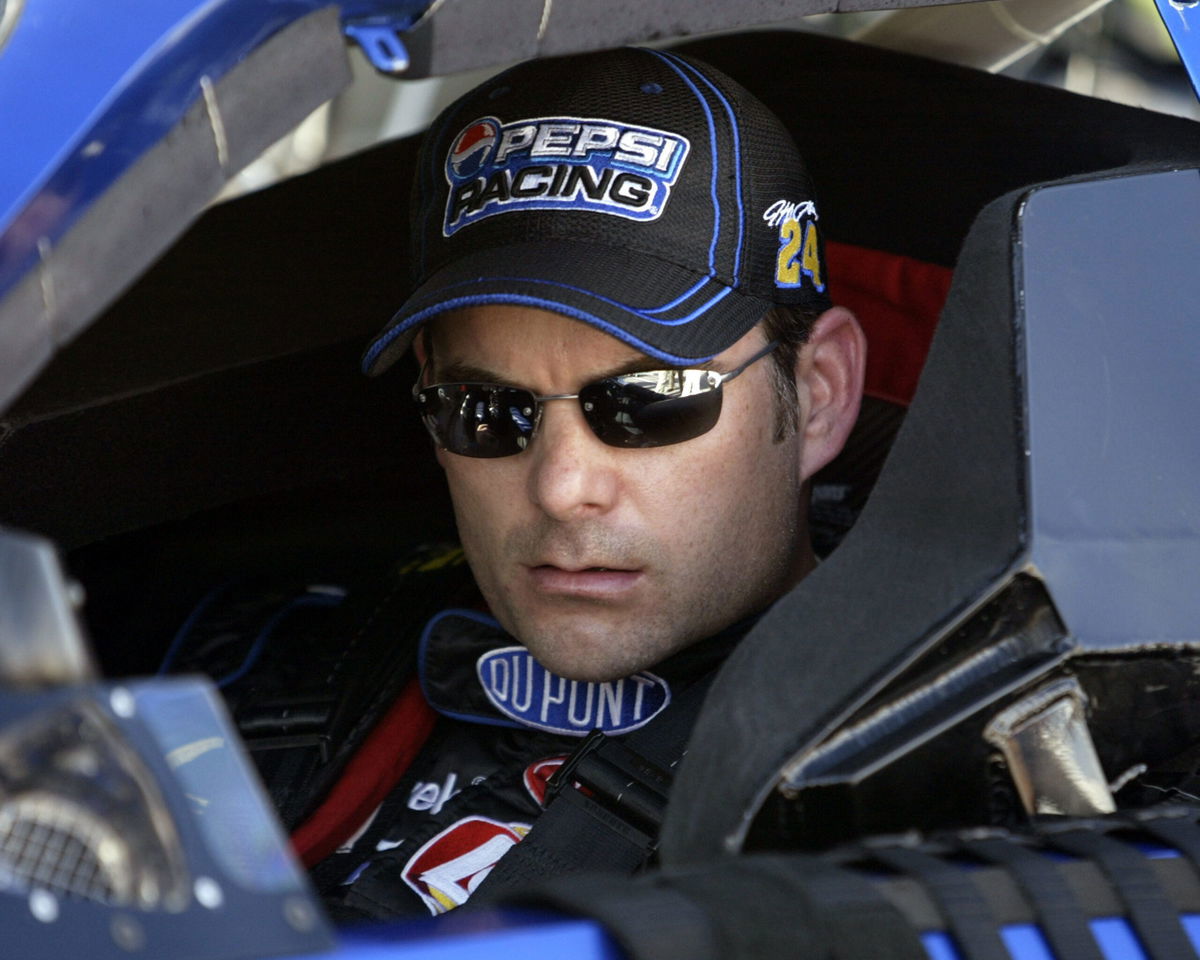
NASCAR Champion Jeff Gordon, Jeff Gordon prepares to qualify for the Pepsi 400 Nextel Cup Series race at Daytona International Speedway in Daytona Beach, Florida, on July 1, 2005.
Imago
NASCAR Champion Jeff Gordon, Jeff Gordon prepares to qualify for the Pepsi 400 Nextel Cup Series race at Daytona International Speedway in Daytona Beach, Florida, on July 1, 2005.
ZERO! Yep, that’s the number of championships the four-time NASCAR Cup Series champion won after the sport flipped its title fight upside down. When NASCAR introduced the 10-race Chase format in 2004, Jeff Gordon suddenly found himself racing in a system that didn’t reward season-long dominance the way he’d mastered before.
Watch What’s Trending Now!
Despite piling up wins, points, and consistency, Gordon never lifted another championship trophy under the Chase. It’s a reality that frustrated fans and rewrote his legacy in real time. And yet, years later, Gordon is doing something few expected. He is setting aside personal scars to publicly back NASCAR’s postseason philosophy as it makes a return.
Jeff Gordon admits the Chase beat him and still backs its return
“Not only did I say it, but it’s true that I got my a– kicked by that format,” Jeff Gordon said recently, offering one of the most candid admissions of his post-driving career.
It’s a striking comment coming from a four-time Cup champion who entered the Chase era as one of NASCAR’s most complete drivers. When the original 10-race Chase format was announced ahead of the 2004 season, Gordon was fresh off his fourth title in 2001 and fully aligned with the old-school 36-race points grind. At the time, he believed those final 10 races would actually play to his strengths. Instead, they became the stretch that denied him any additional championships.
Yet Gordon has never framed his disappointment as bitterness. In fact, when discussing NASCAR’s decision to bring back a Chase-style format for the 2026 season, he has been surprisingly supportive. “I think that when I look through the history and I look at what’s the best compromise to 36 races with points accumulation versus one race championship win to decide the championship, 10 races I think is is the right way to go,” Gordon said earlier.
Jeff Gordon did indeed tell NASCAR he likes the reintroduction of the Chase format (saying it’s the best compromise) even though he was screwed by it as a driver.
“Not only did I say it, but it’s true that I got my ass kicked by that format.”https://t.co/bc14mieon2
— Kelly Crandall (@KellyCrandall) January 23, 2026
That support comes despite the personal toll the format took on his legacy. “But I still loved what it did for the excitement of the sport,” Gordon revealed, separating individual outcomes from what he believes is best for NASCAR as a whole.
The 2026 Chase format marks a significant shift from the current playoff system. The top 16 drivers in the point standings after the regular season’s 26 races will qualify, with the automatic “win and you’re in” rule eliminated entirely. Regular-season consistency will matter again. The championship will be decided across the final 10 Chase races, with no elimination rounds and no winner-take-all finale at Phoenix.
For Gordon, it’s a rare case of perspective winning out over regret, and a reminder that sometimes the drivers most hurt by change are the ones who understand its value best.
When the Chase cost Gordon a title
That broader perspective is important because Gordon’s complicated relationship with the Chase can’t be told without acknowledging who benefited most from it. As Gordon was wrestling with a format that never quite bent his way, one of his own protégés was mastering it.
That driver was Jimmie Johnson, the quiet phenom Gordon helped bring to Hendrick Motorsports. While Gordon was the established superstar, Johnson became the Chase-era blueprint, winning five straight championships and redefining how drivers approached the postseason. No season illustrated that shift more painfully for Gordon than 2007.
That year, Gordon did almost everything right. He led the points standings for 21 of the first 26 weeks of the regular season and then six of the first eight weeks once the Chase began. His consistency was unmatched. Two top-five finishes in the first three Chase races were followed by back-to-back wins at Talladega Superspeedway and Charlotte Motor Speedway. In most eras, that résumé would have locked up a championship.
But Johnson had found another gear. Over the final five weeks of the season, he won four races, applying relentless pressure at the exact moment the format rewarded it most. Gordon, despite posting a series-best 7.3 average finish across the entire season (remarkably the only driver in single digits), was forced to settle for second in the championship.
It wasn’t an isolated frustration. Gordon also finished third in the standings under the Chase format in both 2004 and 2009. He was repeatedly close but never close enough when the reset points and postseason intensity took over.
In hindsight, the irony is hard to miss. Gordon helped shape the driver who perfected the Chase. Even as that same system blocked his own path to a fifth title, that reality helps explain why his support for the format’s return isn’t blind nostalgia. Instead, it’s informed acceptance from someone who lived both sides of NASCAR’s most debated era.