Imago
Via NASCAR
Imago
Via NASCAR
“Where it stands right now, I don’t think the playoff committee is going to meet again. I think we have gotten all the feedback that we needed from them. Awesome job, by the way, from the playoff committee. Now, it’s in NASCAR’s hands,” NASCAR’s managing director of racing communications Mike Forde revealed last month. That single comment reopened a wound NASCAR fans know all too well.


The NASCAR playoff format debate isn’t cooling off. Instead, it’s heading straight for another flashpoint. With sweeping changes rumored for 2026, expectations are high, patience is thin, and trust is fragile. Now, Kaulig Racing president Chris Rice has stepped into the conversation with a blunt admission that suggests NASCAR is listening… just not in the way many fans are hoping.
Watch What’s Trending Now!
The latest NASCAR playoff tug-of-war
“It got put on the back burner, and I talked to Mark Warren a lot, believe it or not. You’re gonna like it. You will like it. It’s not exactly what everybody’s posting about. We need an adjustment. Do we need an overhaul? No. But we need an adjustment,” Chris Rice, President of Kaulig Racing, recently revealed the future of the NASCAR playoffs to Kenny Wallace.
Now, while his confidence suggests change is coming, his wording is exactly what has fans bracing for impact yet again. For a large chunk of the fanbase, the request has been simple for years: bring back a traditional, full-season points format. The argument isn’t rooted in nostalgia alone.
Fans believe season-long consistency should matter more than one hot afternoon in November. Week-to-week excellence, surviving bad luck, and grinding out results over 36 races feels more “earned” than peaking at the right moment. That frustration often circles back mostly to one name: Joey Logano.
Imago
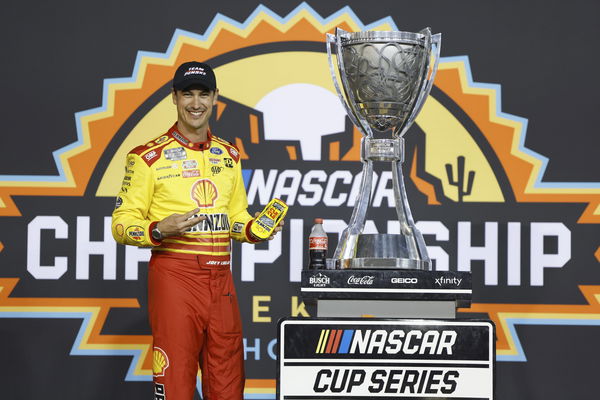
JOEY LOGANO 22 aus Middletown, CT gewinnt das NASCAR Cup Series Championship Race auf dem Phönix Raceway in Avondale, AZ, Avondale, Vereinigte Staaten von Amerika, Nordamerika JOEY LOGANO 22 of Middletown, CT wins the NASCAR Cup Series Championship Race at Phoenix Raceway in Avondale, AZ, Avondale, United States of America Copyright: imageBROKER/StephenxArce/Grindst ibxiqx12960015.jpg Bitte beachten Sie die gesetzlichen Bestimmungen des deutschen Urheberrechtes hinsichtlich der Namensnennung des Fotografen im direkten Umfeld der Veröffentlichung
Fair or not, Logano has become the poster child for the modern NASCAR playoff backlash. He’s routinely criticized for winning a handful of strategically perfect races, sneaking into the Championship 4, and then walking away with a title despite uneven regular seasons. To fans who value cumulative performance, it feels like gaming the system rather than conquering it.
Still, insiders suggest NASCAR isn’t ready to burn the format down. As Jordan Bianchi previously explained on a podcast, the most realistic paths forward are evolutionary, not revolutionary.
One option is a return to the 10-race Chase, used from 2004 to 2013, which extended the championship battle and reduced the randomness of a single race deciding everything.
Another possibility is the so-called “five and five” model. There will be shorter rounds designed to keep urgency high while spreading the championship pressure across multiple races.
Rice seems convinced NASCAR has heard the noise. “What I do know is I feel like 75% of the people are going to love it. 10% are gonna be okay, right? That’s gonna leave 15% of the people that’s gonna hate it,” he explained.
This pushback by the fans has been brewing up for a while now, and now that the leadership has acknowledged the concerns, the single-race finale is surely out the window. But, given NASCAR’s Next-Gen approach, they aren’t likely to rely on a 36-race points championship. And there’s a good reason for them to move ahead in this direction.
Why NASCAR won’t go back to a full-season points format
As loud as the calls are for a return to traditional, season-long points, NASCAR’s leadership sees a very real obstacle standing in the way: the modern audience. Chris Rice summed it up bluntly when explaining why a full reset isn’t likely.
“The traditional way of doing points would be tough to do in this era because we are looking towards a younger group of people, right? So that’s what we got to think about.”
The shift was obvious throughout the past few seasons. NASCAR aggressively expanded its digital footprint, pushing content across NASCAR.com, the mobile app, YouTube, Instagram, and newer platforms like TikTok. Broadcasts began leaning into AI-driven tools, data overlays, and faster storytelling to keep casual viewers engaged. The goal wasn’t subtle: meet fans where they already are, not where the sport used to live.
As NASCAR CMO Jill Gregory explained at the start of the 2020 season, “The biggest benefit that we have is that our fans are highly engaged, and they are very vocal about things we should or should not be doing. We embrace that because it means they care. They’re weighing in on competition changes, partnerships, driver relationships, and more. They’re watching us on television, but they are highly engaged in our digital and social channels as well.”
That strategy is also reflected in NASCAR’s massive $7.7 billion media rights deal last year, which sent some of the races to streaming platforms like Amazon Prime alongside traditional television partners. The move wasn’t just about revenue. Rather, it was about accessibility, flexibility, and attracting a generation that consumes sports differently.
And the numbers back it up. NASCAR has seen a 29% increase in social engagement among Gen Z over the past two years, driven largely by data-driven content strategies and shorter, more digestible storytelling. Rice put it in terms everyone could understand.
“We got to make it exciting. And our attention spans. My social media guy says, ‘Remember, Chris, 30 seconds long, not four hours. 30 seconds to get it.’”
That philosophy explains why NASCAR is adjusting the NASCAR playoff format and not abandoning it. The sport believes excitement sells. Whether longtime fans agree remains the real question.