Imago
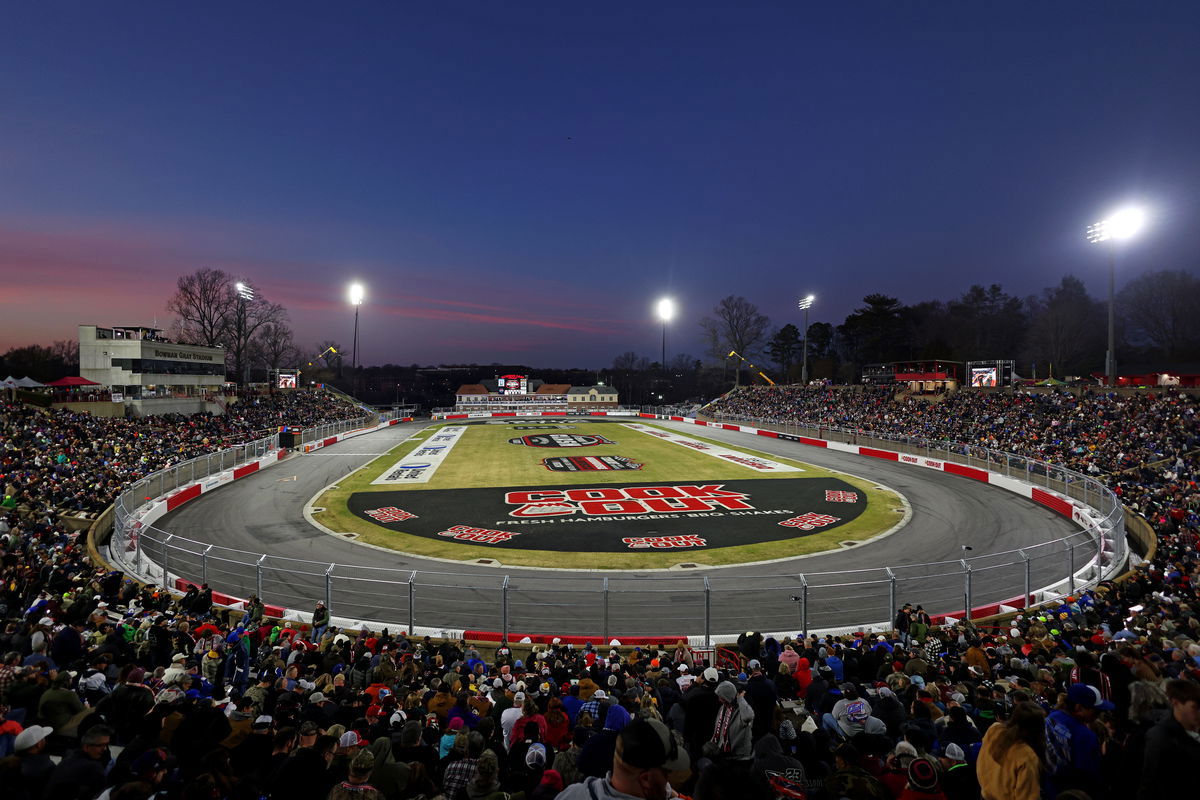
NASCAR, Motorsport, USA Clash at Bowman Gray – Last Chance Qualifying Race Feb 2, 2025 WInston-Salem, North Carolina, USA The Sunsets over the track before the last change qualifying race for the Clash at Bowman Gray at Bowman Gray Stadium. WInston-Salem Bowman Gray Stadium North Carolina USA, EDITORIAL USE ONLY PUBLICATIONxINxGERxSUIxAUTxONLY Copyright: xPeterxCaseyx PC3_7891
Imago
NASCAR, Motorsport, USA Clash at Bowman Gray – Last Chance Qualifying Race Feb 2, 2025 WInston-Salem, North Carolina, USA The Sunsets over the track before the last change qualifying race for the Clash at Bowman Gray at Bowman Gray Stadium. WInston-Salem Bowman Gray Stadium North Carolina USA, EDITORIAL USE ONLY PUBLICATIONxINxGERxSUIxAUTxONLY Copyright: xPeterxCaseyx PC3_7891
The Clash at Bowman Gray Stadium tested the patience of drivers and fans alike. With the rain delaying the race by 30 minutes and with 17 cautions underway, the 200-lapper definitely went into overtime, creating a break in entertainment. However, one NASCAR insider has a solution to this problem, and it all dates back to the early 1980s.


Speaking with NASCAR journalist Jeff Gluck, Jordan Bianchi is definitely calling for a return to the Busch Clash Era.
Watch What’s Trending Now!
“I want to go back to the day of the Bush Clash, where it was 20 laps, it was 10 and 10, pole sitters only, and it was a short hour race. I think that was a great setup for the season. You’d come home on Sunday, the race would be on at noon, you flip it on, race was over in an hour, it was like, oh man, these guys are back, it’s exciting, oh this is what I’m gonna see a week from now in Daytona,” Jordan Bianchi said.
Taking fans back further into Clash lore revealed why some insiders like Jordan Bianchi yearn for the simplicity of the Busch Clash.
When the Clash first debuted in 1979, it was an uncomplicated season opener, a 20-lap sprint featuring only previous season pole winners, designed purely as a showcase of speed and excitement without the complexity of today’s formats.
That original race was straightforward, with nine drivers, a short dash to the finish, and no championship implications, and it often delivered an energetic burst that got fans excited for Speedweeks.
Throughout the 1980s and early 1990s, the format stayed rooted in brevity and simplicity, even experimenting with 210 lap segments and inverted fields to keep things fast and exciting.
Over time, as NASCAR tried to add more strategy, segments, and eligibility criteria, the clash evolved into a longer, more complex event with fluctuating formats involving multiple segments, weighing lap counts, and expanded driver pools beyond just pole winners.
These changes slowly transformed it from a quick spectacle into a marathon prelude, but it sometimes struggles to retain the intensity and focus of its early years.
View this post on Instagram
Moreover, this year’s clash saw itself being postponed due to snowstorms, a delay that clearly annoyed everyone.
Once underway, treacherous conditions and slippery pavement turned Bowman Gray’s tight quarter mile into a survival test with drivers sliding, spinning, and battling grip issues that led to a record number of cautions, far more than typical clash races, and a race distance that felt much longer than its 200 laps.
It is yet to be seen if NASCAR will decide to return. With that being said, NASCAR has definitely been making some moves.
Big changes ahead of the Daytona 500
The 2026 Daytona 500 will feature a revised qualifying format, introducing a subtle but meaningful change to how open cars earn their way into the field. While not a dramatic overhaul, the adjustment impacts the qualifying path for non-charter teams and raises an obvious question among fans. Why wasn’t this implemented sooner? Why not just leave the system as it was?
Previously, open cars had to race for four available spots through the Duel races, creating a two-elimination scenario whenever more than four non-chartered entries were on the list. That core concept remains in place, but with one more important tweak that reshapes the process.
According to FOX Sports’ Bob Pockrass, the two Open cars in single-car qualifying will now be locked into the Daytona 500 field. Those teams will still compete in the Duel races, but they will no longer be racing for their lives on Thursday night, with a spot on Sunday’s Great American Race on the line.
That leaves the remaining open cars to battle for the final two transfer positions. One open car from each Duel race will advance, meaning only the highest-finishing non-chartered driver in each Duel will earn a place on the Daytona 500.