
USA Today via Reuters
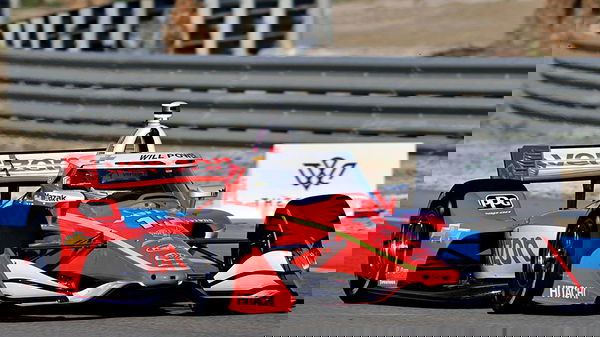
Apr 25, 2021; St. Petersburg, Florida, USA; IndyCar Series driver Jimmie Johnson (48) races at the Grand Prix of St. Petersburg. Mandatory Credit: Jasen Vinlove-USA TODAY Sports
USA Today via Reuters
Apr 25, 2021; St. Petersburg, Florida, USA; IndyCar Series driver Jimmie Johnson (48) races at the Grand Prix of St. Petersburg. Mandatory Credit: Jasen Vinlove-USA TODAY Sports
NASCAR’s Truck Series is prepared to race on a street for the first time in its history, and what makes the event more exciting is that it will share the track with IndyCar’s Firestone Grand Prix of St. Petersburg. While the fans share the excitement, a few rules in the Truck Race, specifically those related to pit stops, have been modified. While many call them “non-competitive,” insiders have strong logic to back NASCAR.
Watch What’s Trending Now!
Truck Series’ pit stop rules changing for the IndyCar crossover
While pit stops are an essential part of all the planning and strategy that go into racing, NASCAR is modifying them for this particular Truck race in a way that somewhat reduces the competitive side of it.
According to Bob Pockrass, teams are allowed to change tires and add fuel at any time during the race. However, there will be a minimum time limit on the trucks making a stop under green and yellow conditions. The minimum time on pit road must be 65 seconds per the regulations.
Top Stories





Truck pit stop rules:
–Fuel and tires may be added/changed at any time
–When making a pit stop under green/yellow, minimum time on pit road is 65 seconds
–Stage breaks will consist of a 3-minute break for all teams (don’t lose spots on pit road except to those who don’t pit). https://t.co/1MCmu5iDbB— Bob Pockrass (@bobpockrass) February 24, 2026
Moreover, there will be competitive stage breaks, consisting of a 3-minute break for all teams, so the drivers will not lose spots on pit road, except for those who stay out on the track.
These changes have been made with safety and the drivers’ lack of track experience in mind. As mentioned, this will be the first time that the Truck Series races on a street circuit. While they have raced on road courses before, a street circuit is quite different because the asphalt is not laid for racing but for daily commuting.
The car reacts differently, the suspension has to be more flexible, and everything changes, even the braking distance. Moreover, if the pit stops remained competitive, it would have been unsafe for over 100 crew members to rush on the track at the same time, considering the track’s nature.
NASCAR driver points out a major difference in IndyCar
There is a massive difference between NASCAR and IndyCar. For fans, the differences are limited to external factors: how the cars look and sound, for most. However, only the drivers really know what goes on in the cars. Daniel Suárez, who has been in the Cup Series since 2017, recently dropped a major comparison between the two.
“We are heavier, and we have more horsepower. It’s just different,” he told the media. “It’s a different kind of racing. We are just a more physical kind of race. INDYCARs are super, super fast, especially on ovals. They are going to make us look like we are running on bicycles, but it’s just completely different things.”
Imago
Will Power at Team Penske (Image: INDYCAR)
While NASCAR is stock-car racing, IndyCar is open-wheel racing. The aerodynamics on those cars make a major difference in performance. In some ways, a fairer comparison of speed can be made with Formula 1, since they are somewhat in a similar category. NASCAR cars are designed to race on ovals. They are slower in corners and take longer to reach peak performance than open-wheel cars.
With this crossover happening soon, the fans will have quite a lot on their schedules: the Trucks race at St. Petersburg on Saturday, followed by the IndyCar season-opener on Sunday.
Written by

Edited by

Rati Agrawal