Imago
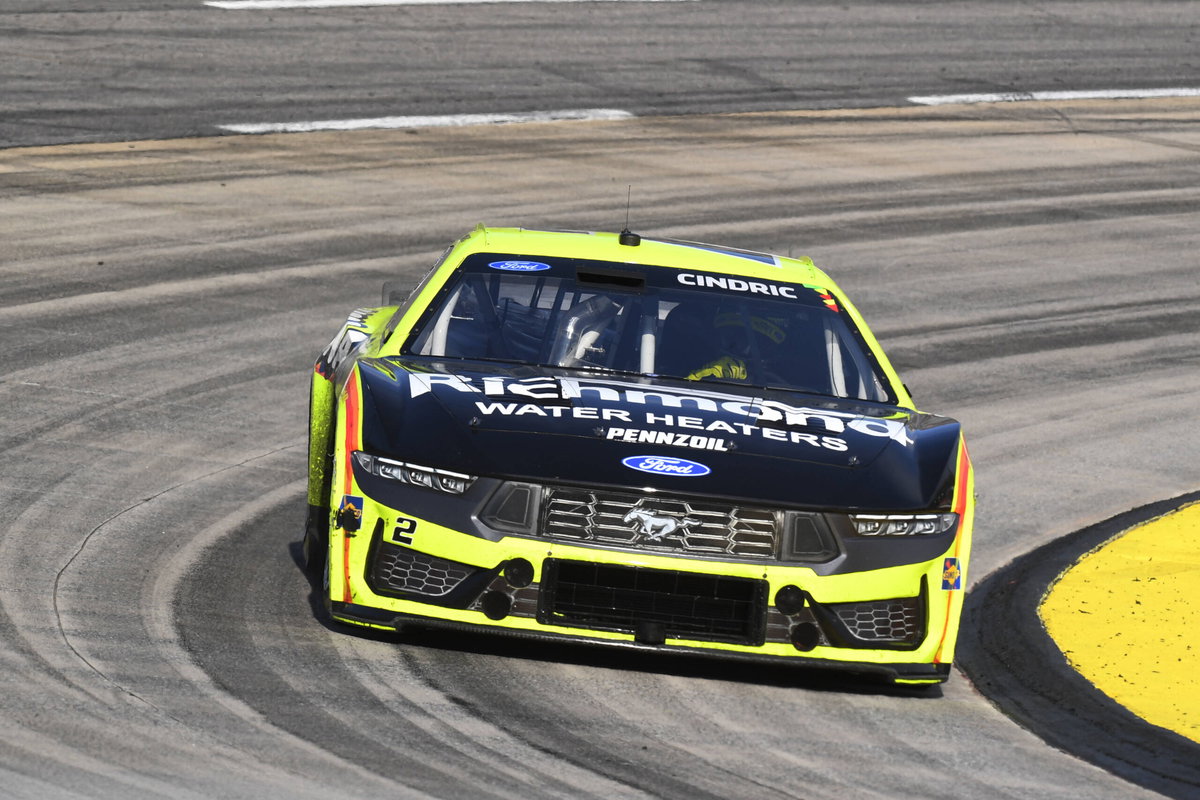
MARTINSVILLE, VA – MARCH 29: Austin Cindric 2 Team Penske Menards/Richmond Water Heaters Ford races through Turn 4 during the running of the NASCAR, Motorsport, USA Cup Series Cook Out 400 on March 29, 2026, at Martinsville Speedway in Martinsville, VA. Photo by Jeffrey Vest/Icon Sportswire AUTO: MAR 29 NASCAR Cup Series Cook Out 400 EDITORIAL USE ONLY Icon2603295426
Imago
MARTINSVILLE, VA – MARCH 29: Austin Cindric 2 Team Penske Menards/Richmond Water Heaters Ford races through Turn 4 during the running of the NASCAR, Motorsport, USA Cup Series Cook Out 400 on March 29, 2026, at Martinsville Speedway in Martinsville, VA. Photo by Jeffrey Vest/Icon Sportswire AUTO: MAR 29 NASCAR Cup Series Cook Out 400 EDITORIAL USE ONLY Icon2603295426
Ford’s presence in NASCAR has begun to collapse to the point that, at the O’Reilly level, even participation feels uncertain. This has forced teams to adopt rotating structures for drivers and adapt strategies. The most apparent change in strategy? This is how team owners are speaking and confirming races, but avoiding anything beyond the immediate future.
And in one short interview with Hettinger Motorsports, those short-term answers reveal just how fragile the situation has become.
“We’re going to Kansas, we’re already entered. We’re going to Talladega with a sponsor, so that’s all I can tell you,” Chris Hettinger said post-race, immediately shutting down speculation that the No. 5 Ford would step away in the coming weeks.
Top Stories





The above statement might seem like a good sign, but it foreshadows an essential fact that this guarantees participation only in the short term, yet the long-term roadmap is muddy. Kansas is secured. Talladega is backed; beyond that, the horizon is shady.
And with no indication of any stability for the future being offered during the interview, it would lead us to believe that the operation still is being run on a race-to-race basis due to ongoing financial and structural constraints within the series.
Well this is Fantastic news for all the Ford Fans, despite what Door Bumper Clear said on their show about the #5 Taking a few weeks off, team Owner Chris Hettinger confirms they’ll be at both Kansas and Talladega https://t.co/jxzMhGOP3K
— Colby Evans (@StartAndParkCar) April 12, 2026
When pressed further on clarity, particularly around the driver lineup, Hettinger did not expand. “You’ll find out on Monday,” he said. The uncertainty to confirm drivers further reinforces our speculation of flimsy backing. Hettinger added, “It just depends on what our objective is for that week, so that kind of determines who the driver is.”
This also showcases a shift in strategy where, rather than having a consistent lineup, resource-driven decisions are being forced.
At the same time, Hettinger’s team now operates as the only consistent Ford presence in the O’Reilly field, a position that brings its own competitive disadvantages. “It’s a little tougher,” he admitted, before outlining, “Being the only one out there, you don’t really have much help as far as notes and things to compare to.”
This brings us to the final statement that was much awaited, is Ford helping out as much as they should? And Hettinger’s tone said it all. His response added a distasteful flavour to it, “I mean, they’re here. They’re supportive, so I mean, that’s all we can ask for.”
This acknowledgment of bare support without indication of any future backing or even a strong-worded statement from the sponsor shows that all’s not well in Wonderland. Kansas is confirmed. Talladega is confirmed. Beyond that, as Hettinger himself made clear, “that’s all I can tell you.”
What makes this even more interesting is that if we note that Ford’s competitive base in the series is slowly shrinking, and it’s not just Hettinger Racing that’s feeling the heat, it’s being spread right down the grid.
Ford’s structural O’Reilly collapse
Ford’s shrinking presence in the O’Reilly Auto Parts Series is not the result of a single decision, but a sequence of structural blows that have hollowed out its once extremely competent ability.
The inflection point? It was the closure of Stewart Haas Racing at the end of 2024, which immediately extinguished Ford’s long pipeline of cars, data, and developmental drivers. This loss could have been limited, but the racing gods had other plans. Haas Factory Team transitioned to Chevrolet for 2026, taking multiple full-time entries with it, while RSS Racing followed the same path through technical alignment.
What this meant was that in a span of less than 18 months, Ford lost its entire ecosystem of engineering collaborations that had been built over decades and sponsor networks that provided revenue.
In fact, the Rockingham O’Reilly race was only the second time this season when there was just one Ford. COTA was the first. And before that, this happened nearly three decades ago.
This drop is also reflected in the numbers. From a broader multi-car presence in 2024 and 2025, Ford has now been reduced to, at times, a single entry on track, either through AM Racing operating on a limited and inconsistent schedule amid ownership uncertainty, or Hettinger Racing, which, in certain races, has been the only Ford in the field.
Now we dare you to take this a step further. Overlay this with the economic reality of the lower tiers. Even as Cup teams can make the case for higher revenues, Trucks and O’Reilly operate on far tighter margins, often requiring race-to-race sponsorships to stay afloat. When Ford’s pipeline dried up, it hastily collapsed its already shrinking sponsorship alliance, leading to a far larger seismic shock than Ford anticipated.
However, some hope does find itself within Ford’s finances. Ford Motor Company is expanding its global motorsport footprint, committing to Formula 1 from 2026 and a Hypercar program in endurance racing by 2027. With $187.3 billion in revenue and nearly $29 billion in cash reported in 2025, it clearly showcases that this is not a revenue problem, but rather an allocation one.
This allocation issue is extremely, extremely costly at the race track, and even though the great Ford company might survive, like it always did, the racing dominance it once enjoyed is now being directly challenged. And as Ferrari would argue, what good are cars if they can’t race?
Written by

Edited by

Suyashdeep Sason