
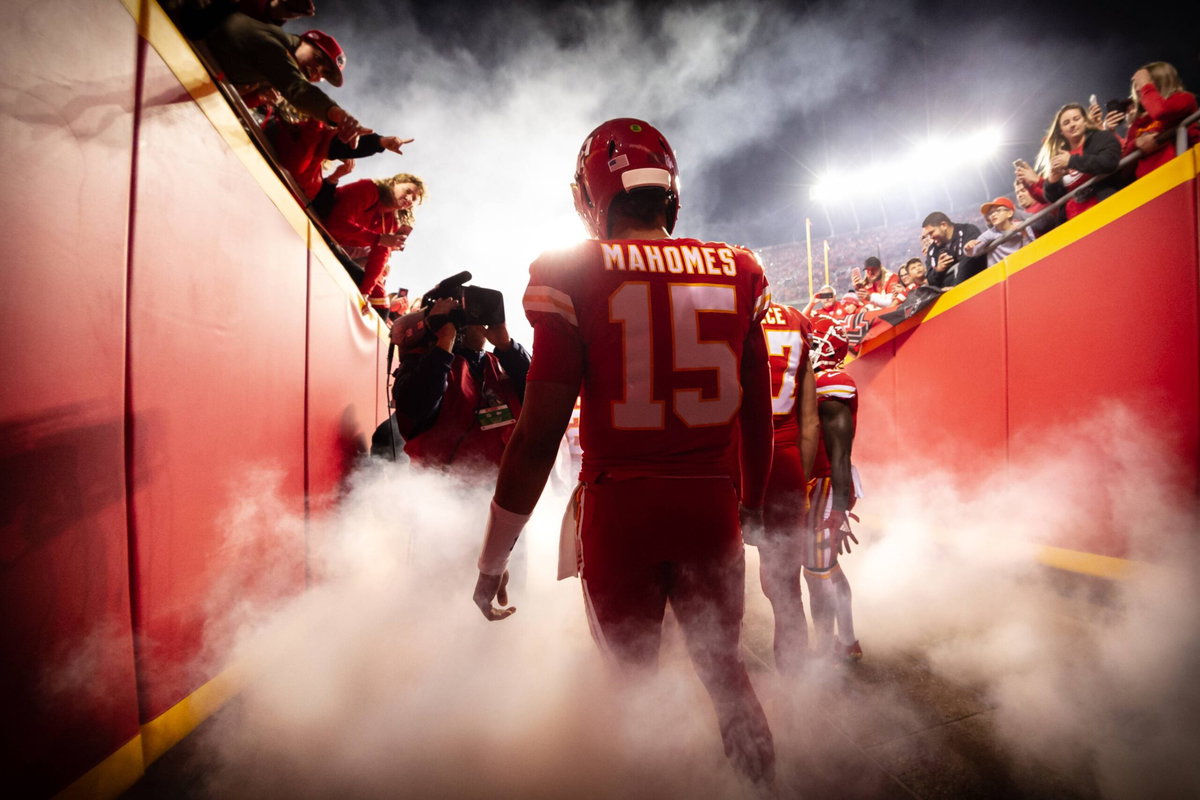
Essentials Inside The Story
- 11 quarterbacks had cap hits exceeding 12% in 2025
- Teams often overpay due to market pressure
- The league is in talks of placing a cap on individual player salaries
If there’s one thing anyone certainly knows about football, it is that the quarterback is the most important position on a roster. While the physical toll their bodies go through justifies the check they receive, it ultimately makes one wonder how a bigger piece of the pie always goes to them. In today’s NFL, teams often allocate 20% to 25% of their salary cap to a franchise quarterback, believing it will push them toward a championship. But more often than not, it does the opposite.
Watch What’s Trending Now!
That level of investment means a lesser bite for others, limiting roster flexibility to build a complete, Super Bowl-caliber team. It’s not just me saying that; years of data suggest this.
Super Bowl history stands against the big-money quarterbacks
Signing your franchise quarterback isn’t the problem. Overpaying him is. And things only get more complicated when you look at how much of the total salary cap is tied to that one position. In the 2025 season, for example, 11 quarterbacks carried cap hits exceeding 12%.
That group included Dak Prescott, Matthew Stafford, Joe Burrow, Lamar Jackson, Kyler Murray, Geno Smith, Kirk Cousins, Tua Tagovailoa, Justin Herbert, Josh Allen, and Deshaun Watson. To no one’s surprise, none have reached the Super Bowl, eight didn’t even make the postseason, and four are now on new teams.
On the contrary, Sam Darnold accounted for just 5.16% of the cap with the Seattle Seahawks, ranking 33rd among the last 50 Super Bowl quarterbacks and 19th in the league in 2025. Thanks to his rookie deal, Drake Maye accounted for only 2.99% of the cap for the New England Patriots, ranking 40th among the last 50 Super Bowl QBs and 29th in the league that year. One ended up winning the Super Bowl, while the other finished as the runner-up.
So, it’s fair to say that once a quarterback crosses that 12% threshold, winning a Super Bowl becomes more difficult. This isn’t just about one season. History hasn’t been kind to big-money quarterbacks for over two decades now.
Since the Tom Brady era began in 2001, several quarterbacks reached the Super Bowl with cap hits above 13% but fell short. Peyton Manning lost to Drew Brees in 2009-10 with an 18.88% hit, and again to Russell Wilson in 2013-14 at 14.16%. Matt Ryan, at 15.30%, lost to Brady in 2016-17. Mahomes himself, at 14.49%, lost to Jalen Hurts in 2024-25.
On the flip side, there have only been two instances where a quarterback with a cap hit above 13% won the Super Bowl. Both came from Patrick Mahomes, at 16.5% in 2023 and 17.19% in 2022. Two in 25 years stands out. Let’s break it down:
| Season | Team | Super Bowl-Winning QB | Cap hit (%) |
| 2025 | Seahawks | Sam Darnold | 5.16% |
| 2024 | Eagles | Jalen Hurts | 5.31% |
| 2023 | Chiefs | Patrick Mahomes | 16.52% |
| 2022 | Chiefs | Patrick Mahomes | 17.19% |
| 2021 | Rams | Matthew Stafford | 10.96% |
| 2020 | Buccaneers | Tom Brady | 12.61% |
| 2019 | Chiefs | Patrick Mahomes | 2.38% |
| 2018 | Patriots | Tom Brady | 12.42% |
| 2017 | Eagles | Nick Foles | 0.96% |
| 2016 | Patriots | Tom Brady | 8.87% |
| 2015 | Broncos | Peyton Manning | 12.21% |
| 2014 | Patriots | Tom Brady | 11.13% |
| 2013 | Seahawks | Russell Wilson | 0.5% |
| 2012 | Ravens | Joe Flacco | 6.63% |
| 2011 | Giants | Eli Manning | 11.71% |
| 2010 | Packers | Aaron Rodgers | 5.34% |
| 2009 | Saints | Drew Brees | 8.41% |
| 2008 | Steelers | Ben Roethlisberger | 7.11% |
| 2007 | Giants | Eli Manning | 10.75% |
| 2006 | Colts | Peyton Manning | 8.38% |
| 2005 | Steelers | Ben Roethlisberger | 4.94% |
| 2004 | Patriots | Tom Brady | 6.28% |
| 2003 | Patriots | Tom Brady | 4.42% |
| 2002 | Buccaneers | Brad Johnson | 9.56% |
| 2001 | Patriots | Tom Brady | 0.46% |
This highlights a concerning trend.
Only nine out of 25 Super Bowl winners had quarterbacks with a cap hit exceeding 10% of the team’s total salary cap. That pattern points back to one thing: rookie deals. That’s often the real Super Bowl window.
There are plenty of examples. Brady won his first title with just a 0.46% cap hit in 2001-02. Wilson did it at 0.55% in 2013-14. Nick Foles won in 2017-18 at 0.96%. Mahomes followed with a 2.38% hit in 2019-20. Brock Purdy took the San Francisco 49ers to the Super Bowl with just a 0.40% cap hit before falling to Mahomes.
I would go as far as to say that the biggest advantage in the NFL isn’t just having an elite quarterback. It’s having one who isn’t paid like one yet.
Teams don’t necessarily need to commit $40 to $50 million annually at that position to win it all. So when you step back and look at it, big-money quarterbacks may define a franchise, but they rarely define a Super Bowl run.
Sometimes, a quarterback’s cap hit exposes what teams are sacrificing
The edge rusher market surged last year when T. J. Watt, Micah Parsons, Myles Garrett, Maxx Crosby, and others secured massive deals. The one name that remained unresolved was Trey Hendrickson, as the Cincinnati Bengals didn’t meet his asking price. That eventually led to Hendrickson leaving earlier this year and signing with the Baltimore Ravens.
But adding a top-tier edge rusher like Hendrickson on a four-year, $112 million deal isn’t simple when you already have Lamar Jackson carrying a $74.5 million cap hit in 2026. Baltimore understood that, which is why they restructured Jackson’s contract to create space and make the move possible.
Contract restructuring isn’t a huge deal; every star player goes through it. But here’s the deal:
That adjustment lowered Jackson’s 2026 cap hit to $34.54 million. But it pushed future costs higher, with his 2027 cap figure rising to $84.49 million, which would rank among the highest in the league. At the same time, Jackson is still in line for another major extension that could reset the quarterback market.
Colin Cowherd has been critical of that direction. Even before the restructure, he questioned the push for a new deal, pointing out that Jackson’s original $74.5 million cap hit could have been distributed across multiple positions. He used the Seahawks’ Super Bowl campaign as a reference point.
Imago
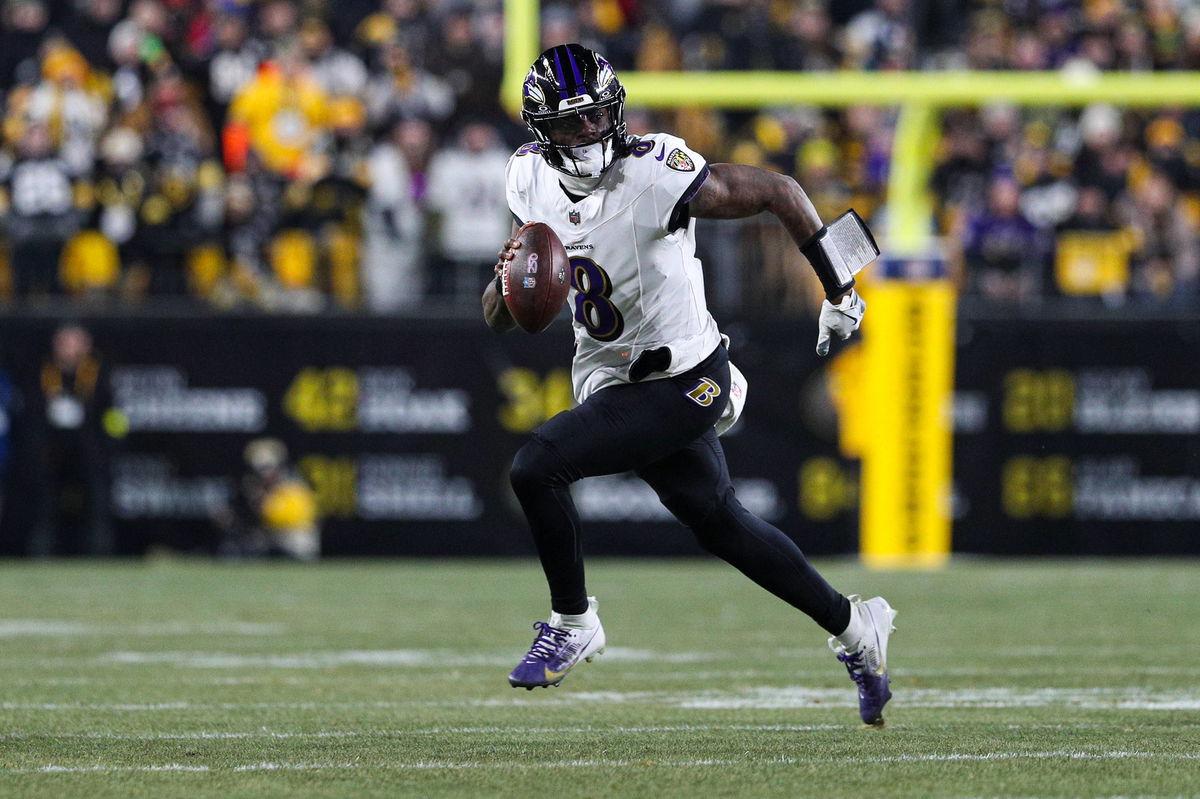
PITTSBURGH, PA – JANUARY 04: Baltimore Ravens quarterback Lamar Jackson 8 runs with the ball during the NFL, American Football Herren, USA football game between the Baltimore Ravens and Pittsburgh Steelers on January 4, 2026 at Acrisure Stadium in Pittsburgh, PA. Photo by Mark Alberti/Icon Sportswire NFL: JAN 04 Ravens at Steelers EDITORIAL USE ONLY Icon26010401413
He argued that, in theory, the same cap figure could cover players like Sam Darnold, Jaxon Smith-Njigba (before his extension), Devon Witherspoon, Nick Emmanwori, Grey Zabel, and DeMarcus Lawrence, with room still left over. And he wasn’t wrong.
In 2025, Darnold carried a $13.4 million cap hit, Smith-Njigba came in at $3.9 million, and Witherspoon came in at $8.6 million. Emmanwori accounted for $2.1 million, Zabel for $3.3 million, and Lawrence for $8.2 million.
The broader point centered on roster construction. A lower quarterback cap hit, like Darnold’s in 2025, gave Seattle flexibility to build a deeper team. That included offensive production from Smith-Njigba, who posted 119 receptions for 1,793 yards and 10 touchdowns, and Kenneth Walker III, who earned Super Bowl MVP honors with 135 rushing yards on 27 carries. Combine that with a top-ranked defense, and it helps explain how the Seahawks ended up winning Super Bowl LX.
Paying your quarterback big bucks just after one good season isn’t the key
“I’m 100 percent accountable for my part. I did not play well enough, consistently enough, to help the team get the results,” Daniel Jones said during his farewell press conference after the New York Giants moved on from him in the 2024 season.
Those comments came less than two years after the Giants handed him a four-year, $160 million deal. On paper, the decision made sense. Jones had just delivered the best season of his career, leading the team to a 9-6-1 record in 2022. In reality, though, New York paid top-tier quarterback money for mid-tier production. Jones ranked sixth in the league with a QBR of 62.9 that season, but from 2019 through his exit, he ranked 26th among qualifying quarterbacks with a QBR of 53.0.
The drop-off came quickly.
In the 2023 opener against the Dallas Cowboys, Jones was pressured on 23 dropbacks and sacked seven times in a 40-0 loss. Then, in a Week 4 loss to the Seahawks, he forced a throw over the middle in the red zone that was undercut and returned 97 yards for a touchdown. What could have been a scoring drive instantly turned into a three-score deficit, flipping the game entirely. Add the fact that the Seahawks sacked him 10 times, and it’s hard to ignore that Jones was running for his life. Across six games that season, he was sacked 30 times before suffering a torn ACL.
He finished 2023 with a 1-5 record, followed by 2-8 in 2024 before the Giants moved on. The contract didn’t age well, with injuries, inconsistency, and eventual benching shaping his final stretch. He did stabilize his situation with the Indianapolis Colts in 2025, but the broader takeaway remained. And Jones wasn’t an isolated case.
Imago
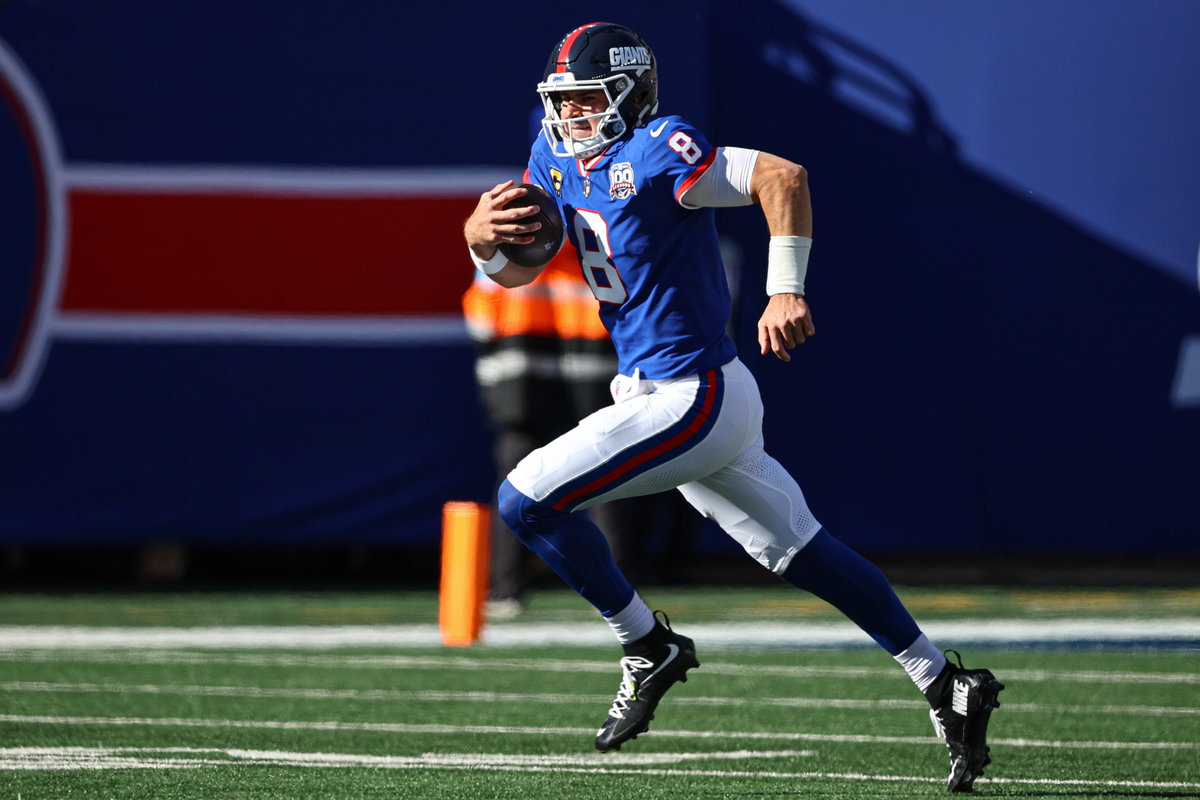
NFL, American Football Herren, USA Washington Commanders at New York Giants Nov 3, 2024 East Rutherford, New Jersey, USA New York Giants quarterback Daniel Jones 8 carries the ball during the first half against the Washington Commanders at MetLife Stadium. East Rutherford MetLife Stadium New Jersey USA, EDITORIAL USE ONLY PUBLICATIONxINxGERxSUIxAUTxONLY Copyright: xVincentxCarchiettax 20241103_vtc_cb6_04797
The Miami Dolphins followed a similar path with Tua Tagovailoa, only on a larger scale.
After leading the league with 4,624 passing yards in 2023, Tagovailoa signed a four-year, $212.4 million extension. Two years later, he is no longer with the team, and the reasons are rooted in how his production was built.
His former head coach, Mike McDaniel, constructed an offense tailored to Tua’s strengths. Quick throws, heavy motion, RPOs, and play-action defined the system. The ball came out fast, deep shots were selective, and players like Tyreek Hill and Jaylen Waddle handled much of the yardage after the catch. Within that structure, Tua thrived.
He was efficient, decisive, and accurate when the first read was available. But he wasn’t consistently operating outside of structure or attacking tight windows when plays broke down. The numbers reflect that.
In 2022, he put up 3,548 total yards, with over 1,200 coming after the catch and another 1,431 generated through play-action. A year later, that number jumped to over 4,600 yards, but the pattern stayed similar, with more than 2,100 yards coming via YAC and another 1,100 through play-action.
Over time, defenses adjusted. Throwing lanes tightened, and the rhythm of the offense was disrupted. By 2025, with Hill sidelined due to injury, the system lost its edge. The RPO game declined, rushing efficiency dropped, and turnovers increased.
The pattern here is hard to miss. Paying top-tier money to quarterbacks coming off a single strong season hasn’t consistently worked. The Giants have yet to return to the postseason since Jones’ extension, and the Dolphins followed a similar trajectory. Beyond that, both quarterbacks and their respective head coaches are no longer with their respective teams.
The market race and the roster sacrifices to afford a franchise quarterback
If a team pays a quarterback big bucks based on sustained performance (well, not to mid-tier QBs right after one good season), it makes sense. But lately, it has started to feel more like a market race. The NFL salary cap has climbed to $301.5 million in 2026, up $22 million from last year.
On paper, that should help teams build deeper rosters. In reality, it has mostly fueled only bigger quarterback deals.
Look at the last few years. Patrick Mahomes reset the market in 2020 with a 10-year, $450 million deal, one of the largest in sports history at that time. That contract worked out for the Chiefs, but it remains an exception, not the rule, considering Mahomes is no longer even among the top ten highest-paid quarterbacks annually. While he is a three-time Super Bowl champion, the top-10 highest-paid quarterbacks at the time haven’t even won a single Super Bowl combined. The current top earners include:
- Dak Prescott — $60 million/year
- Josh Allen — $55 million/year
- Joe Burrow — $55 million/year
- Trevor Lawrence — $55 million/year
- Jordan Love — $55 million/year
- Tua Tagovailoa — $53.1 million/year
- Jared Goff — $53 million/year
- Brock Purdy — $53 million/year
- Justin Herbert — $52.5 million/year
- Lamar Jackson — $52 million/year
Outside of Burrow, most of these players haven’t even reached a Super Bowl yet. Now, the point here isn’t to question talent. Even with his injury concerns, Burrow’s deal aligns with his production, but the broader trend raises questions. Prescott, for example, signed a four-year, $260 million extension in 2024. He’s productive, but with a 2-5 postseason record, the contract reflects market pressure as much as performance. That’s how the cycle inflates itself.
Imago
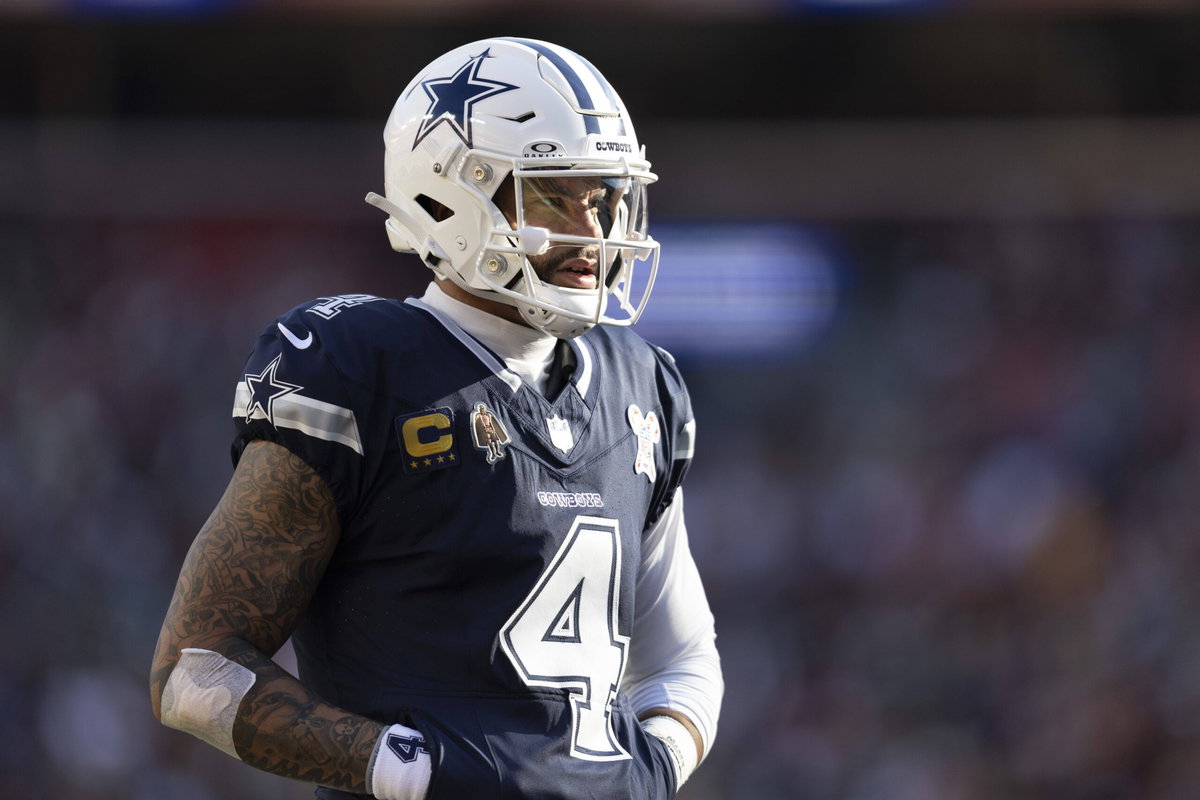
LANDOVER, MD – DECEMBER 25: Dallas Cowboys quarterback Dak Prescott 4 stands on the field during game between the Dallas Cowboys and the Washington Commanders on December 25, 2025 at Northwest Stadium in Landover, MD. Photo by Charles Brock/Icon Sportswire NFL, American Football Herren, USA DEC 25 Cowboys at Commanders EDITORIAL USE ONLY Icon251225009
Each new deal becomes the benchmark for the next one. Agents use it as leverage, players expect to match or exceed it, and the market keeps resetting. It’s not limited to quarterbacks either. Contracts at other positions follow the same pattern. Don’t be surprised if Puka Nacua potentially resets the wide receiver market soon after Jaxon Smith-Njigba became the highest-paid receiver.
These contracts also create internal challenges for teams. Not necessarily among players, but in how front offices manage the rest of the roster after committing a significant portion of the cap to one position. Take Brock Purdy as an example.
Going from the final pick in the draft to one of the highest-paid quarterbacks is a significant jump, and performance justified the extension. But that’s the kind of extension that only works if the roster can survive it. Because Purdy’s contract also forced the 49ers to adjust their personnel.
Knowing Purdy’s cap hit would rise sharply once his five-year, $265 million deal kicks in, the 49ers began making moves early. They traded Deebo Samuel, allowed Dre Greenlaw to leave, and released Javon Hargrave.
Those decisions weren’t reactionary. They were planned. The franchise was preparing for the financial impact of the deal, even if it meant sacrificing depth in the short term. The result was a league-high $86.6 million in dead cap, signaling a clear shift toward long-term flexibility. In simple terms, the 49ers chose to give up some of the present to secure their future.
Why some quarterbacks still deserve big money
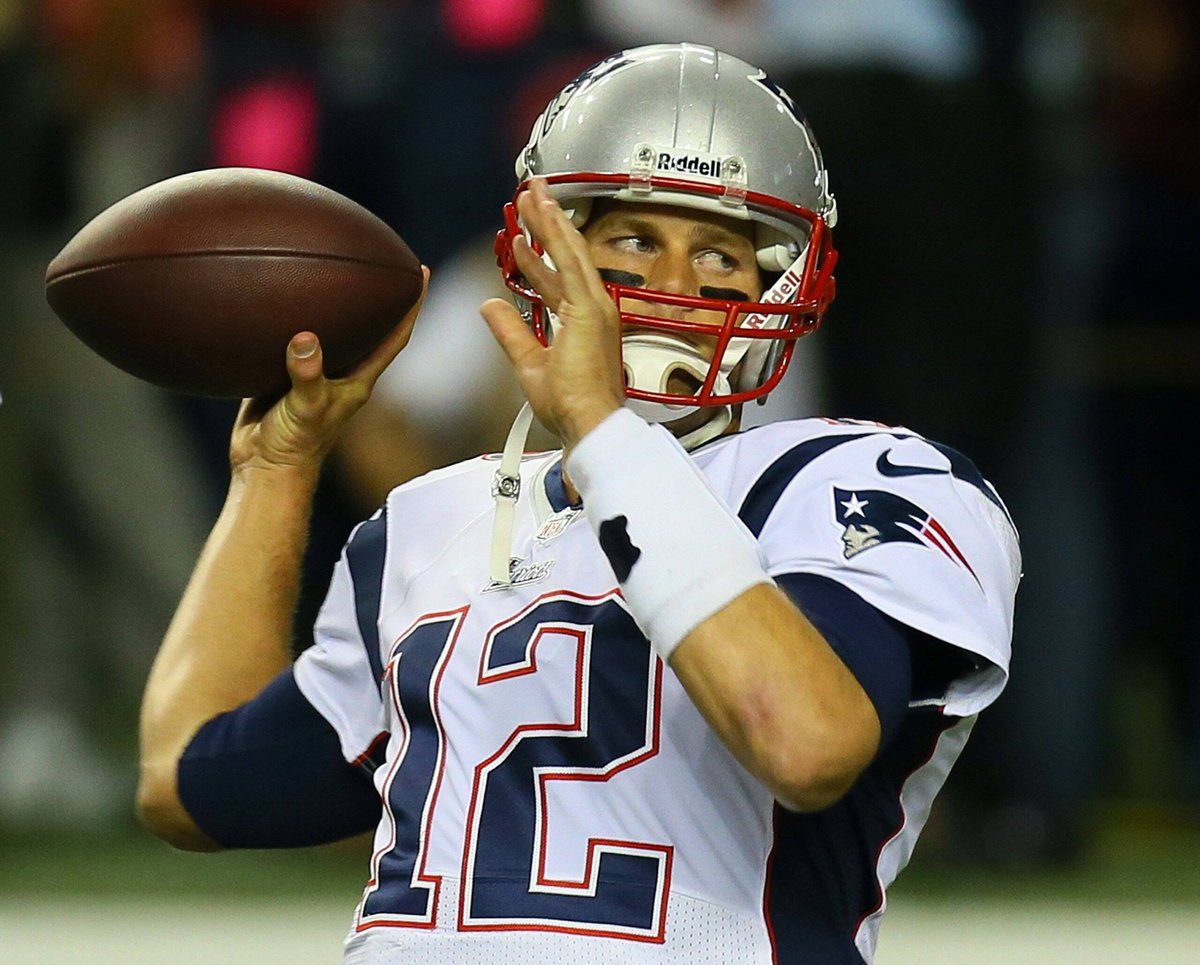
During his two-decade-long tenure with the Patriots, Tom Brady’s case has always been tied to the idea of “taking less.” But the reasoning was fairly straightforward. Brady prioritized winning over cap share, which allowed the Patriots to build complete Super Bowl rosters around him. That’s why, despite being one of the best quarterbacks in the league, he was rarely among the highest-paid.
If you focus on his Patriots tenure from 2004 to 2020, Brady earned about $241 million, averaging roughly $15 million per year. For comparison, look at Matthew Stafford and Aaron Rodgers during that same era:
After his rookie deal, Stafford spent eight seasons with the Detroit Lions, earning $188 million with an average annual value of $23.5 million. Rodgers, meanwhile, played 14 seasons with the Green Bay Packers from 2009 to 2022, earning just under $300 million at around $21 million per year.
Whether Brady was better than those two can be debated separately. What stands out here is how the Patriots structured their roster around him while he accepted a lower financial ceiling. Patrick Mahomes presents a different version of that idea.
Imago
Sept. 29, 2013 – Atlanta, GA, USA – Patriots quarterback Tom Brady warms up before an NFL, American Football Herren, USA game between New England and the Atlanta Falcons on Sunday, September 29, 2013, in Atlanta, Georgia. Copyright: xCurtisxComptonx
He is on a massive deal, but the results have still translated into sustained success with the Chiefs. Even after moving on from players like Tyreek Hill, the organization has managed to remain competitive.
That comes down to how Andy Reid and Brett Veach handle the cap. Since Mahomes signed his 10-year, $450 million deal, Kansas City has repeatedly restructured his contract to create flexibility. Over the past three offseasons, those moves created $21.6 million in 2024, $49 million in 2025, and $43 million in 2026, allowing the team to retain key players, add free agents, and maintain roster balance.
But at the same time, there could also be another layer to this.
Sometimes, these decisions aren’t just about numbers. Culture plays a role, too. The Buffalo Bills spent years as a struggling franchise before Sean McDermott and Josh Allen changed the direction. Even though the Bills haven’t reached a Super Bowl during Allen’s tenure, he remains central to the team’s identity and is now on a six-year, $330 million extension. His value isn’t just tied to performance. It also comes from leadership and connection with the team and fanbase. That’s the broader point. Not every contract fails, but most large quarterback deals come with a clear trade-off: roster depth. As such, the league is taking steps to possibly avoid such a situation.
The league is already planning to avoid this financial backlog
During the annual meetings in Phoenix, team owners discussed the idea of placing a cap on individual player salaries. It’s still just a concept for now, but it could gain traction when the next Collective Bargaining Agreement is negotiated. The reports suggest that the league could presumably take the NBA’s approach, with maximum contract depending on the player’s experience.
If such a proposal were implemented, quarterback salaries would likely follow a tiered structure, where younger players with fewer years of experience earn less, while established veterans with seven to ten or more years in the league command higher ceilings. The outcome, however, would be mixed. While it could help teams build more balanced rosters, top-earning quarterbacks would likely resist a system that places a ceiling on their market value.
At the same time, setting a ceiling on individual salaries could slow down the quarterback market race, give teams more flexibility to build balanced rosters, invest across positions, and retain key contributors instead of losing them to cap constraints. Because quarterbacks may be the most valuable players in the NFL, but overpaying them often comes at the expense of the very roster needed to win championships. And once a single contract begins to limit the rest of the roster, the balance starts to shift.