
Essentials Inside The Story
- 20 NFL teams currently run a 3-4 scheme
- Christian Parker is 21 years younger than any of the team’s last three coordinators
- The Cowboys have struggled since Dan Quinn's departure from the team
Two decades later, the Dallas Cowboys are once again moving to a 3-4 scheme under new defensive coordinator Christian Parker after Bill Parcells last implemented it in 2005. Back then, the Cowboys improved, allowing only 19.3 ppg (a significant drop from 25.3 in 2004). After a disastrous defense led by Matt Eberflus in 2025, the front office is confident that Parker’s presence in the building will lead to a significant turnaround.
Watch What’s Trending Now!
“He’s so detailed when it comes to explaining things,” one Cowboys front-office member said, per Yahoo Sports. “It’s the best I’ve been around as far as communicating what he wants, what his vision is for the guy. Right now, we’re like in a honeymoon period. But it’s been amazing.”
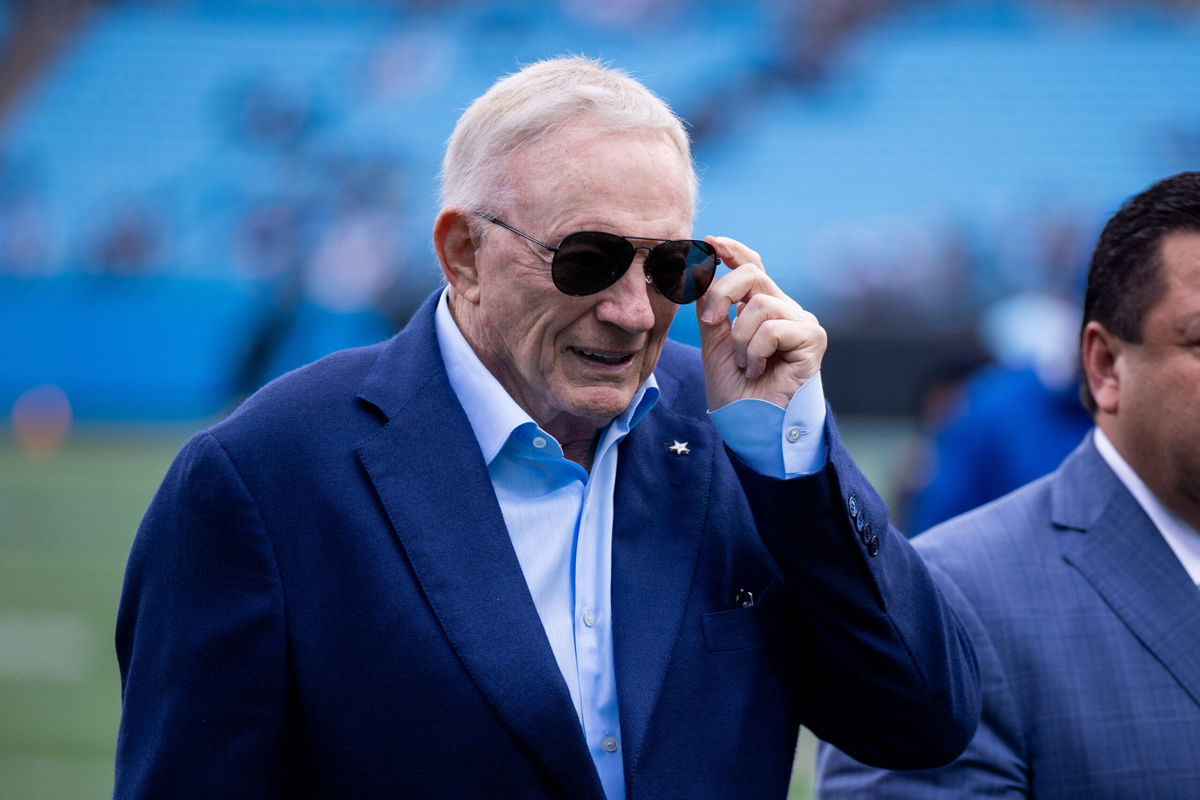
The Cowboys’ owner/general manager, Jerry Jones, head coach Brian Schottenheimer, and EVP Stephen Jones had to go through a tiring process to reach that “honeymoon period.” Following Matt Eberflus’ defensive struggles last year, Dallas interviewed eight candidates, making for a demanding search.
Still, the group eventually met a ninth candidate in Parker, who was 21 years younger than any of the Cowboys’ last three coordinators. He presented a detailed and modern defensive plan that covered player development, scheme adaptability, and ways to counter modern offenses.
That was enough to make an impression and earn him the role. His primary vision for the defense revolves around shifting from a traditional 4-3 structure (four defensive linemen and three linebackers) to a 3-4 setup built around three defensive linemen and four linebackers.
Imago
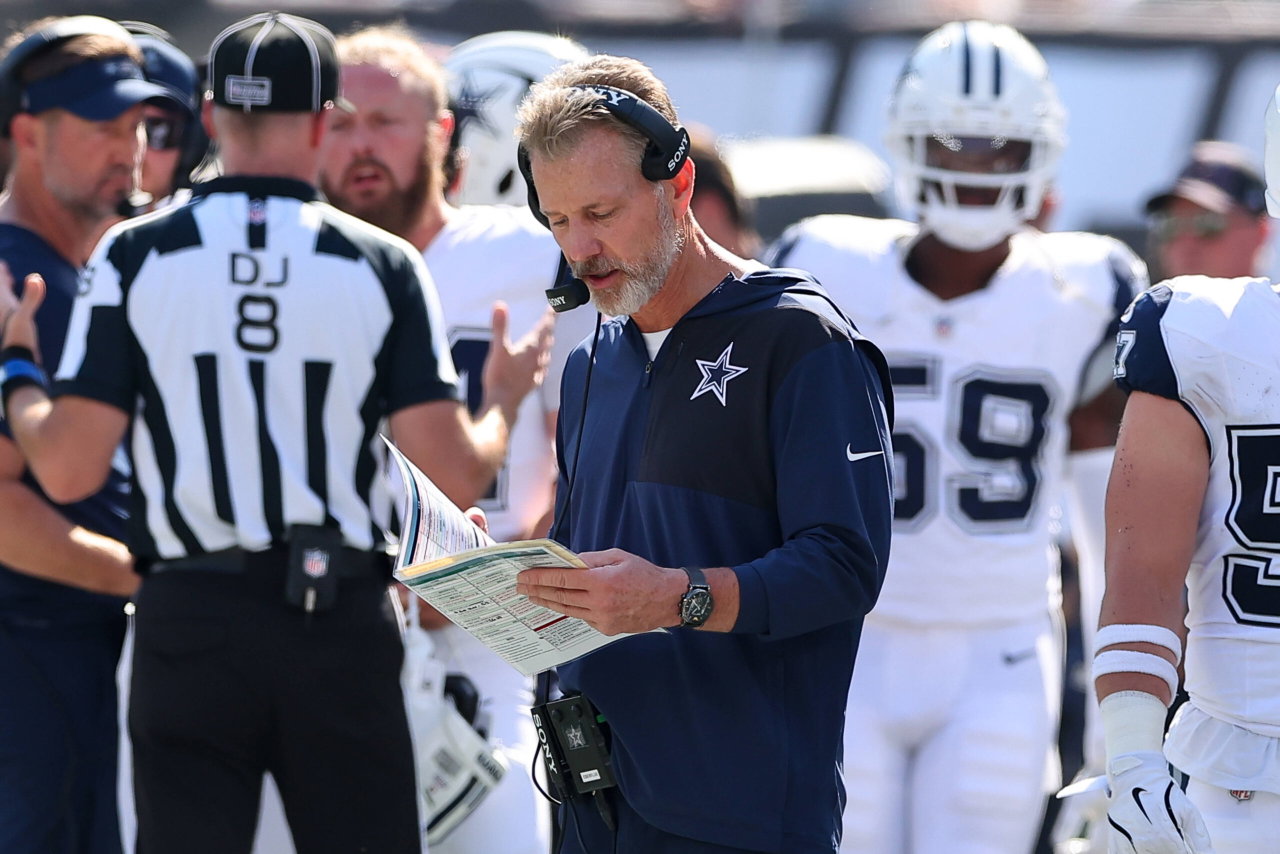
EAST RUTHERFORD, NJ – OCTOBER 05: Matt Eberflus Defensive Coordinator of the Dallas Cowboys during the game against the New York Jets on October 5, 2025 at MetLife Stadium in East Rutherford, New Jersey. Photo by Rich Graessle/Icon Sportswire NFL, American Football Herren, USA OCT 05 Cowboys at Jets EDITORIAL USE ONLY Icon25100519170
For a broader context, 20 NFL teams currently run a 3-4 scheme, while the remaining 12 operate out of a 4-3. While that alone doesn’t determine success, Parker does bring experience from working under established defensive minds like Vic Fangio, Vance Joseph, and Ejiro Evero.
The 3-4 scheme is often tied to systems designed to counter offenses built around outside-zone concepts. Unlike 4-3 defenses, which typically emphasize penetration and pass rush, the 3-4 approach relies more on size and strength up front, with linemen often responsible for controlling multiple gaps.
Parker understands that flexibility will be key, even with a base structure in place. During his introductory press conference, he said:
“Whenever you form a defensive structure, it’s about the players that you have. So core principles, we’ll be a 3-4 by nature. But 4-3 spacing will be appropriate — 4-2-5 in nickel. Different front structures, coverages behind it. I would say being multiple is probably the most important thing.”
This brings up the natural question: After running a 4-3 system for the last 13 years, why make the switch now?
A fallout that forced the Cowboys to undergo a defensive overhaul
The Cowboys’ defense hadn’t looked this poor in the past few years before the 2025 season. Under Dan Quinn, Dallas built a strong defensive identity, finishing with three top-10 scoring defenses. The results spoke for themselves, as Quinn eventually landed the head coaching job with the Washington Commanders after his success as a coordinator.
Since then, though, the Cowboys have struggled to find that same rhythm. For context, under Mike Zimmer, Dallas allowed the second-most points and fifth-most yards in the 2024 season. A year later, the team turned to Matt Eberflus.
Eberflus was expected to build the defense around Micah Parsons, but that plan shifted quickly when Jerry Jones moved Parsons to the Green Bay Packers just before the season began. From there, the defense struggled again, finishing last in points allowed and third-worst in yards under Eberflus.
As the performance dipped and criticism mounted, the need for change became obvious, and Dallas responded with a significant overhaul, including the addition of Rashan Gary, multiple reinforcements in the secondary, and the possibility of another key piece in the first round of the 2026 NFL Draft.
Now, with Christian Parker stepping in as defensive coordinator and implementing a 3-4 scheme, the direction is clear. The expectations are higher, but the real measure will come with how these changes translate on the field during the 2026 season.