
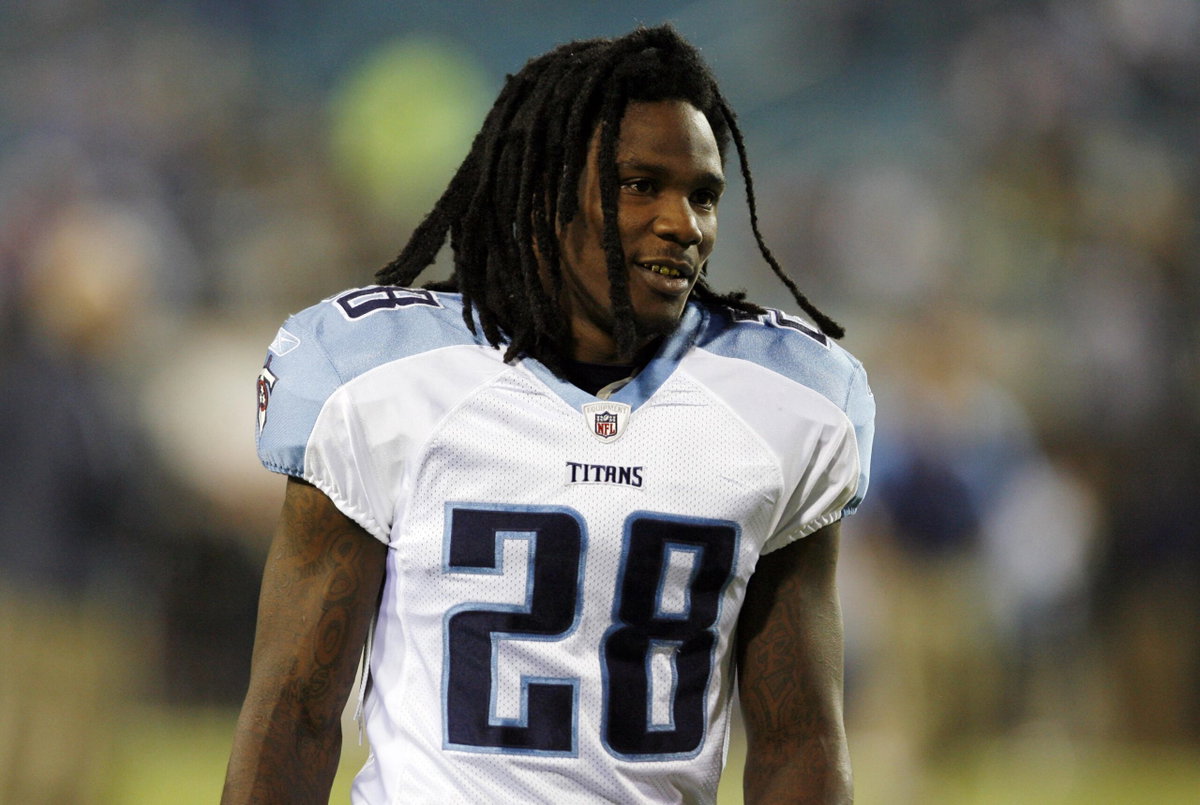
When Tennessee Titans legend Chris Johnson began struggling to maintain a firm grip with his hand, his wife, Brittany, initially believed it might be the result of the wear and tear from his NFL career. After all, Johnson had spent a decade absorbing hits while making defenders miss as one of the league’s most explosive running backs. It was later revealed that he had been diagnosed with ALS, a progressive neurodegenerative disease that affects the brain and spinal cord.
Watch What’s Trending Now!
Unfortunately, Johnson isn’t the only former NFL player dealing with a neurodegenerative disease after retirement. In fact, conditions such as ALS, dementia, and CTE (Chronic Traumatic Encephalopathy) have become a growing concern across the football community. And according to neuroscientist Chris Nowinski, the latest research involving former NFL players only reinforces those concerns.
“We had a study yesterday. It’s unfortunate news, but hopefully it helps people take this issue more seriously,” Nowinski said on the Ross Tucker Podcast. “And that’s a study that we partnered with Boston University and Harvard University, where we looked at the death certificates of ALL NFL players from 1960 through 2019 and confirmed at a very small sample, that they’re dying of dementia at four times the rate of the population, including things like ALS, which Chris Johnson went public with last week…If you combine that with previous studies on when we look at the brains, what’s going on in there, it really is driven by CTE.”
“We had a study out yesterday. It's unfortunate news, but hopefully it helps people take this issue more seriously…” “We looked at the death certificates of ALL NFL players from 1960 through 2019, and confirmed that they're dying of dementia at FOUR times the rate of the Show more


Chris Nowinski Interview! @RossTuckerNFL is joined by @ChrisNowinski1 from @ConcussionCTEfn. The two discuss the latest in CTE research, if there's any correlation between CTE & ALS, what the typical symptoms are for those who have CTE, and more. linktr.ee/RossTuckerPod

Per the findings, diseases like ALS, dementia, CTE, and Parkinson’s disease can affect millions of people globally. However, people who experience repeated blows to the head over many years, like football players, are at a higher risk of developing the conditions than the general population.
Recently, researchers conducted the largest retrospective cohort study of NFL players ever performed. They analyzed the health records of 19,824 NFL players who competed between 1960 and 2019 and compared their causes of death with those of people in the general population. Per the study, while the former NFL players actually had a lower mortality rate, they had nearly four times higher risk of dying from neurodegenerative diseases than people in the general population.
For a broader context, the study revealed that deaths related to all-cause dementia were about 3.8 times higher. Meanwhile, deaths related to Parkinson’s disease were approximately 3.88 times higher. That means, there’s no denying that NFL players generally live a healthier life in many respects, yes. But they face a substantially greater risk of developing fatal neurological diseases later in life.
The younger players, meanwhile, had a higher risk of developing these conditions. Among the players who died before the age of 60, the rate of death from neurodegenerative diseases was more than 12 times higher than in the general population. At the same time, the length of the NFL career also plays a key role. A player spending more than 5 seasons in the NFL has a higher risk of neurodegenerative disease than those who have shorter careers.
This is exactly why, in his conversation on the podcast, Chris Nowinski emphasized that the study has been done so that people can take this issue more seriously.