
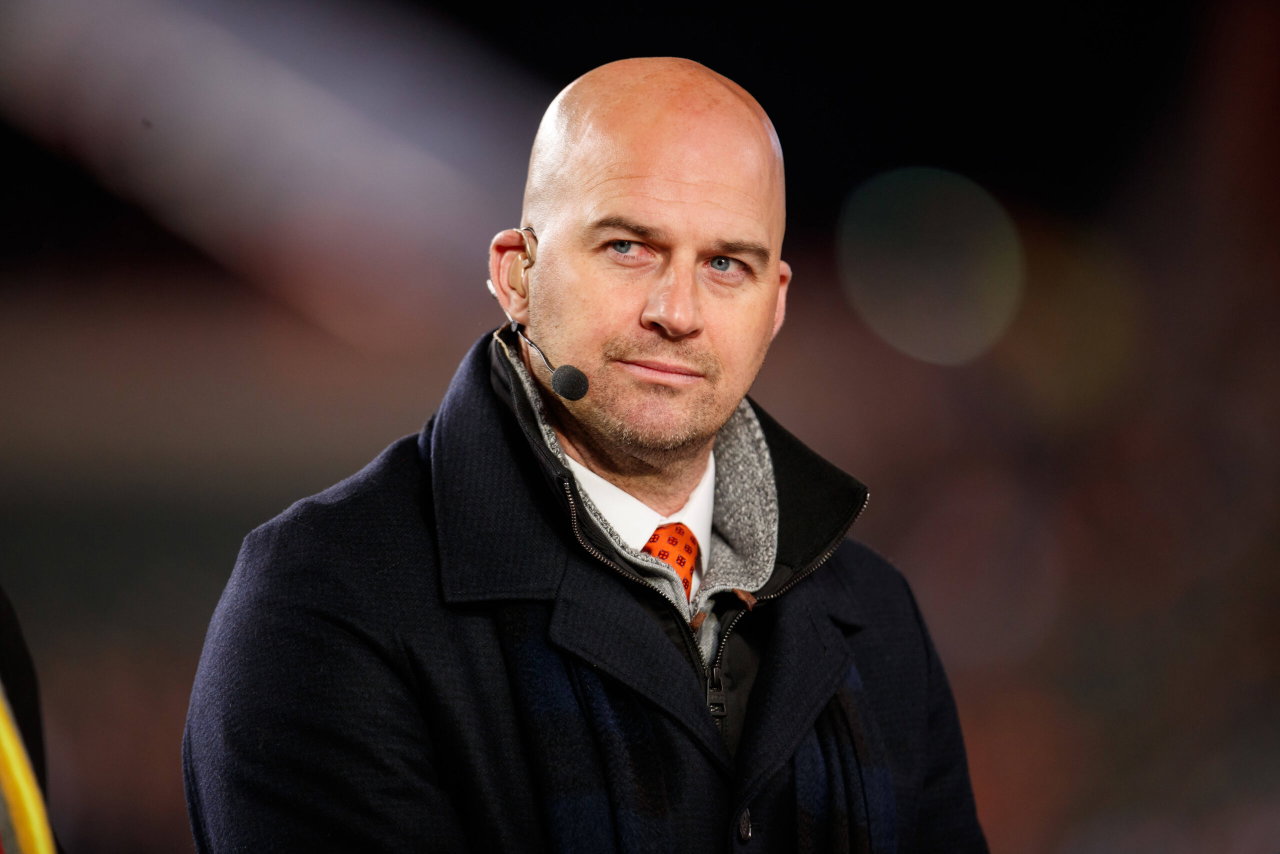
Former NFL quarterback Matt Hasselbeck watched his father play in the NFL for almost a decade, spent 18 seasons quarterbacking in the league himself, and now watches his own children play while coaching football at the same time. That’s exactly why the 50-year-old NFL legend wants to make the game safer for his children and future generations.
Watch What’s Trending Now!
At the same time, however, his recent decision to participate in major CTE research and donate his brain is also for the teammates he watched take countless hits throughout their football careers. Per reports, Hasselbeck recently spent a couple of days at Boston University, where he went through a battery of scans and tests to determine how much the hits he endured in the NFL affected his brain.
“They need guys like me,” Hasselbeck said, per ESPN. “They need people who are feeling good to step up to the plate and volunteer. I played quarterback, so I didn’t take some of the hits that a lot of my teammates took. But the guys who were blocking for me, or playing special teams, or trying to get the ball back for me on defense, I wanted to do something. They had my back, so in a way I’d like to have their back.”
The development gained momentum after NIH handed Boston University’s CTE Center a $15 million grant back in November 2025 for DIAGNOSE CTE Research Project-II. As part of the research, the researchers will attempt to spot CTE while someone’s alive. For now, CTE (chronic traumatic encephalopathy), which affects the regions of the brain, leading to memory loss, depression, violent mood swings, and other issues, can only be diagnosed after death.
CTE is a degenerative brain disease associated with repeated blows to the head. In the NFL, meanwhile, the Boston University CTE Center examined the brains of 376 former NFL players in 2023. Of those, 345 players, or 91.7%, were diagnosed with CTE. Several former NFL players, including Junior Seau, Ken Stabler, and Aaron Hernandez, were also diagnosed with CTE posthumously.
Hasselbeck, meanwhile, has become part of something much bigger, with Michael Alosco, co-director of clinical research at the Boston University CTE Center, hoping the effort will eventually expand to hundreds of participants across multiple locations. As of now, the research is being conducted at several sites, including in California, Arizona, Texas, and Florida, with potentially more locations to come.
The NFL legend underwent multiple tests, including blood tests, an MRI of his brain, and a positron emission tomography (PET). On top of that, Matt Hasselbeck has also confirmed that he’ll donate his brain after his death. The former NFL quarterback spent time with the Green Bay Packers, Seattle Seahawks, Tennessee Titans, and Indianapolis Colts, in a career spanning almost two decades.
However, Hasselbeck has admitted that he suffered multiple concussions even before he started playing in the NFL. Now, considering his brain seems healthy at the age of 50, Hasselbeck has decided to help researchers diagnose the cause of CTE when someone is alive.