
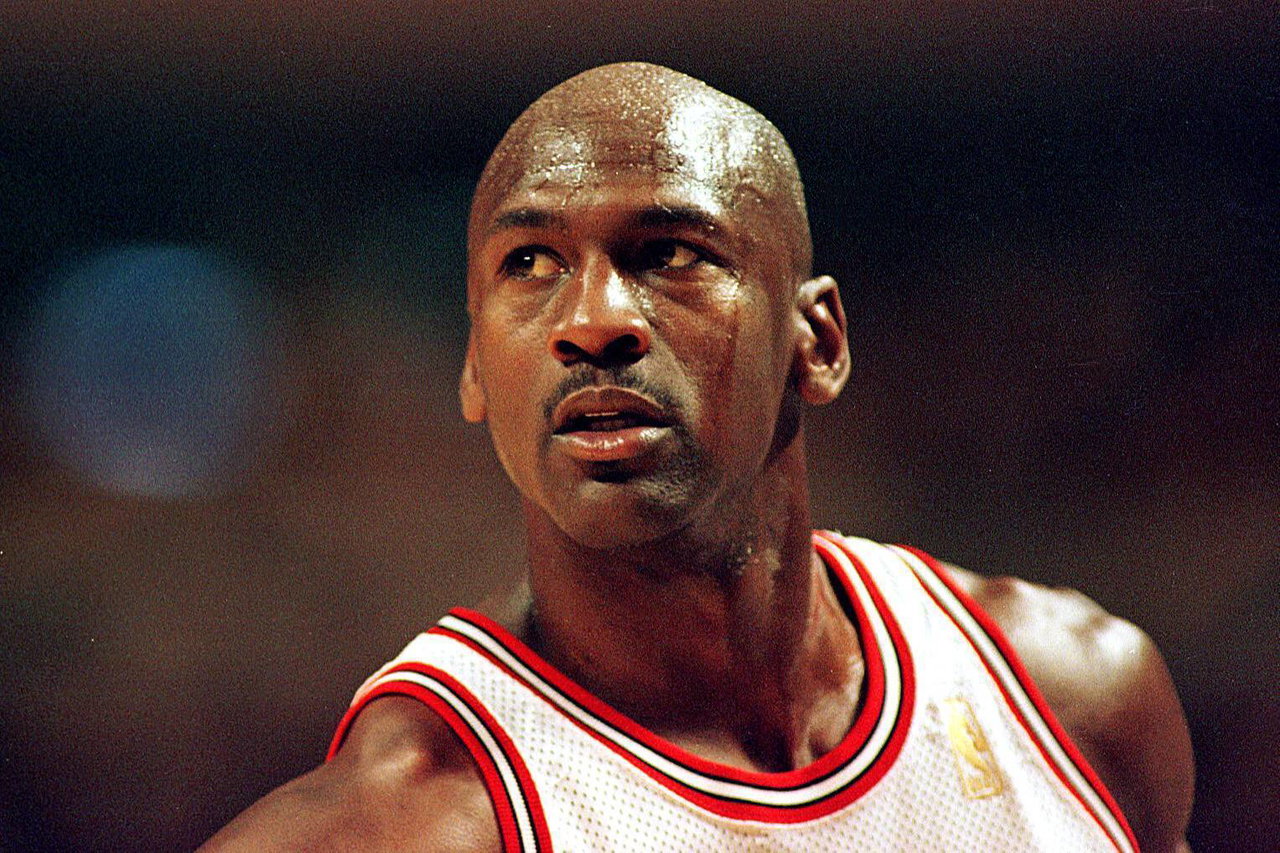
“People were afraid of him. We were his teammates, and we were afraid of him,” Michael Jordan’s former teammate Jud Buechler said in The Last Dance. On the court, Jordan helped build the Chicago Bulls dynasty and led the franchise to two three-peats. Behind the scenes, though, he was known for his tough “MJ” love approach, constantly pushing his teammates to meet championship standards.
Watch What’s Trending Now!
That side of him was on full display in The Last Dance, which chronicled the Bulls’ 1997-98 season. However, according to Miami Dolphins legend Channing Crowder, those traits made Jordan a great player, but not a great leader.
“No, I don’t think they’re great leaders,” Crowder said of Jordan and Kobe Bryant. “You said leadership, I don’t think they’re great leaders. I think they’re great players. I don’t think Jordan was a great leader. After watching The Last Dance, Jordan’s not a great leader.”
The documentary intentionally showed both sides of Michael Jordan: His extraordinary ability to drive winning and the personal cost of his methods. One of the most prominent incidents was Jordan bullying his teammates, especially Scott Burrell. In the series, Jordan relentlessly taunted and belittled Burrell during practices and team activities. He insulted him, embarrassed him in front of teammates, and constantly tested him.
On top of that, one of the documentary’s most famous stories is when Jordan punched Steve Kerr after Kerr stood up to him in practice, which Kerr later described as something he “wasn’t proud of.” Jordan, meanwhile, had a philosophy: According to the all-time great, he wanted his teammates to endure what he had endured, considering they joined the team after him.
“Winning has a price,” Jordan would say. “And leadership has a price. So I pulled people along when they didn’t want to be pulled. I challenged people when they didn’t want to be challenged. And I earned that right because [other] teammates came after me. They didn’t endure all the things that I endured. Once you joined the team, you lived at a certain standard that I played the game. And I wasn’t going to take anything less.”
Kobe Bryant, meanwhile, is a fascinating comparison because, like Michael Jordan, his leadership style was both highly successful and highly controversial. Jordan Clarkson, who recently won his first NBA Championship with the New York Knicks, had played with both Bryant and LeBron James. And when asked about the leadership styles of both the NBA greats, Clarkson gave a telling answer.
“Two different styles of leadership,” Clarkson said. “LeBron, very encouraging, bringing everybody along, and Kobe, he’s testing you, seeing what you gonna give him. If he gonna get at you, he gonna scream at you, he gonna cuss, he gonna do whatever it is. He had his own way of leading guys as well. It’s two different sides. I’m just blessed to see both of them.”
But for Kobe, that leadership style ultimately paid off, as he won five NBA championships with the Los Angeles Lakers. So, the debate over Michael Jordan’s and Kobe Bryant’s leadership styles is no breaking news, especially because both approaches produced championship results.