
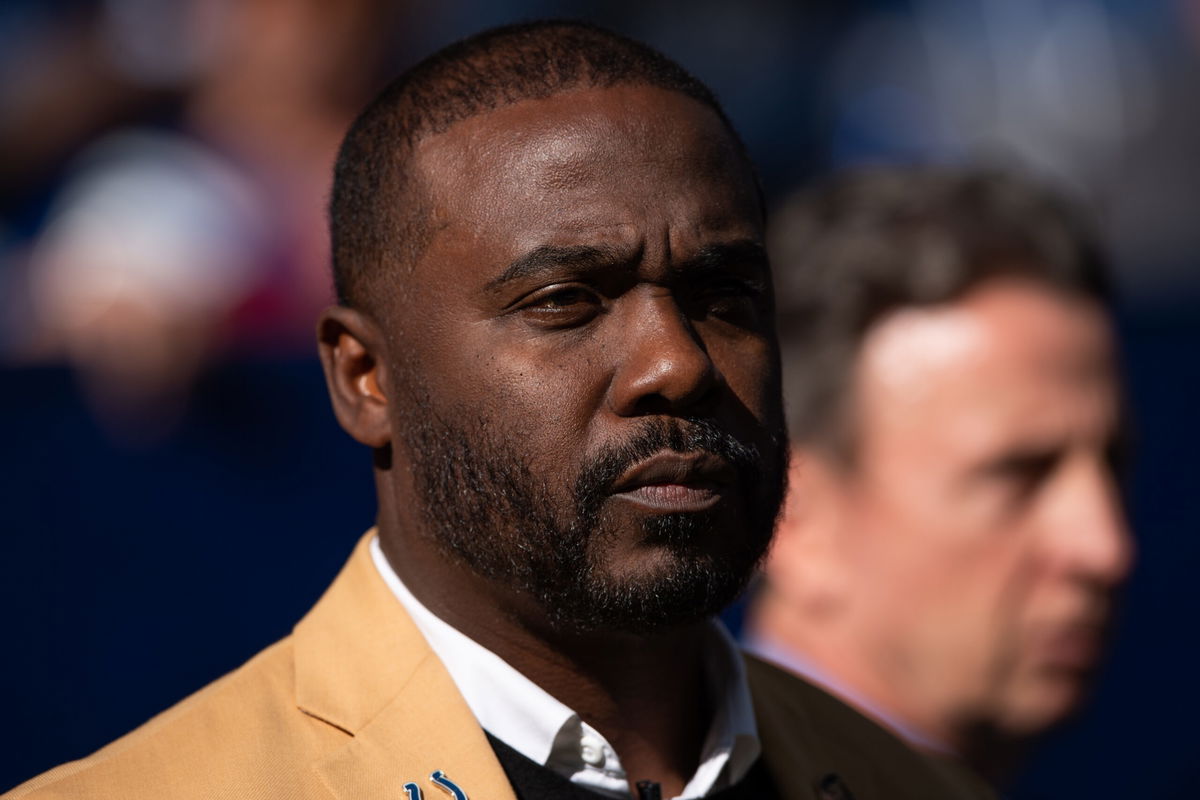
College football success usually paves a direct path to the NFL. However, according to former NFL running back Marshall Faulk, that path looks different today. Faulk, who recently became Southern University’s 22nd head coach ahead of the 2026 season, gave his perspective on the additional step that has been seen in recent years for HBCU players who thrive.
Watch What’s Trending Now!
“I believe that the next level is no longer the NFL,” Faulk said during SWAC Football Media Day. “We get poached by the FBS. They want our players.”
For decades, the path to the NFL seemed straightforward: excel in high school, enroll at an HBCU, and eventually make it to the league. It’s a script we’ve seen play out successfully time and again. Names like Walter Payton from Jackson State, Jerry Rice from Mississippi Valley State, Steve McNair from Alcorn State, and Shannon Sharpe from Savannah State all came through HBCU programs before building successful NFL careers.
Thanks to NIL deals, however, that’s not the case anymore. In fact, Marshall Faulk now believes that bigger college football programs, like FBS programs, have come between HBCUs and players’ paths to the NFL. Of course, Faulk is just entering the first year of his head coaching role at Southern Jaguars, but his biggest fear is obvious: Spending years developing players only to lose them.
“They have an opportunity to maybe go somewhere and make good money while they’re in college,” Faulk added. “The game has changed. The landscape of college football has changed.”
Take Deion Sanders’ example. Coach Prime proved that HBCUs could recruit elite talent. He coached Travis Hunter and Shedeur Sanders at Jackson State. But at the same time, he showed another reality when he moved to Colorado, and both Hunter and Shedeur followed. The picture is clear that even the biggest HBCU success story ended with players moving to the FBS level.
And while he’s concerned about that particular bridge between HBCU and the NFL, Marshall Faulk now wants his fellow coaches to prepare their players to take advantage of those bigger opportunities.
“I believe that we as coaches, we have to look at it for what it is and start preparing these kids and coaching them and making sure they have the capacity to move on to the next level,” Faulk added.
Faulk joined the Southern Jaguars in late November 2025 and is now preparing to kick off his head coaching journey after serving as a running backs coach for the Buffaloes.