Imago
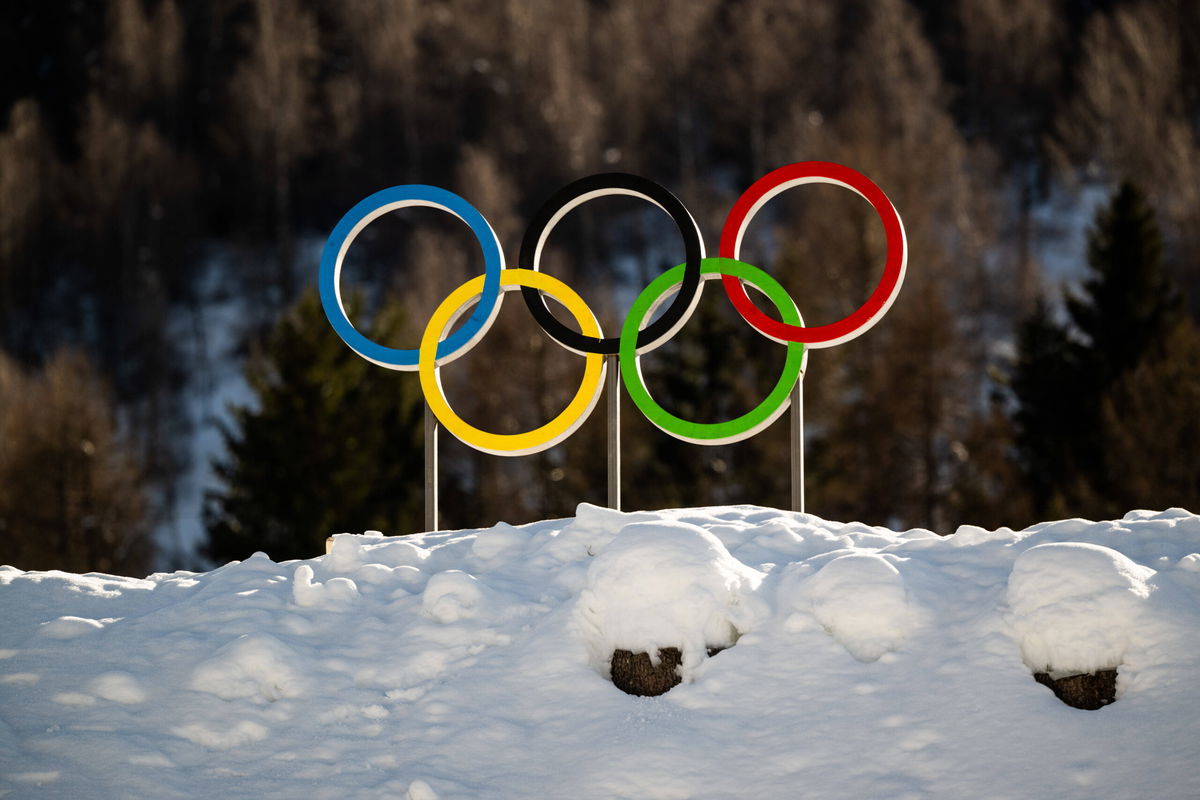
260201 The Olympic Rings are seen at Tesero Cross Country Stadium during day -5 of the 2026 Winter Olympics on February 1, 2026 in Tesero. Photo: Mathias Bergeld / BILDBYRAN / kod MB / MB1289 skidor cross-country skiing langrenn Olympic Games, Olympische Spiele, Olympia, OS olympics winter olympics os ol olympiska spel vinter-os olympiske leker milano cortina 2026 milan cortina 2026 milano cortina 2026 olympic games milano cortina 2026 winter olympic games milano cortina-os milano cortina-ol vinter-ol -5 bbeng Tesero Cross Country Stadium genre os-ringar os-ringarna olympic rings *** 260201 The Olympic Rings are seen at Tesero Cross Country Stadium during day 5 of the 2026 Winter Olympics on February 1, 2026 in Tesero Photo Mathias Bergeld BILDBYRAN kod MB MB1289 skidor cross country skiing langrenn olympic games olympics winter olympics os ol olympiska spel vinter os olympiske leker milano cortina 2026 milan cortina 2026 milano cortina 2026 olympic games milano cortina 2026 winter olympic games milano cortina os milano cortina ol vinter ol 5 bbeng Tesero Cross Country Stadium genre os ringar os ringarna olympic rings PUBLICATIONxNOTxINxSWExNORxFINxDEN Copyright: MATHIASxBERGELD BB260201MB020
Imago
260201 The Olympic Rings are seen at Tesero Cross Country Stadium during day -5 of the 2026 Winter Olympics on February 1, 2026 in Tesero. Photo: Mathias Bergeld / BILDBYRAN / kod MB / MB1289 skidor cross-country skiing langrenn Olympic Games, Olympische Spiele, Olympia, OS olympics winter olympics os ol olympiska spel vinter-os olympiske leker milano cortina 2026 milan cortina 2026 milano cortina 2026 olympic games milano cortina 2026 winter olympic games milano cortina-os milano cortina-ol vinter-ol -5 bbeng Tesero Cross Country Stadium genre os-ringar os-ringarna olympic rings *** 260201 The Olympic Rings are seen at Tesero Cross Country Stadium during day 5 of the 2026 Winter Olympics on February 1, 2026 in Tesero Photo Mathias Bergeld BILDBYRAN kod MB MB1289 skidor cross country skiing langrenn olympic games olympics winter olympics os ol olympiska spel vinter os olympiske leker milano cortina 2026 milan cortina 2026 milano cortina 2026 olympic games milano cortina 2026 winter olympic games milano cortina os milano cortina ol vinter ol 5 bbeng Tesero Cross Country Stadium genre os ringar os ringarna olympic rings PUBLICATIONxNOTxINxSWExNORxFINxDEN Copyright: MATHIASxBERGELD BB260201MB020
The Winter Olympics are not about the winner, but it is about the rarity of winning itself. When the Games begin on February 6, Milan and Cortina will welcome around 2,916 athletes from 92 countries, all chasing the same goal: a medal around their neck. Be it gold, silver, or bronze!


In 16 sports, years of practice will come down to seconds, landings, and millimeters that will determine it all. With so many athletes and so few prizes, the question naturally follows: how many medals are actually up for grabs at the 2026 Winter Olympics?
Watch What’s Trending Now!
History of Winter Olympics medals? Know the origin, top winners, medals by country, and more
The first Winter Olympics were held in 1924 in Chamonix, France. The event was originally called the International Winter Sports Week, but the International Olympic Committee later recognized it as the first official Winter Games.
From the very beginning, medals were awarded to athletes who finished first, second, and third, following the gold, silver, and bronze format still used today.
At the 1924 Games, Norway dominated the table with 17 medals in total. Finland followed with 11, while the United States and Great Britain each received 4. Medals were awarded in the same way as today, though the program featured far fewer sports and events.
Imago
Credits – Instagram / @milanocortina2026
Before 1924, winter sports had appeared in different competitions, but there was no separate Winter Olympics.
After the success of Chamonix, the IOC updated its charter and made the Winter Games a regular Olympic event. Since then, medals have been awarded at every Winter Olympics to the top three finishers in each event.
But as time went by, new sports and disciplines were added, and with them, the number of medal events also increased.
As of 2026, the leading countries in total Winter Olympics medals are:
- Norway: about 405 total medals (most of any country).
- United States: around 330 medals.
- Germany: 267 medals
- Austria: 250
The early Winter Games had just 16 events, with roughly 50 medals awarded in total. Modern editions now feature more than that. But how much?
How many medals will be given at the Milan-Cortina Winter Olympics? All to know about the numbers, production, costing, and more
The Olympic Winter Games will feature a total of 195 medal events, with athletes competing for 245 gold, 245 silver, and 245 bronze medals. There will also be medals in the Paralympic Winter Games: 137 gold, 137 silver, and 137 bronze medals
Adding Olympic and Paralympic, 1,146 medals will be granted in the Milan-Cortina 2026 Winter Olympics.
But those will not be ordinary!
All medals are produced by the Istituto Poligrafico e Zecca dello Stato (IPZS), Italy’s state mint. The process follows strict environmental standards:
- Metals are recycled through production wastes.
- Furnaces are operated on renewable energy.
- Packaging involves very little plastic and green materials.
The casting of each 2026 Winter Olympics medal is hand-finished, so that no two medals are identical.
The design itself reflects the shared hosting of Milan and Cortina d’Ampezzo. Every medal is made from two connected halves, joined at the center by the Olympic rings. The idea behind the design is unity and the shared effort behind every athlete’s journey.
Paralympic medals feature braille inscriptions on the back, recognizing Para athletes and accessibility.
All medals follow the same physical format. Each has a diameter of 80 millimeters and a thickness of 10 millimeters. The materials differ by medal type.
Gold medals are made from .999 silver and coated with around six grams of 24-carat gold. Silver medals are made from .999 silver, while bronze medals are made mainly from copper.
Do gold medals won in the team events count as individual medals?
When a country wins a team event, that counts as one medal in the official medal table.
For example, if a hockey team wins gold, the medal table shows 1 gold for the country, not one for each player. That’s how all modern Olympics are tallied.
Every athlete on the medal-winning team gets a physical medal to keep. So if a team has 20 players, each receives a gold medal to take home.
But for the overall country total, it’s still just one.
This difference is because the official medal table counts medals by event. And team events produce one result per event, even though many athletes share it. So when you read a country has, say, 5 gold medals overall, that includes team events only once per event.