Imago
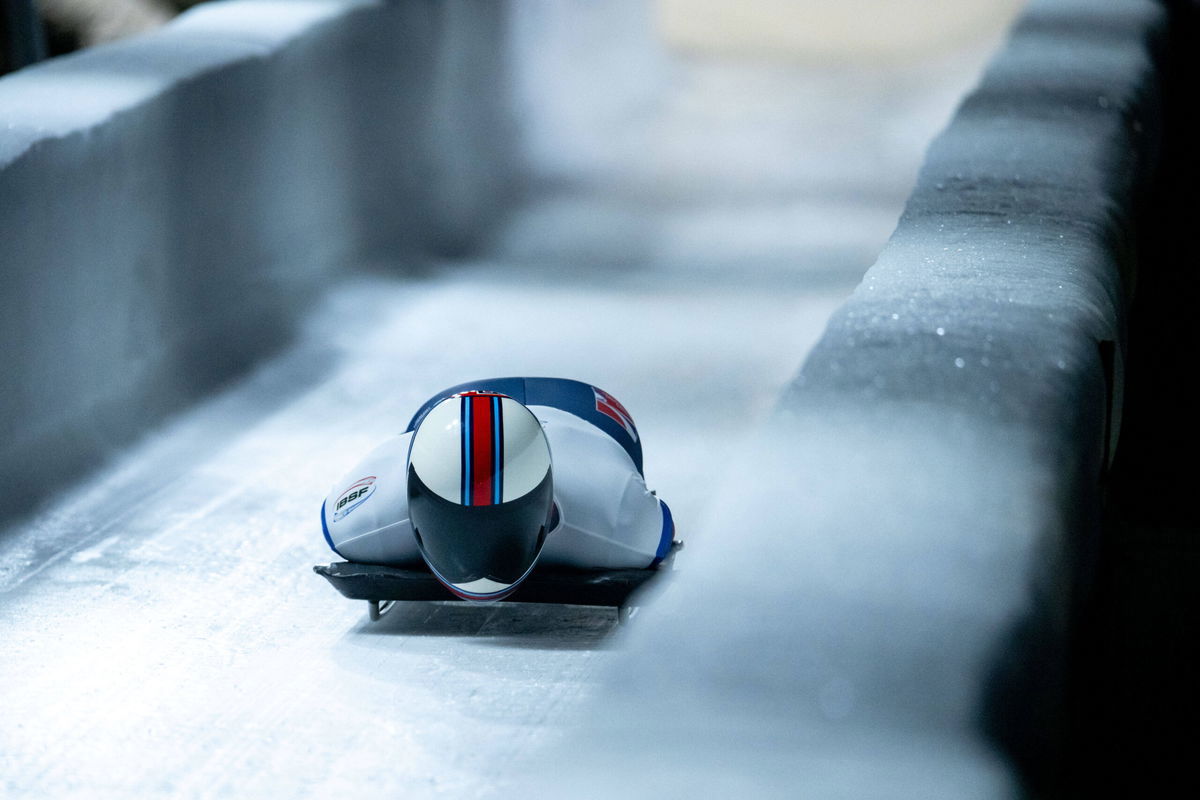
WESTON Matt Großbritannien, GER, IBSF Skeleton Weltcup Altenberg, Mixed Team Event, Saison 2025/2026, 16.01.2026 GER, IBSF Skeleton Weltcup Altenberg, Mixed Team Event, Saison 2025/2026, 16.01.2026 Altenberg *** WESTON Matt Great Britain , GER, IBSF Skeleton World Cup Altenberg, Mixed Team Event, Season 2025 2026, 16 01 2026 GER, IBSF Skeleton World Cup Altenberg, Mixed Team Event, Season 2025 2026, 16 01 2026 Altenberg Copyright: xEibner-Pressefoto/Memmlerx EP_MMR
Imago
WESTON Matt Großbritannien, GER, IBSF Skeleton Weltcup Altenberg, Mixed Team Event, Saison 2025/2026, 16.01.2026 GER, IBSF Skeleton Weltcup Altenberg, Mixed Team Event, Saison 2025/2026, 16.01.2026 Altenberg *** WESTON Matt Great Britain , GER, IBSF Skeleton World Cup Altenberg, Mixed Team Event, Season 2025 2026, 16 01 2026 GER, IBSF Skeleton World Cup Altenberg, Mixed Team Event, Season 2025 2026, 16 01 2026 Altenberg Copyright: xEibner-Pressefoto/Memmlerx EP_MMR
Team GB’s skeleton squad – one of the nation’s top medal hopes at the Winter Olympics has faced a major blow just days before competition begins in Milan‑Cortina. Matt Weston, Marcus Wyatt, Tabitha Stoecker, Freya Tarbit, and Amelia Coltman were ready to give everything on the ice with one goal: the podium. But instead of thinking about medals, they now face a legal hurdle.


This obstacle is with their equipment that could affect how they compete.
Watch What’s Trending Now!
The controversy centers on the team’s newly designed helmets, developed with help from Formula 1 and cycling partners to give Britain a competitive edge. The helmets were supposed to make their Olympic debut, but on 29 January, the International Bobsleigh and Skeleton Federation ruled that their shape does not comply with current competition regulations.
However, the British Bobsleigh and Skeleton Association (BBSA), which funded the design and manufacture of the helmet, claims that the equipment is of high safety standards.
“They also requested that CAS rules that the Team GB helmet is proven to be safer and more beneficial to athletes’ health and safety than any other helmets being used,” BBSA noted.
Now, to resolve the dispute, the BBSA has filed an urgent appeal with the Court of Arbitration for Sport, requesting confirmation that the helmets are legal.
The decision is expected before skeleton racing begins on 12 and 13 February in the Winter Olympics.
The British skeleton team – among Team GB's best hopes for medals at the Winter Olympics – have been told their helmets do not meet safety standards only days out from the competition starting.
The British team have appealed to the Court of Arbitration for sport.
The team would… pic.twitter.com/kEmhFbucOg
— BBC Sport (@BBCSport) February 4, 2026
If successful, the team can compete in the gear they trained with all season. If not… they’ll have to revert to older helmets. And the stakes could not be higher right now.
Britain has dominated Olympic skeleton more than any other nation, winning nine medals: three golds, a silver, and five bronzes. However, with the history of greatness comes pressure, and Team GB is aware that every detail counts to be on the podium
Matt Weston and Marcus Wyatt are at the forefront of the men’s side. Weston comes into the tournament as the defending World, European, and general World Cup champion, and Wyatt is the European champion in 2024.
The women team members: Tabitha Stoecker, Freya Tarbit, and Amelia Coltman are also well-qualified. This season, Stoecker won Britain its first female overall World Cup medal in 11 years, Tarbit has already placed two top-10 finishes in Olympic test events, and Coltman has placed 4th overall in the 2024/25 World Cup.
With talent like this, the team’s potential is undeniable, if only the helmet issue is resolved in time. Incidents like these should be taken seriously, as history has shown that even a small oversight can have big consequences.
How safety and gear have shaped the Winter Olympics over the years
Sports equipment has always played a pivotal role in sporting events such as the Olympics, and history testifies to the stakes involved.
In 1959, a Canadian alpine skier, John Semmelink, died in an accident when he was competing in a downhill race. He had a leather helmet that was even superior to most at that time, but not quite good enough to save his life, as a head injury took his life.
Following this tragedy, helmets became compulsory in downhill skiing since the 1960 Winter Olympics.
But with time, accidents have continued to raise the issue of helmet safety in the late 1990s and 2000s.
In 2009, British actress Natasha Richardson passed away due to a fall on a ski slope. Experts indicated that an excellent helmet would have saved her from the head injury.
Imago
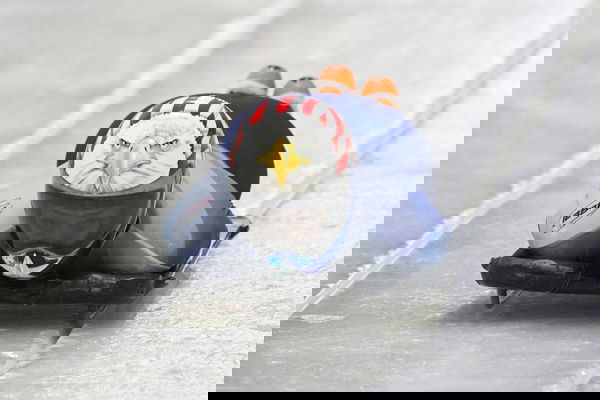
IBSF Bobsled and Skeleton World Championships LAKE PLACID, NY, UNITED STATES – MARCH 07: Katie Uhlaender USA competes during the women skeleton heat 3 race on March 07, 2025 at Mt Van Hoevenberg in Lake Placid, NY, United States Photo by David Kirouac *** IBSF Bobsled and Skeleton World Championships LAKE PLACID, NY, UNITED STATES MARCH 07 Katie Uhlaender USA competes during the women skeleton heat 3 race on March 07, 2025 at Mt Van Hoevenberg in Lake Placid, NY, United States Photo by David Kirouac Copyright: xBEAUTIFULxSPORTS/Kirouacx
Looking at all this, sports and safety authorities realized that in skiing and snowboarding, among other related sports, head injuries are one of the most hazardous consequences. The accidents resulted in regulations on the use and specifications of helmets so that they can sustain high-impact crash incidents.
Research has now indicated that head protection with a helmet can greatly lower the chances of severe head injury.
But innovation in sports equipment never ceases.
In every Olympics, teams will drive towards the speedier and more streamlined equipment, and it can get controversial at times.
In the 2018 Winter Olympics in PyeongChang, the skeleton team of Britain had a problem with high-technology skinsuits built to help them experience less drag and more performance.
Rival teams questioned whether the suits broke the rules. American athlete Katie Uhlaender and USA bobsled and skeleton chief Darrin Steele were among those raising concerns.
“I’m not a scientist, I just know that I was trying to get a suit of the same quality, and I was told that it was illegal, and now it’s legal,” said the American. “I just want to know then can the rest of us then do the same thing?” she added.
Steele noted, “It’s kind of like Amy’s helmet in 2010. Amy is one of my best friends, and I have the utmost respect for her — I couldn’t have been more proud when she won — but in my opinion, that helmet was illegal based on what I saw in the rules.”
Despite the controversy, Britain’s skeleton athletes were allowed to compete in 2018. The IBSF reviewed the suits, found them legal, and the athletes competed in them without changing to older suits.
Now, in the 2026 Winter Olympics, the Team GB skeleton sqaud is experiencing the same issue: safety plus shape. While innovation is important for a competitive edge, these cases show that safety cannot be compromised.