
Imago
250903 — NEW YORK, Sept. 3, 2025 — Novak Djokovic of Serbia celebrates scoring during the men s singles quarterfinal match against Taylor Fritz of the United States at the 2025 US Open tennis championships in New York, the United States, Sept. 2, 2025. SPU.S.-NEW YORK-TENNIS-US OPEN-MEN S SINGLES-DJOKOVIC VS FRITZ WuxXiaoling PUBLICATIONxNOTxINxCHN
Imago
250903 — NEW YORK, Sept. 3, 2025 — Novak Djokovic of Serbia celebrates scoring during the men s singles quarterfinal match against Taylor Fritz of the United States at the 2025 US Open tennis championships in New York, the United States, Sept. 2, 2025. SPU.S.-NEW YORK-TENNIS-US OPEN-MEN S SINGLES-DJOKOVIC VS FRITZ WuxXiaoling PUBLICATIONxNOTxINxCHN
We never understood if age had really caught up to Novak Djokovic till he tapped out after missing Alexander Zverev’s putaway volley at the 2025 Australian Open Semifinals. While he maintained a successful streak of qualifying for all the major semifinals this season, he lacked that edge that had gotten him the 24 Grand Slams throughout his career. As the Serb chases his 25th title in the 2026 season, the question is no longer whether Djokovic knows how to win a major, but if he can still bend time to his will.


Let us look at four things that the Serb should do to improve his chances at a major win as he approaches the twilight of his career:
Watch What’s Trending Now!
1. Following a Lighter Tennis Calendar
Djokovic clearly stated last year that his major focus lies on Grand Slams. However, that decision saw a drastic change when he took part in ATP 250 events like the Geneva Open, followed by the Hellenic Champions, and even ended up winning both. Hence, forecasting his 2026 schedule is a difficult task.
While his camp has not yet released details of his participation for this season, the possibilities of him taking a shot at all four majors are high. In addition to that, he can be expected to play in the Cincinnati, Rome, and Paris Masters, as he has found success in these tournaments over the past five years.
At 38, Djokovic’s methods have changed, and so have his priorities. Hence, maintaining a relaxed schedule would be his focus so that he can refocus and recover for events that he decides as important. A cleaner path through the early rounds would allow rest days and a controlled workload. Djokovic can still survive deep five-set encounters, but his efficiency will matter. The more he minimises strain, the more realistic a 25th major becomes.
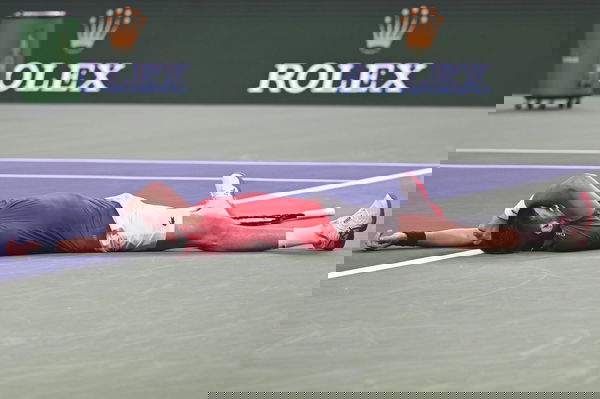
Imago
251007 — SHANGHAI, Oct. 7, 2025 — Novak Djokovic reacts during the men s singles round of 16 match between Novak Djokovic of Serbia and Jaume Munar of Spain at the ATP, Tennis Herren World Tour Shanghai Masters tennis tournament in Shanghai, east China, Oct. 7, 2025. SPCHINA-SHANGHAI-TENNIS-ATP TOUR-SHANGHAI MASTERS-MEN S SINGLES CN ChenxHaoming PUBLICATIONxNOTxINxCHN
2. Maintaining Dominance
Jannik Sinner and Carlos Alcaraz have claimed every Major title since early 2024 and have defeated Novak Djokovic on the way. But history shows that dominant periods are never airtight. Even the strongest eras allow gaps. Injuries, upsets, or scheduling can create sudden openings. If such a gap appears, Djokovic remains one of the few players able to exploit it instantly.
He knows pressure. He understands late-stage tactics. His familiarity with the moment still separates him from everyone else. But what has pulled him back time and again this season is his inability to gain a mental edge over his opponents, in addition to physical setbacks.
If conditions align in 2026, Djokovic’s chase will not feel like nostalgia. It will look like unfinished business, as he remains hungry despite 101 ATP titles.
3. Optimising fitness
For Djokovic, the issue has not been his technique or shot selection. Instead, it has been a physical decline during long matches. At 38 years of age, that is normal, but a significant barrier between him and a 25th Grand Slam title.
He battled hard against Alcaraz at the US Open, going deep in every game and even taking him to a tiebreaker. He challenged the 22-year-old physically till the third set, but eventually, Djokovic dropped, which led him to a 6-4, 7-6(4), 6-2 loss.
A similar pattern unfolded at Roland Garros. The Serb went neck to neck against Jannik Sinner and challenged his intensity. Djokovic lost 6-4, 7-5, 7-6 (3) in tight margins, but once again, the decisive factor was physical endurance.
Djokovic has recognised this reality. He understands that physical durability, recovery, and resilience will determine whether he can contend again at the top level. He cannot rely on the same preparation he used when he was 30. Instead, he has identified his physical conditioning as the top priority and shifted his approach.
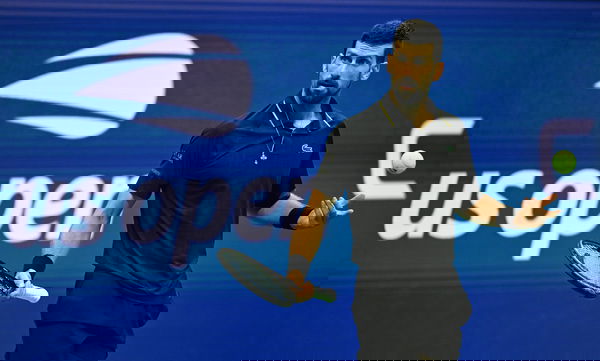
Imago
250903 — NEW YORK, Sept. 3, 2025 — Novak Djokovic of Serbia reacts during the men s singles quarterfinal match against Taylor Fritz of the United States at the 2025 US Open tennis championships in New York, the United States, Sept. 2, 2025. SPU.S.-NEW YORK-TENNIS-US OPEN-MEN S SINGLES-DJOKOVIC VS FRITZ LixRui PUBLICATIONxNOTxINxCHN
To address this, the 24-time Grand Slam champion has added Mark Kovacs to his team. Some might question adding a new specialist so late in his career. However, Kovacs has a strong professional background, which supports the decision.
Kovacs has worked with Coco Gauff and other elite athletes. His expertise lies in conditioning, biomechanics, injury prevention, and recovery. Djokovic hired him to rebuild his physical base. The goal is sharper endurance, improved resistance, and less physical breakdown across long matches.
If Djokovic can recover a higher level of fitness, he may change the dynamic against Alcaraz and Sinner. That extra stamina could allow him to seize key points late in sets. It could also extend his career window. If he achieves greater sharpness and longevity, he may still defeat one or both rivals at a Slam. The outcome could determine whether he completes his ambitious pursuit of a 25th major.
4. Banking on Strengths
Djokovic understands Melbourne Park better than any player, and his record proves it. His 10 Australian Open men’s singles titles are a record for men, and an Open-era record for any player. He has also won 91% of his matches at the event. One more win at the Australian Open 2026 would take him to 100 match victories at the tournament.
Whenever Djokovic enters the Australian Open, history follows him onto the court. It will be the same when he begins his 21st campaign in January. He will again chase milestones. There is a chance to equal Margaret Court’s record of 11 Australian singles titles. There is also an opportunity to secure a record 25th major singles trophy.
His highest tournament win rates continue to come during the Australian summer. Melbourne conditions suit his movement and his ball-striking. He has dominated on those courts for almost two decades. Hence, the Australian Open may offer the clearest pathway toward Grand Slam No. 25. If Djokovic is to make more history, Melbourne may be the location that keeps the door open.
With the Australian Open commencing on 18 January, attention will inevitably shift to Novak Djokovic and the prospect of a 25th major in Melbourne. Can he claim No. 25 at Down Under? Share your thoughts below!
Written by

Edited by

Aatreyi Sarkar