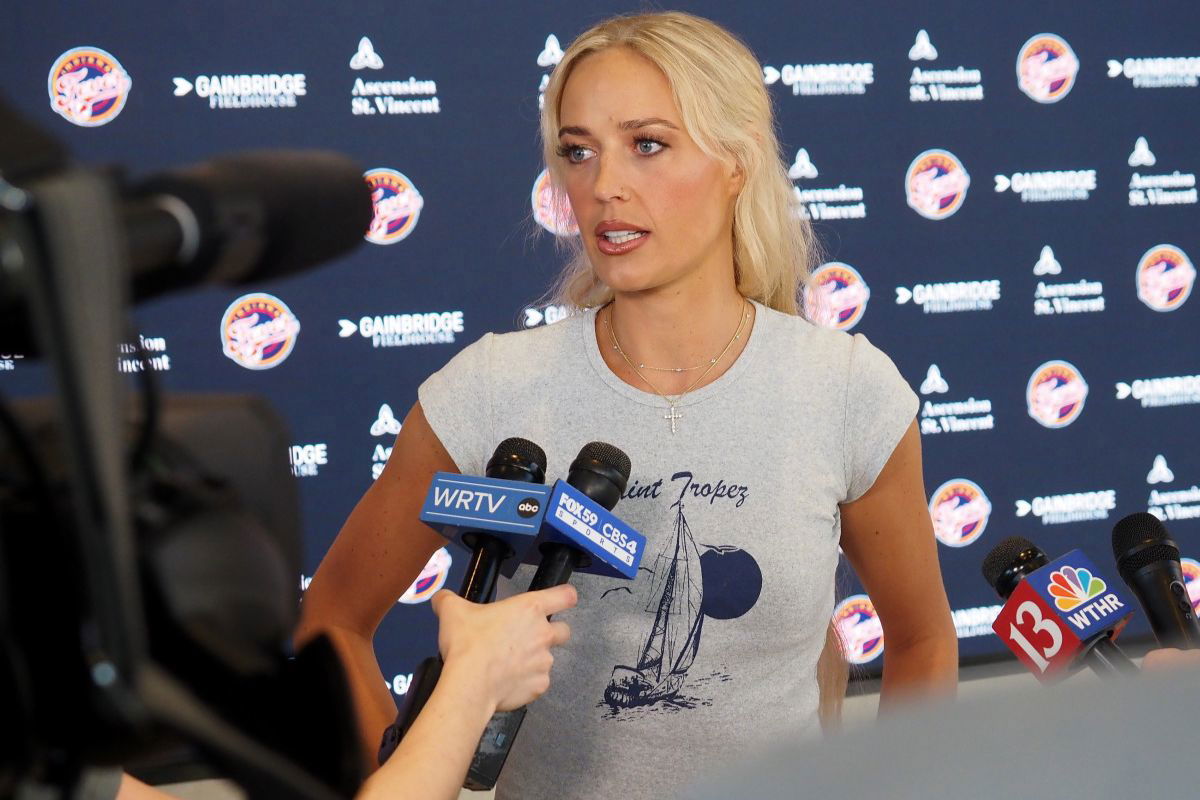
The WNBA’s CBA negotiations did not just stall again. They exposed something deeper, and players are no longer pretending otherwise. That reality came into sharper focus after the league’s most recent face-to-face meeting with the WNBPA on February 2, when no counterproposal was presented. With weeks passing and silence lingering, Sophie Cunningham offered a blunt explanation for why progress has been impossible. From her perspective, the issue is not paperwork or timelines. It is division at the ownership level.


“But from my perspective it seems like that half of our owners are player first and really wanting to invest, and the other half are more league side,” Cunningham said. “It’s weird because they do want to invest, but you don’t have owners who are willing to spend.”
Watch What’s Trending Now!
That split, as Cunningham framed it, leaves negotiations stuck in neutral. When ownership is divided on how far to invest, compromise becomes nearly unreachable. It also helps explain why the February meeting ended with frustration rather than momentum.
The lack of a proposal did not come as a shock to union leadership. As Nneka Ogwumike revealed, the league acknowledged it did not arrive prepared with a response to the union’s proposal submitted around Christmas. From the players’ side, that admission alone set the tone.
Financial gaps only magnify the tension. Several of the league’s top earners remain just below the $250,000 threshold. Kelsey Mitchell earns $249,244, while Jewell Loyd and Arike Ogunbowale sit at $249,032. Those figures, which represent the current ceiling, highlight why investment has become such a flashpoint.
At the same time, younger stars feel the disparity even more sharply. Caitlin Clark and Paige Bueckers both earn in the $78,000 range under the existing structure. For players, that contrast underscores why revenue sharing continues to loom over every discussion.
Cunningham’s point was not that owners lack interest. It was that interest without commitment leaves the league frozen. Some ownership groups are ready to spend to grow the game. Others are not prepared to absorb the immediate financial hit that meaningful raises would require.
Stakes Get Higher As the Tentative 2026 WNBA Season Delays
With fewer than 100 days remaining before the scheduled May 8 start of the 2026 season, patience is wearing thin. Training camps typically begin around April 19, and every unanswered proposal compresses an already narrow window.
According to reporting cited by the New York Post, league officials believed the union’s most recent proposal did not warrant a response because it was “essentially unchanged” from earlier submissions. From the union’s perspective, that rationale only deepened the frustration. Players questioned why that message was not communicated earlier, before the committee convened.
Meanwhile, commissioner Cathy Engelbert and league officials have maintained that negotiations require careful consideration. Still, union leaders viewed the February meeting as a missed opportunity to regain momentum after more than a year of stalled talks.

Getty
Cathy Engelbert, chief executive officer of Deloitte LLP, speaks during a Bloomberg Television interview in New York, U.S., on Tuesday, March 8, 2016. Engelbert said Deloitte would hire 25,000 people in 2016. Photographer: Chris Goodney/Bloomberg via Getty Images
Players have not been subtle about their dissatisfaction. Clark, Sabrina Ionescu, and others have previously worn “Pay us what you owe us” shirts, signaling that the frustration runs beyond private bargaining rooms.
The calendar, however, does not pause. If ownership remains split and proposals remain absent, the league risks more than strained negotiations. It risks undermining its momentum as it approaches its 30th season.
For Cunningham, the diagnosis is already clear. Until ownership aligns on how much it is willing to invest in players, no proposal will move fast enough. What happens next will determine whether the WNBA enters 2026 united or fractured at the top.
Written by

Edited by

Ved Vaze