Imago
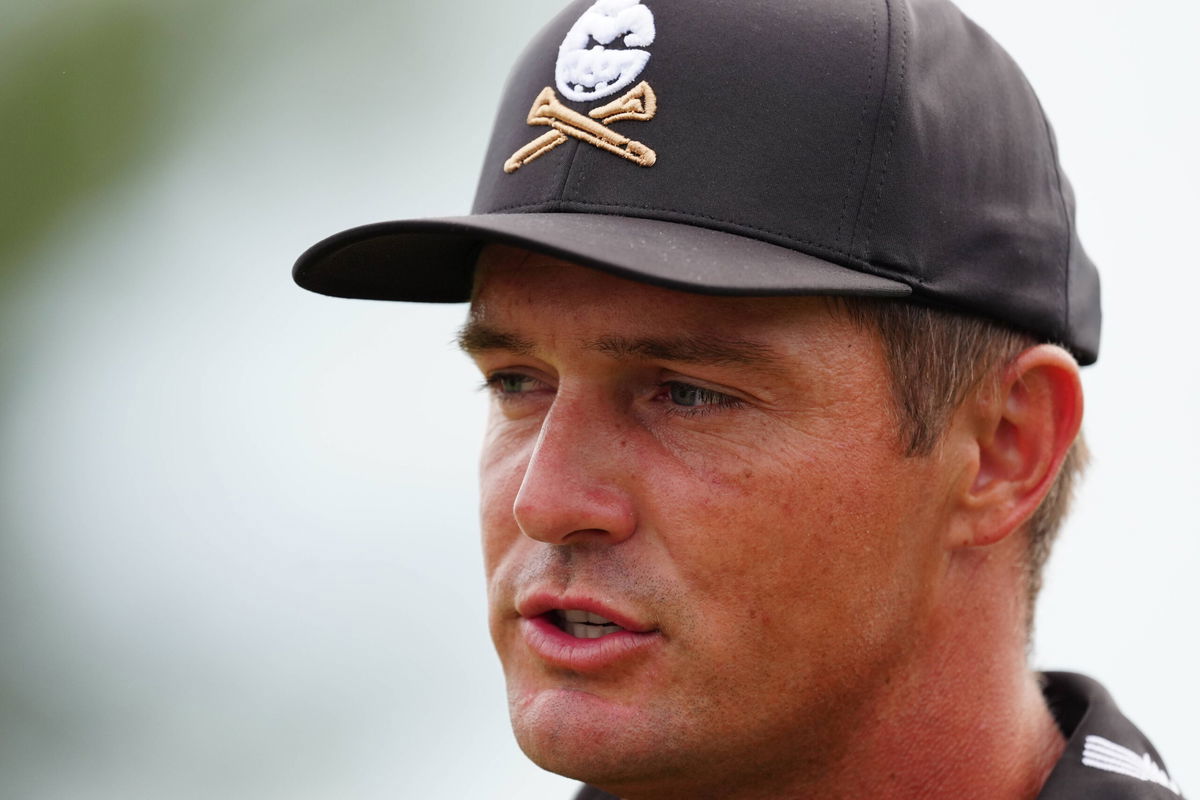
The Masters Bryson DeChambeau USA during the second practice day Tuesday at the The Masters, Augusta National Golf Club, Augusta, Georgia, USA. 10/04/2024. Picture Fran Caffrey / Golffile.ie All photo usage must carry mandatory copyright credit Golffile Fran Caffrey Augusta Augusta National Georgia USA Copyright: xFranxCaffreyx *EDI*
Imago
The Masters Bryson DeChambeau USA during the second practice day Tuesday at the The Masters, Augusta National Golf Club, Augusta, Georgia, USA. 10/04/2024. Picture Fran Caffrey / Golffile.ie All photo usage must carry mandatory copyright credit Golffile Fran Caffrey Augusta Augusta National Georgia USA Copyright: xFranxCaffreyx *EDI*
Five billion dollars in. Five-to-ten years from breaking even. What does that math mean for the players who staked their careers on LIV Golf? Scott O’Neil answered that question this week in Riyadh, hours before the Saudi-backed league’s fifth season teed off. The CEO confirmed what the balance sheets have been screaming for three years: profitability remains half a decade away at minimum, possibly longer.


“This is run like a business, with serious targets, KPIs… and a ton of pressure,” O’Neil told the Financial Times.
Watch What’s Trending Now!
The timeframe to breakeven, he added, sits somewhere “less than 10 and greater than five” years. That admission reframes the entire LIV narrative. A league built on disruption now asks its players, sponsors, and investors to wait until the end of the decade for validation. LIV’s UK entity alone has reported over $1 billion in cumulative losses between 2022 and 2024, with the 2024 figure landing at $590 million against just $65 million in revenue. Saudi Arabia’s Public Investment Fund has injected nearly $5 billion into the venture since its 2021 founding, and the red ink shows no signs of slowing.
O’Neil defended the trajectory with a familiar refrain.
“I don’t know any business worth its weight in salt that hasn’t had to invest in the early years to realise what’s coming down the road,” he said.
LIV Golf CEO Scott O’Neil says they’ve added half a billion dollars in sponsorship in the last 10 months, and that’s no where near where they’ll be in a year from now.
In 2025, LIV have added several high profile sponsors, including HSBC and Salesforce, with franchises gaining… pic.twitter.com/gvxDAtc9si
— Flushing It (@flushingitgolf) October 18, 2025
The comparison invites scrutiny. Most startups correct mistakes on the path to profitability. LIV’s response has been to double down, raising weekly purses to $30 million, abandoning its signature 54-hole format for 72-hole events, and appointing Citi to sell minority stakes in its 13 teams at roughly $1 billion per franchise. Commercial partnerships worth approximately $500 million, including deals with HSBC, Rolex, and Salesforce, have provided some revenue cushion. Whether that cushion can absorb another half-decade of losses remains the central question facing everyone attached to this project.
Player departures have sharpened that question considerably. Patrick Reed and Brooks Koepka both negotiated returns to the PGA Tour ahead of this season, leaving LIV without two of its early headliners. Five-time major champion Koepka represented marquee star power that 21-year-old replacement Michael La Sasso, however talented, cannot replicate overnight.
O’Neil dismissed the exits without dwelling on them.
“I wish them well, but I’m more focused on looking through the windshield and not the rear-view mirror,” he said.
The windshield view includes broader signals from Saudi Arabia’s sports portfolio that warrant attention. The Saudi Pro League pulled back from its $957 million player spending spree in 2023, pivoting toward financial sustainability. The Asian Winter Games, scheduled for 2029 in Saudi Arabia, have been postponed indefinitely. When pressed on whether the kingdom’s commitment to LIV remained firm, O’Neil left no ambiguity.
“There’s a commitment to the long term of this business, that’s beyond a shadow of a doubt,” he said.
The financial filings tell a different story—one where even sovereign wealth funds eventually expect returns. And inside that uncertainty, one team has managed to turn a profit while the parent structure hemorrhages cash.
Bryson DeChambeau’s Crushers GC defies LIV Golf’s financial trend
The league’s balance sheet shows $1.4 billion in cumulative losses since 2022. Bryson DeChambeau‘s Crushers GC, by contrast, has been EBITDA-positive for multiple seasons. The two-time U.S. Open champion revealed late last year that his team generates over $20 million in annual revenue through sponsorships with Qualcomm and Reebok, prize money, including $8 million from the 2025 Team Championship, and his own media empire. His YouTube channel alone has accumulated over 134 million views and 2.57 million subscribers, metrics that dwarf the league’s broadcast numbers.
The lack of perceived value of the LIV Golf League and its teams has attracted a lot of attention over the past few years. But Bryson DeChambeau’s Crushers GC have been one of the most successful franchises and he says they’ve cleared more than $20 million in revenue:
“I’ll tell… https://t.co/zhfEgcDRQ7 pic.twitter.com/dXZX3LkCRn
— Flushing It (@flushingitgolf) December 27, 2025
The paradox cuts deep. DeChambeau captains the most commercially successful franchise inside an enterprise that continues searching for a financial footing after burning through billions. His contract expires after 2026, and while he has committed to this season, his long-term future remains conspicuously unresolved. He declined the PGA Tour’s Returning Member Program for now, but has publicly noted that things within LIV’s structure need to change and improve.
Individual team success means little if the parent enterprise cannot sustain itself. O’Neil projects confidence. The balance sheet projects uncertainty. For DeChambeau and every golfer who bet their career on LIV’s vision, the next five years will determine whether patience was wisdom or a very expensive miscalculation.
