Imago
Source Credit: IMAGO
Imago
Source Credit: IMAGO
Essentials Inside The Story
- Rory McIlroy opens up about the mental hurdle that he had to deal with during the Masters earlier this year. He also shed light on how a simple piece of advice helped him cope better. However, there was still one barrier that he needed to cross to emerge triumphant.
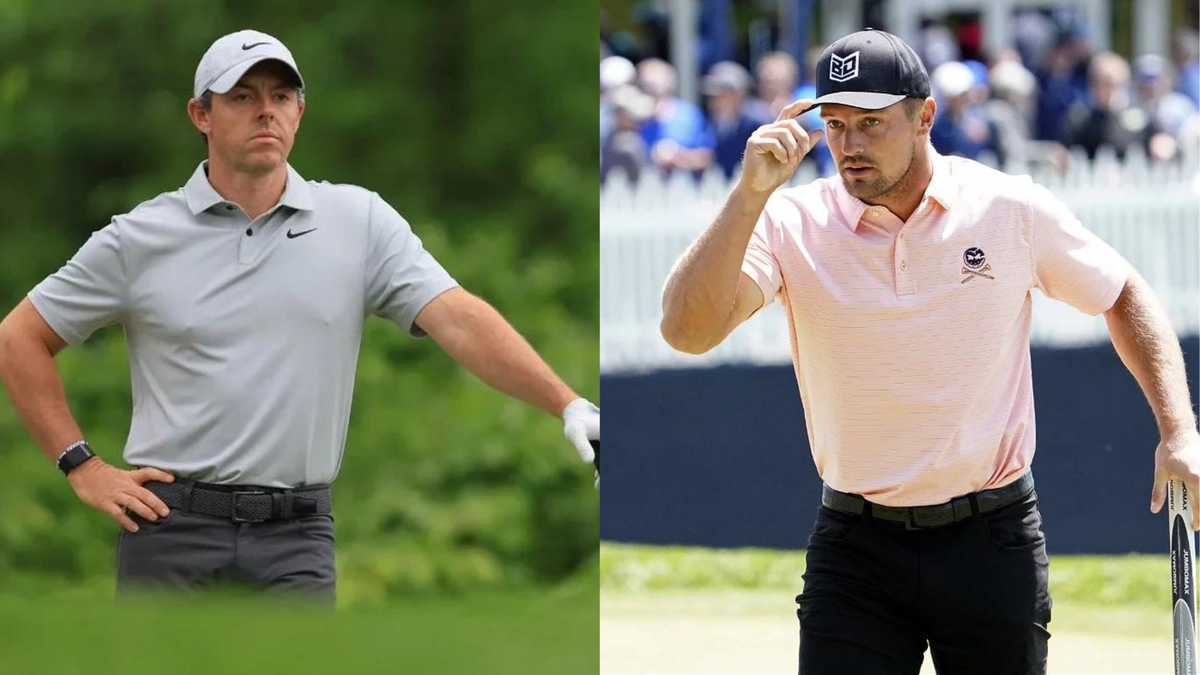
Ten months before the 2025 Masters, Rory McIlroy watched from a Pinehurst scoring room as Bryson DeChambeau‘s 55-yard bunker shot clinched a U.S. Open title that slipped through his fingers. At Augusta, they would be paired together for the final round, and McIlroy knew exactly what he was walking into.
Watch What’s Trending Now!
Appearing on The Shotgun Start’s 2025 Year in Review episode, McIlroy offered rare insight into the internal battle behind his Career Grand Slam-clinching victory. The toughest challenge wasn’t Augusta National’s back nine. It wasn’t the weight of an 11-year major drought. It was the man walking beside him. “I felt like that was going to be the toughest thing I would have to deal with that day was Bryson himself,” McIlroy said. “Just the way we completely—we’re polar opposites in terms of how we approach the game.”
McIlroy anticipated the crowd dynamics, too. DeChambeau would have his section of supporters. McIlroy would have his. Managing that split energy while chasing history required a deliberate strategy.
ADVERTISEMENT
Before heading to the range on Masters Sunday, McIlroy stopped by the caddy area for his routine check-in with sports psychologist Bob Rotella.
“How you feeling today?” Rotella asked.
“I’m feeling good. I’m feeling good about my stuff,” McIlroy replied. Then came the admission: “The one thing that I’m like just uneasy about is just the pairing.”
ADVERTISEMENT
Rotella’s advice was direct. “Just make him invisible. Don’t engage. Don’t look at him. Just get lost in your own little world. You’ve got Harry beside you. Have him be your companion.”
McIlroy carried that framework onto the course. And it paid off at the most critical moment. Walking up the third fairway, McIlroy trailed by one shot. He couldn’t believe what he saw next. “I could not believe that Bryson laid up,” McIlroy said. “I thought he had a chance to drive it on the green. I felt like even though it was early in the round, if he were to take driver out there and hit it on the green, it really is like taking the tournament by the scruff of the neck.”
ADVERTISEMENT
DeChambeau’s conservative choice backfired. He three-putted while McIlroy made a birdie. A good shot into four, another converted putt. By the time McIlroy walked off the fifth tee, he led by three. “I was like, what just happened?” McIlroy recalled. “If I don’t have those two holes after such a rough start, I probably don’t go on to win.”
Shane Lowry greeting his best friend. 💛 pic.twitter.com/sMQXL1HECx
— Golf Digest (@GolfDigest) April 13, 2025
The external threat had been neutralized. But the pressure didn’t disappear, it simply changed form.
ADVERTISEMENT
Top Stories
Nelly Korda & Co. Stopped From Teeing Up as $2.1M Tournament Faces Unexpected Disruption

Justin Rose Makes Honest Admission About Turning Down LIV After Brooks Koepka’s Return

Furious Golf Fans Sign Petition Demanding Suspended PGA Tour Pro’s Reinstatement

Jon Rahm Has the Last Laugh as DP World Tour Decides on LIV Golf Fines – Insider
Lydia Ko & More Livid as Nelly Korda Wins LPGA Title Due to Controversial Ruling: ‘Gutted’
Rory McIlroy’s biggest impediment became his own self
“That was the biggest impediment between me and winning the Masters that day,” McIlroy said of the pairing. “And then once it was apparent that that wasn’t going to be the biggest impediment, then I made myself the biggest impediment.” The psychological arc was complete. External challenge managed. Internal pressure amplified. McIlroy had to beat himself to finish the job.
He did. A playoff birdie over Justin Rose sealed the Career Grand Slam. DeChambeau later admitted he “wanted to cry” watching McIlroy complete the achievement, praising the Northern Irishman for fighting his way to the green jacket.
ADVERTISEMENT
Reflecting on the intensity of that Sunday, McIlroy acknowledged a complicated relationship with the pressure he experienced. “There’s not one thing about that day that I would want back,” he said. “I’m happy that it’s over. I never want to feel that way. But I hope I feel that way again on the golf course because it means I’m playing for something very important.”
The Grand Slam is complete. The burden lifted. But McIlroy’s admission reveals something deeper about championship golf: sometimes the biggest battle isn’t against the course or the competition. It’s against everything you’ve trained yourself to ignore.
ADVERTISEMENT
ADVERTISEMENT
ADVERTISEMENT
Related Newsletters