Imago
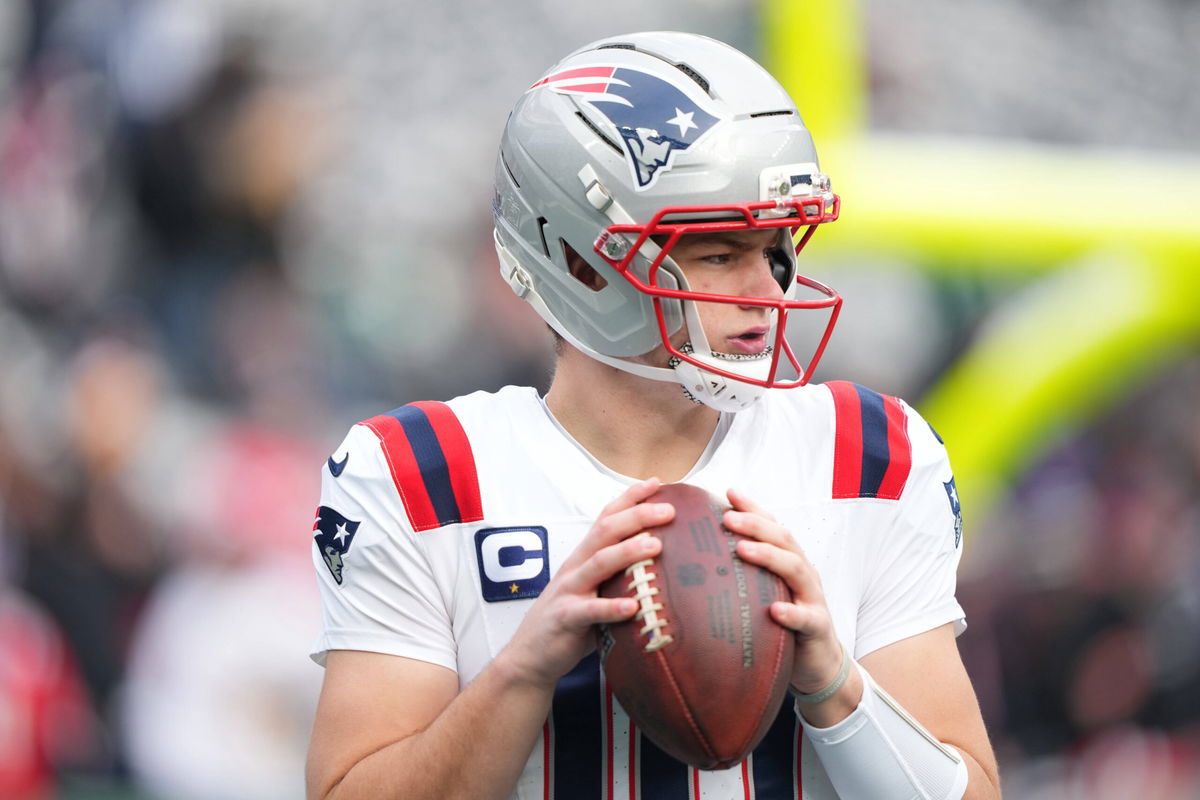
NFL, American Football Herren, USA New England Patriots at New York Jets Dec 28, 2025 East Rutherford, New Jersey, USA New England Patriots quarterback Drake Maye 10 warms up prior to the game against the New York Jets at MetLife Stadium. East Rutherford MetLife Stadium New Jersey USA, EDITORIAL USE ONLY PUBLICATIONxINxGERxSUIxAUTxONLY Copyright: xRobertxDeutschx 20251228_ajw_jo9_024
Imago
NFL, American Football Herren, USA New England Patriots at New York Jets Dec 28, 2025 East Rutherford, New Jersey, USA New England Patriots quarterback Drake Maye 10 warms up prior to the game against the New York Jets at MetLife Stadium. East Rutherford MetLife Stadium New Jersey USA, EDITORIAL USE ONLY PUBLICATIONxINxGERxSUIxAUTxONLY Copyright: xRobertxDeutschx 20251228_ajw_jo9_024
Essentials Inside The Story
- NFL Executive confirms a formal review of shoulder pad requirements
- Modern pads have become significantly smaller and lighter than those used 10–15 years ago
- Shoulder injuries now account for approximately 6.7% of all NFL injuries
Picture the NFL as a sports car that’s been quietly removing safety bumpers to go faster. The car looks sleeker, and it moves quicker, but eventually, something breaks. Right now, that something is a lot of shoulders, and the league is finally pulling over to take a look under the hood.
Watch What’s Trending Now!
The NFL’s offseason agenda now includes a formal review of its shoulder pad requirements. It’s a direct response to a troubling injury trend that has persisted across multiple seasons. Jeff Miller, the league’s executive vice president, made the admission plain on Monday, February 23.
“Shoulder injuries were very high a year ago,” Miller said. “They weren’t quite as high this year, but they were still higher than average. And so the conversation with the Competition Committee went to: Are there equipment-focused ways you can prevent some of those injuries?”
Top Stories





“We know that shoulder pads in their coverage are not what they were 10 or 15 years ago,” Miller continued. “Players and equipment managers tailor them. And is that presenting injury risk with less coverage?… It may be something we’re going to spend more time on… I think that there are equipment elements to this which need to be addressed.”

Where Do the Patriots Still Lack Elite Talent?
Let Tony do the scouting, you just make the pick.
Pick your positions. Get Tony’s top 5:
NFL to study shoulder pad requirements after rise in shoulder injuries. https://t.co/7NRLKMdhp5
— ProFootballTalk (@ProFootballTalk) February 23, 2026
The root cause, in Miller’s view, isn’t a mystery. Modern shoulder pads provide less coverage than their 80s counterparts. But that shrinkage didn’t happen overnight. For decades, players have gravitated toward lighter, smaller pads to maximize speed and avoid being grabbed. Advances in foam and plastic designs also gave manufacturers cover to argue that the smaller pads were still safe.
This resulted in a generation of NFL players sprinting around in equipment that prioritizes aesthetics and athleticism over anatomical protection. Now, if a league-wide consensus forms on Miller’s perspective, we could see bulkier pads on the field as early as the 2026 season itself.
The 2025 season drove the point home with brutal efficiency. The Tennessee Titans’ rookie quarterback Cam Ward suffered a Grade A AC joint sprain in his right shoulder in the final week of the regular season, ending his debut year early. Across the league, shoulder injuries have dotted every team’s injury report.
A peer-reviewed study that tracked NFL injury data from 2019 through 2022 found that shoulder injuries accounted for approximately 6.7% of all reported injuries in that time period at a rate of 4.5 per 1,000 athletic exposures. Naturally, the league is now taking a harder look to see how this number can go down.
But perhaps the most prominent case study for the 2025 season was that of Drake Maye, the 23-year-old New England Patriots quarterback who dragged his team to the Super Bowl while quietly carrying a damaged shoulder the whole way there.
Drake Maye’s Super Bowl hindrance
Maye’s shoulder issue notably predated the AFC Championship game, per NBC Sports Boston’s Phil Perry. But a third-quarter scramble in the game, where Denver Broncos safety Talanoa Hufanga drove him hard into the Mile High turf, made things significantly worse.
“My understanding is that he was dealing with a right shoulder issue prior to the Denver game,” Perry wrote. “It hadn’t limited him in practices or games, but wasn’t 100 percent. The Talanoa Hufanga hit, which resulted in Maye landing hard on his right side, didn’t help.”
But Drake Maye wasn’t about to let a shoulder injury get in the way of his Super Bowl glory. Maye received a painkiller injection before Super Bowl LX, and downplayed the ailment publicly when asked about it later.
“You can’t zone in on one little thing on the shoulder,” Maye said.
Meanwhile, the Seattle Seahawks defense – six sacks, 11 hits, Devon Witherspoon blitzing from everywhere – did most of the visible damage. But rewatching the 29-13 loss showed something serious. Maye missed routine throws he’d been nailing all season, including a badly overthrown pass to a wide-open Austin Hooper, and a ball thrown behind Hunter Henry. Maye finished 27-of-43 for 295 yards, two touchdowns, and two picks, a far cry from his near-perfect performance several times in the regular season.
Drake Maye finished runner-up in the MVP vote after a season that included 4,394 passing yards, 31 touchdowns, and a league-best 72% completion rate. The grace he showed in defeat, taking full blame, tearing up over his teammates, confirmed what New England already knew: they have the right guy.
But the right guy deserved better protection than the equipment currently provides. Maybe if Maye had been at 100 percent, the outcome of Super Bowl LX would have been a Patriots victory instead. Maye has notably shared that his shoulder injury would not require surgery. Meanwhile, the NFL’s shoulder pad review doesn’t just sound like a safety initiative; it’s an overdue acknowledgement that speed came at a cost. But how long will the stars have to pay it?
Written by

Edited by

Antra Koul