Imago
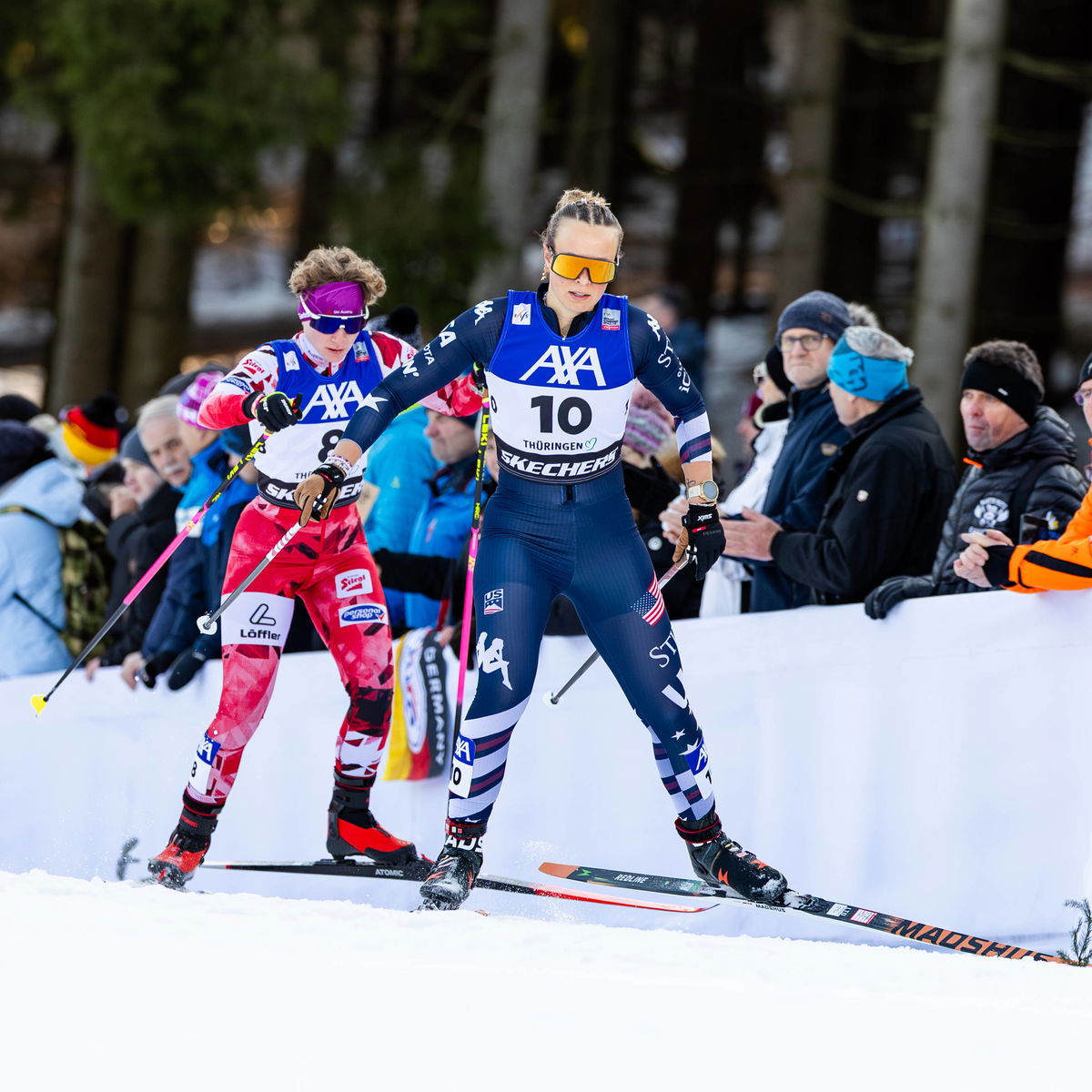
18.01.2026, GER, Nordische Kombination, Saison 25/26, Frauen, Viessmann Fis Nordic Combined World Cup, Individual Gundersen Normal Hill/5.0km Annika Malacinski Steamboat Springs Winter Sports Club, Claudia Purker SC Bischofshofen 98559 Oberhof LOTTO Thüringen ARENA am Renns Thüringen Deutschland *** 18 01 2026, GER, Nordic Combined, Season 25 26, Women, Viessmann Fis Nordic Combined World Cup, Individual Gundersen Normal Hill 5 0km Annika Malacinski Steamboat Springs Winter Sports Club , Claudia Purker SC Bischofshofen 98559 Oberhof LOTTO Thüringen ARENA am Renns Thüringen Germany
Imago
18.01.2026, GER, Nordische Kombination, Saison 25/26, Frauen, Viessmann Fis Nordic Combined World Cup, Individual Gundersen Normal Hill/5.0km Annika Malacinski Steamboat Springs Winter Sports Club, Claudia Purker SC Bischofshofen 98559 Oberhof LOTTO Thüringen ARENA am Renns Thüringen Deutschland *** 18 01 2026, GER, Nordic Combined, Season 25 26, Women, Viessmann Fis Nordic Combined World Cup, Individual Gundersen Normal Hill 5 0km Annika Malacinski Steamboat Springs Winter Sports Club , Claudia Purker SC Bischofshofen 98559 Oberhof LOTTO Thüringen ARENA am Renns Thüringen Germany
For eight years, women’s Nordic combined has fought for Olympic inclusion, only to be rejected repeatedly. While men can compete, women remain sidelined despite meeting the same standards. Now, just 8 days before the Milano Cortina, the athletes are refusing to stay silent; instead are planning a protest unlike anything the sport has ever seen.


At the upcoming World Cup event in Seefeld, Austria (January 30 to February 1, 2026), the world’s best female Nordic combined skiers aim to draw attention to the fact that Nordic combined is the only Winter Olympic discipline without a women’s event. Athletes will raise their ski poles in an “X” shape before the race begins as a symbol of protest against their exclusion.
Watch What’s Trending Now!
The action is designed for television and social media, ensuring a global audience sees it. While their male counterparts fine-tune preparations for Milano-Cortina, the women will watch from home. But through this protest, they claim their own stage.
But the question is, why don’t the women have their own event at the Olympics?
Well, the International Olympic Committee cites low numbers of competing nations and limited global interest as the main reasons behind the exclusion. Officials argue that the sport needs to grow further around the world before a women’s event can be considered.
However, women already compete internationally in the sport: out of 837 Nordic combined athletes as of January 2025, 217 are women and regularly participate in World Cups and World Championships.

Getty
TOBLACH HOCHPUSTERTAL, ITALY – JANUARY 5: (L-R) Petra Majdic of Slovenia, Anna Haag of Sweden and Maria Rydqvist of Sweden compete during the individual sprint women for the FIS Cross Country World Cup Tour de Ski on January 5, 2011 in Toblach Hochpustertal, Italy. (Photo by Arnd Hemmersbach/NordicFocus/Getty Images)
The IOC first blocked a women’s event in Nordic combined at the 2022 Winter Olympics. The sport’s governing body, FIS, and female athletes had hoped to add the event to the Beijing program, but the IOC decided in 2018 not to include it.
And then in June 2022, when the Milano Cortina 2026 program was announced, women were once again left out, with the IOC citing insufficient global reach and participation.
Because of this, women have never competed in Nordic combined at any Winter Olympics. The Seefeld protest is more than a gesture; it is a statement. With the 2026 Games imminent, the athletes are demanding recognition, fairness, and equality. And at the forefront of this fight is one young athlete whose frustration captures the broader struggle.
Athletes push for equality in Nordic Combined at Milano Cortina
24-year-old Annika Malacinski, who fell in love with Nordic combined at age 16, expressed her frustration over being excluded from the Milano Cortina:
“It’s a real shame that women are excluded from the Olympic Games, because we fulfilled all the conditions the IOC expected of us and all their arguments are completely unfounded. There are more different nations on the podium in our discipline than in many others, and we are competitive.”
But this is not the first time athletes have spoken out.
In 2022, Gyda Westvold Hansen, the first-ever World Champion in women’s Nordic, along with other top female athletes have also used the ski-pole “X” symbol at races to protest their exclusion.
On social media, they have raised their voices with the hashtag #noeXception, criticizing the IOC’s decision not to include women’s Nordic combined at the 2026 Winter Olympics.
Speaking to Norwegian broadcaster NRK, Westvold Hansen said, “We think it’s absurd that you have to look like this or have a beard to be allowed to compete in the Olympics. We hope to do something about it. This is important for recruitment and for girls to want to continue with the sport, which is so much fun. It is extremely important for the sport.”
Despite the protests, women’s Nordic combined will not be part of the 2026 Games. However, the IOC issued a statement confirming it will review the discipline after Milano Cortina, including whether to include women’s events in the 2030 Winter Olympics. However, the IOC also issued a warning to the FIS:
“On the other hand, FIS and the Nordic Combined community also have a responsibility to come back with a more compelling case in terms of universality, popularity and level of performance, both on the men and the women categories, to allow the IOC to make decisions for the 2030 Games and beyond.”
The IOC plans to evaluate participation and data from the 2026 Games before deciding the sport’s future.