Imago
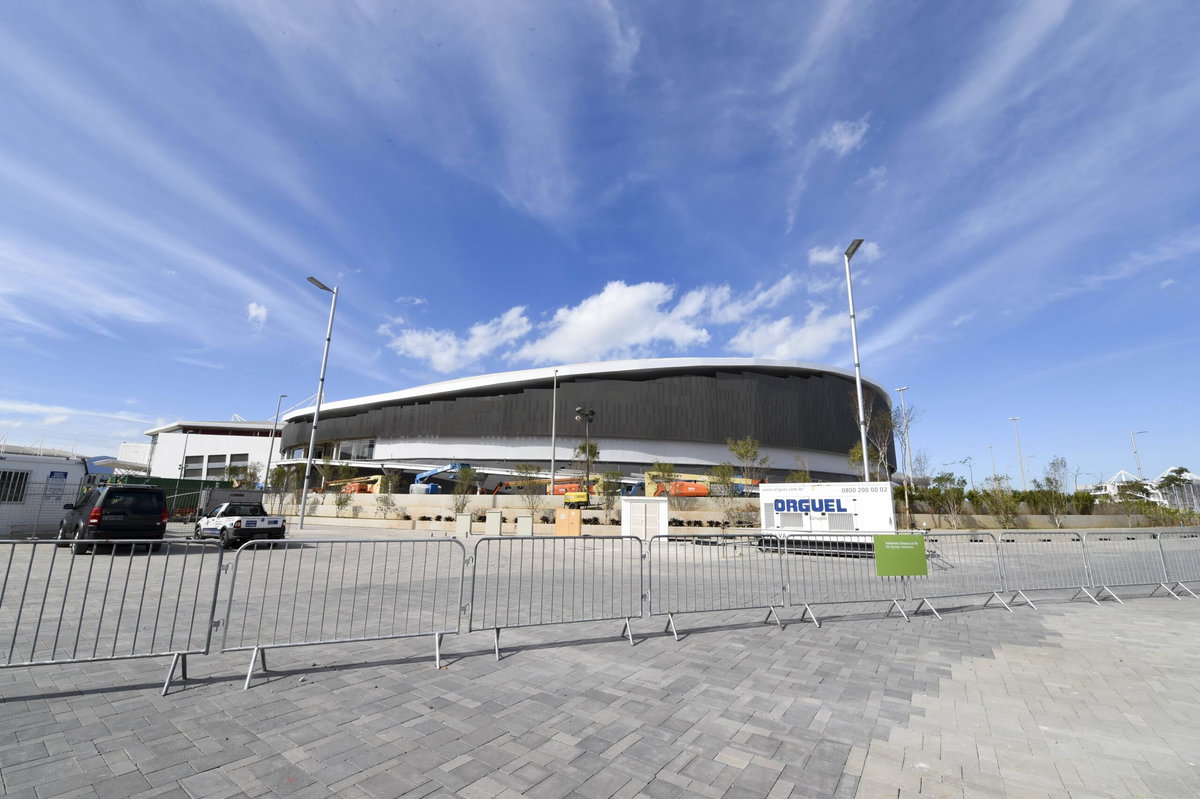
Bilder des Tages – SPORT Entrega do Vel?dromo Rio 2016 RIO DE JANEIRO, Brazil – 25/06/2016: VELODROME DELIVERY RIO 2016 – Eduardo Paes delivers the Olympic Velodrome Rio to the President of Rio 2016, Carlos Arthur Nuzman. The works were delayed and delivery is the last of the Olympic Park Rio 2016 in Barra da Tijuca. (Photo: Celso Pupo / FotoArena) 1152855 PUBLICATIONxNOTxINxBRA CelsoxPupo Images the Day Sports Entrega Do Rn vel dromo Rio 2016 Rio de Janeiro Brazil 25 06 2016 Velodrome Delivery Rio 2016 Eduardo Paes delivers The Olympic Velodrome Rio to The President of Rio 2016 Carlos Arthur Nuzman The Works were delayed and Delivery is The Load of The Olympic Park Rio 2016 in Barra there Tijuca Photo Celso Pupo Fotoarena PUBLICATIONxNOTxINxBRA CelsoxPupo
Imago
Bilder des Tages – SPORT Entrega do Vel?dromo Rio 2016 RIO DE JANEIRO, Brazil – 25/06/2016: VELODROME DELIVERY RIO 2016 – Eduardo Paes delivers the Olympic Velodrome Rio to the President of Rio 2016, Carlos Arthur Nuzman. The works were delayed and delivery is the last of the Olympic Park Rio 2016 in Barra da Tijuca. (Photo: Celso Pupo / FotoArena) 1152855 PUBLICATIONxNOTxINxBRA CelsoxPupo Images the Day Sports Entrega Do Rn vel dromo Rio 2016 Rio de Janeiro Brazil 25 06 2016 Velodrome Delivery Rio 2016 Eduardo Paes delivers The Olympic Velodrome Rio to The President of Rio 2016 Carlos Arthur Nuzman The Works were delayed and Delivery is The Load of The Olympic Park Rio 2016 in Barra there Tijuca Photo Celso Pupo Fotoarena PUBLICATIONxNOTxINxBRA CelsoxPupo
Few places in Brazil carry the same Olympic echoes as Rio’s sprawling Olympic Park. Once a stage for British triumphs and Paralympic glory in 2016, it now tells a different story, one of neglect and misfortune. In 2017, a stray handmade hot-air balloon drifted into the velodrome’s roof, sparking a fire that scorched its prized Siberian wood track, a surface once crafted for champions but now scarred for the second time.
Watch What’s Trending Now!
That was after videos emerged of a large fire blazing on the roof of the velodrome in Rio de Janeiro’s Olympic Park, concerning everyone across social media. Fire crews were called to the scene just after 4 am local time (0717 GMT), with a powerful fire blazing on the velodrome. But over 80 firefighters and around 20 fire trucks battled the blaze until early Wednesday morning, hoping to eventually bring it under control.
They even had to battle the blaze both inside and outside the building in an attempt to protect the structure and the various artefacts within. They managed that successfully, as per the state military fire department, which also came in to help combat the blaze at the iconic structure.
Top Stories






Built for the 2016 Rio Olympics, the park was once the heart of the Games, packed with energy and home to nine major venues. After the closing ceremony, it turned into an Olympic Training Center, with workers taking down parts of the site to reuse elsewhere. Workers used materials from the Aquatics Stadium to build two new pools, and they repurposed sections of the Future Arena to create schools.
Drone footage released by the Corpo de Bombeiros Militar do Rio de Janeiro on April 8 shows a large fire engulfing the roof of the velodrome in Rio’s Olympic Park. Fire officials said the blaze was brought under control early Wednesday. No injuries were reported and there was no… pic.twitter.com/BNoxO1VaA9
— Brut America (@brutamerica) April 9, 2026
The velodrome alone cost about $45 million, yet it now sits mostly unused. Like several other arenas around the park, officials closed it and let it sit unused. In Barra da Tijuca, what was once a lively center of sport now feels empty, offering little for visitors except memories and silence.
Brazil spent about $13 billion to host the Games in 2016, though some reports say the total may have reached $20 billion. That huge price tag still stirs debate, especially with the country going through its worst economic crisis in decades.
Since 2017, the Rock in Rio music festival has used the Olympic Park as its permanent home, hosting the event every year. Ten editions have taken place in Rio since the festival began in 1985. Still, the facility keeps its sporting identity, with several areas operating as a sports training school, a Science and Technology campus, and more.
But despite the concerns, Rio de Janeiro mayor Eduardo Cavaliere revealed the extent of the damage done by the blaze to both the velodrome and the Olympic Park.
Mayor Eduardo Cavaliere reveals the damage done to the Rio Olympic Park
However, the Rio Olympic Velodrome (aka Velódromo Municipal do Rio), which is part of the Olympic Training Center, was where the fire affected most, and that’s what concerned fans. That’s because the site houses the Olympic Museum, which features memorabilia and more from the games, including medals and the Olympic torch.
The blaze, fortunately, did not affect the items on site, as the firefighters managed to stop the flames from spreading, according to Lieutenant Colonel Fabio Contreiras. Mayor Cavaliere reaffirmed what the Lieutenant Colonel had said earlier.
“The velodrome and the Olympic Museum were barely affected by the fire”, Cavaliere said, as per CNN Brazil via Inside the Games.biz. “It remains intact and well-preserved. Obviously, it will need to be cleaned and undergo some form of maintenance before we can announce that the velodrome is back in operation.”
At the time of writing, officials haven’t revealed what caused the fire, unlike the two earlier blazes the site faced in 2017. Both were, at the time, attributed to falling sky lanterns, according to various reports, although things changed this time around. According to CNN Brazil, the tarp on the inside of the structure slowed the fire’s advance and made the firefighters’ job easier.
For now, the immediate danger has passed, but questions remain over what caused the fire and whether deeper structural concerns still linger. Only time will tell if this latest incident is an isolated scare or part of a troubling pattern for one of Brazil’s most iconic Olympic venues.
Written by

Edited by

Firdows Matheen