Imago
Milan Economy And Daily Life Logo is seen at the Milano Cortina 2026 Winter Olympic Games promotion at Piazza del Duomo in Milan, Italy on March 2, 2025. Milan Italy PUBLICATIONxNOTxINxFRA Copyright: xJakubxPorzyckix originalFilename: porzycki-milaneco250302_npiGW.jpg
Imago
Milan Economy And Daily Life Logo is seen at the Milano Cortina 2026 Winter Olympic Games promotion at Piazza del Duomo in Milan, Italy on March 2, 2025. Milan Italy PUBLICATIONxNOTxINxFRA Copyright: xJakubxPorzyckix originalFilename: porzycki-milaneco250302_npiGW.jpg
There’s been a lot of worry in the U.S. about how Olympic qualification rules have affected Olympians at the 2026 Winter Games. Take Katie Uhlaender – she missed out on qualifying due to a seemingly unfair qualification rule. To make sure something like that doesn’t happen again, the IOC Executive Board has put a plan in place to help American athletes.


One big step they’ve taken is to approve the qualification systems for the Los Angeles 2028 Olympic Games (LA28) early. Back in December 2025, they approved 26 systems, and recently they added 22 more. That leaves just six sports still waiting for approval.
Watch What’s Trending Now!
Those will be sorted at a future Executive Board meeting. As of now, 48 sports already have clear qualification rules.
All the new systems follow the Qualification System Principles from March 2025. These rules show how athletes earn Olympic spots and make sure the process is fair, clear, and consistent.
Most of the approved rules are based on the Paris 2024 rules, but they’ve been updated with feedback and lessons learned from teams, federations, and Olympic committees.
The main goal is to provide athletes with several opportunities to qualify without requiring too much travel. The LA28 systems also ensure that all continents and countries receive equal representation.
Imago
Olympische Ringe, Lausanne, SUI, 13.12.2017 *** Olympic rings Lausanne SUI 13 12 2017 PUBLICATIONxNOTxINxSUI
Another big win is the timing. Most of these rules have been passed by the IOC earlier than ever before. That will provide athletes, coaches and support staff with enough time to plan training, competitions, and travel prior to the LA28.
Having the vast majority of qualification systems now licensed and with only a few awaiting, the IOC is sending a strong signal: it is preparation and performance that will dictate who is competing at LA28, rather than bewildering rules.
Of course, none of this progress came without cost, as many athletes saw their Olympic dreams slip away at the Winter Olympics despite being among the very best.
How qualification rules blocked one U.S. Winter Olympian
Five-time Olympian Katie Uhlaender was trying to qualify for her sixth (and probably last) Games at the age of 41. In January 2026, she raced at the North American Cup event in Lake Placid, a key competition where athletes can earn ranking points toward Winter Olympic qualification.
But just before the race, Canada’s skeleton team withdrew four female competitors at the last minute, shrinking the field. Because of how the points system works, fewer athletes in the race resulted in fewer ranking points being available. S
o, even though Uhlaender won the race, she only received 90 points instead of the full 120 she could have earned with a larger field.
Because of this, Uhlaender missed Olympic qualification by 18 points. While the International Bobsleigh & Skeleton Federation (IBSF) investigated and found that the withdrawals did reduce points, they ruled that no rules were technically broken and cleared the Canadian team of formal wrongdoing.
Imago
Bildnummer: 05436950 Datum: 22.01.2010 Copyright: imago/Camera 4
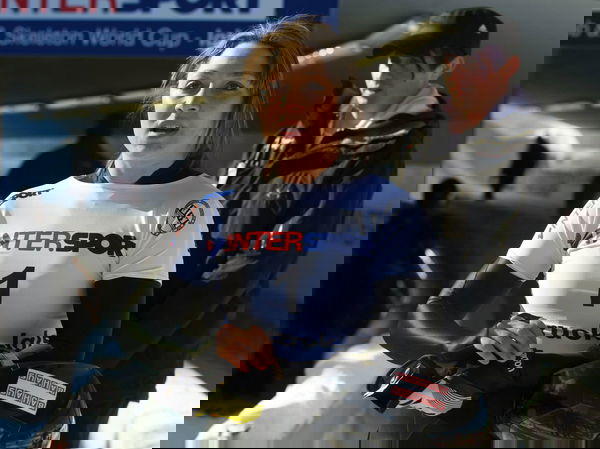
Skeleton Weltcup in Innsbruck – Igls 22.01.2010 Frauen – Katie Uhlaender (USA); Skeleton Damen Weltcup 2009 2010 Innsbruck Einzelbild vdig xkg 2010 quer
Image number 05436950 date 22 01 2010 Copyright imago Camera 4 Skeleton World Cup in Innsbruck Igls 22 01 2010 Women Katie Uhlaender USA Skeleton women World Cup 2009 2010 Innsbruck Single Vdig xkg 2010 horizontal
Even the Canadian coach admitted, “This is a system flaw, if anything. But we were within the rules.” Uhlaender’s story is a clear example of how Olympic qualification rules, even when technically followed, can shatter an athlete’s dreams.
Another example is Alisa Efimova and her partner Misha Mitrofanov, one of the top American pairs teams in figure skating. They won the U.S. national championships and went on to claim gold at the 2026 Four Continents Figure Skating Championships in Beijing.
Despite their success, they could not compete at the 2026 Winter Olympics due to a citizenship rule. Efimova, born in Finland, only had a U.S. green card and had not yet obtained U.S. citizenship in time to meet Olympic eligibility requirements.
These situations shows how eligibility rules, not performance, can prevent even top athletes from reaching the Games.