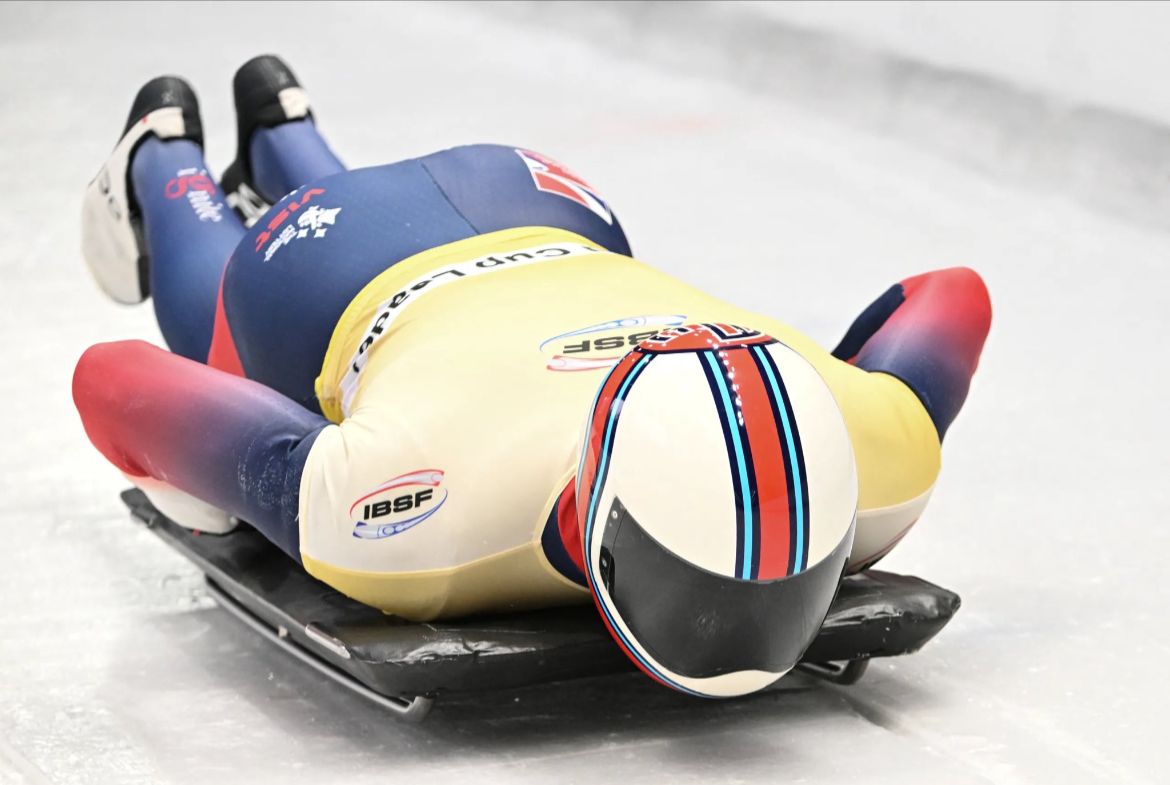
The 2026 Winter Olympics are here! With an array of thrilling sports and fierce competition between countries, there’s so much to look forward to. One event that fans shouldn’t miss is Skeleton. Racing face-first down a frozen track at speeds of up to 150 km/h, this sport demands (approx. 93 mph) pure courage and total control.


It first burst onto the Olympic scene at the 1928 Winter Games in St. Moritz, Switzerland. Since then, Skeleton has cemented its place as one of the most electrifying events at the Games. Here’s everything you need to know about it:
Watch What’s Trending Now!
How does Skeleton work?
In the high-speed world of skeleton, timing is everything. Each competitor’s performance is clocked to the hundredth of a second over four heats. Think of it as a mix of sprinting, precision, and gravity-powered thrill, all performed while lying face-down, chin just above the ice.
At the start, it’s all about the push. Athletes sprint beside their sled, gripping it with one hand, and dive on in perfect sync to build high speed. Once aboard, every movement counts. They steer through high-banked turns and flat-out straights using nothing mechanical, just body control and raw instinct.
Power and speed rule here. The top sliders can cover 50 meters in about five seconds, a nod to their track-and-field roots, just ask 2010 Olympic champion Amy Williams, who swapped her spikes for a sled and proved how explosive starts change everything. On the way down, they experience forces up to five times gravity, holding on through every breathtaking corner of the icy run.
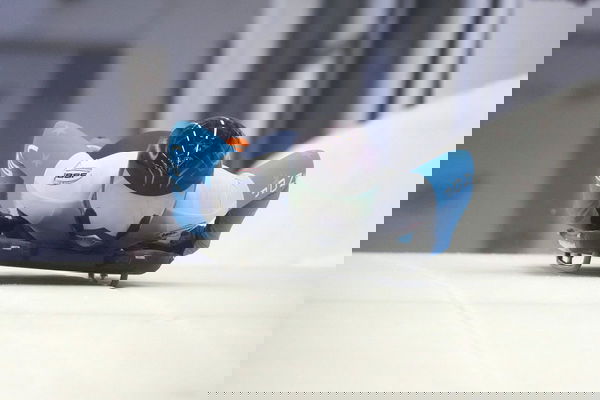
Imago
December 19, 2025, Sigulda, Vidzeme Region, Latvia: MYSTIQUE RO of the United States in action during IBSF World Cup 2025/26 women’s skeleton heat 1 in Sigulda, Sigulda, Latvia – ZUMAk193 20251219_zip_k193_079 Copyright: xIntsxKalninsx
Former gold medalist Williams, now covering the Milano-Cortina Skeleton and other sliding events for TNT Sports, summed it up perfectly for The Independent.
“Skeleton has a powerful start where the sled is on the ice. You are sprinting next to the sled, normally holding on with one hand, sprinting as powerfully as you can, then very gracefully loading onto the sled because you can pop out of a groove there. Get into that perfect body position, as aerodynamic as you can, and then you are steering that sled down the corners.”
She explained just how delicate the steering really is: “You steer by using your shoulders, pushing into the sled, and that will change the direction. Just a tiny little head movement, or you might see someone drop a toe or their leg come out a bit for more of an emergency steer – all those fine movements change the angle of the sled.”
Let’s learn the rules for this sport.
What are the rules, and how is Skeleton scored?
In the high-speed world of Skeleton, every fraction of a second matters. Competitors hurl themselves headfirst down an icy chute, with precision timing systems clocking each run to the hundredth of a second. Four heats, with two on the first day and two on the second, decide it all. The total time across these runs crowns the winner, rewarding the rider who can blend consistency, nerve, and raw speed. One small mistake or tiny skid can be the difference between glory and heartbreak.
Each run is timed and measured independently, with the goal being to minimize any errors caused by external factors, like track conditions or ice quality. That fairness-first approach keeps the sport as pure as its ice, ensuring that skill, not circumstance, defines the result.
Before the real race day thrill, athletes take part in mandatory pre-race training. These sanctioned sessions let them learn every curve of the course while giving officials a chance to check that sleds meet every technical rule. Equipment regulations are strict: sled design, materials, and weight are tightly controlled, with limits of about 15 kg (253 lbs) for men and 102 kg for women. Once the official weigh-in is done, sleds are sealed off in a guarded “parc fermé” (a secure impound area), where any changes are banned
Safety sits at the heart of it all. From helmets and body suits to ice-track maintenance, the International Bobsleigh and Skeleton Federation leaves nothing to chance. Riders must also follow exact push-start protocols: no cutting corners, literally or figuratively. Break the rules, and there are penalties or disqualification.
Why Skeleton is exciting and unique in the Olympics
The sport’s trademark head-first plunge returns with men’s and women’s races along with a brand-new mixed-team showdown. In this debut relay-style event, one man and one woman from the same National Olympic Committee each race once, and their combined times seal the medals. The event is fast and fierce, and has been hailed as “a big step forward for gender-inclusive competition.”
For Team GB, Skeleton isn’t just an adrenaline fix, it’s part of their winning DNA. Great Britain has medaled at every Winter Games, except Beijing 2022. Now the challenge is on to revive that proud run as Britain’s icy daredevils chase another podium.
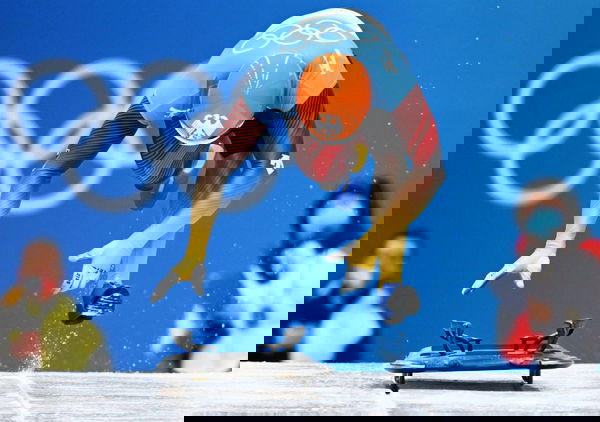
Imago
Sport Bilder des Tages hina Olympics 2022 Skeleton Men 8111412 11.02.2022 Germany’s Axel Jungk competes in the men’s skeleton heats during the Beijing 2022 Winter Olympic Games, Olympische Spiele, Olympia, OS at the National Sliding Centre in Yanqing, China. Vladimir Astapkovich / Sputnik Yanqing China PUBLICATIONxINxGERxSUIxAUTxONLY Copyright: xVladimirxAstapkovichx
The action heats up on February 12, when the men dive into their first two runs. Four days of edge-of-the-seat drama follow. Every fraction of a second matters, and the tension builds with each run. On February 13, the women launch their opening heats while the men return later for their medal-deciding runs. Expect the ice to reveal who kept their cool and who cracked under pressure.
Then comes February 14, the women’s finale. It’s a day made for guts, balance, and pure speed. Those last two runs decide Olympic glory, and every turn of the track feels like a heartbeat stopped just short.
The excitement peaks on February 15 with the sport’s newest chapter, the mixed-team relay. The first of its kind, it turns Skeleton into a high-speed duet where teamwork and timing decide the champions.