Imago
Credits: IMAGO
Imago
Credits: IMAGO
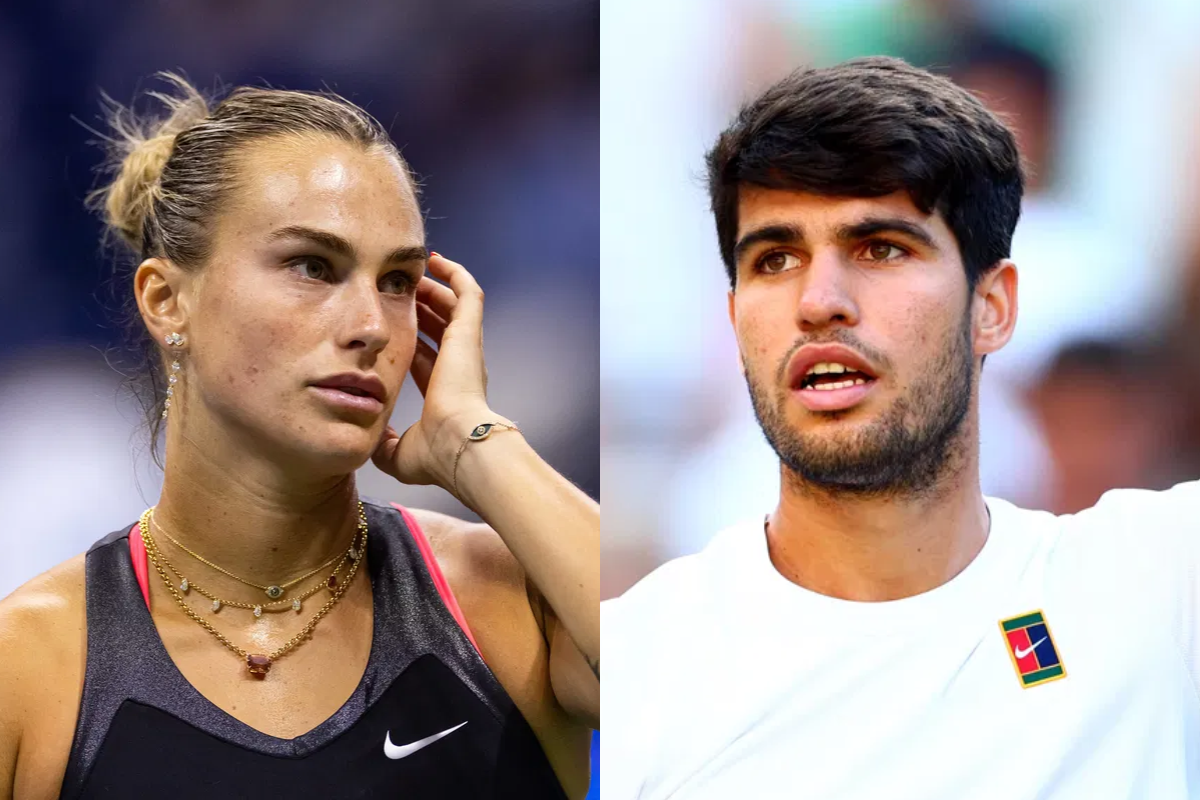
The conversation over player pay seems to have hit another roadblock. A few months ago, tennis pros, including Carlos Alcaraz, Aryna Sabalenka, and more, put forward a list of demands in a letter to Grand Slam organizers for higher pay. They want the players’ share of Grand Slam revenues to rise from 12.5% to about 20–22% by 2030, matching revenue models in other major sports. The issue made headlines at the time, but it seems the matter has come back around for another look.


On February 3, The Guardian reported that the world’s top ten men and women have rejected the Grand Slams’ offer to form a new player council. The idea was meant to give them more say in how the majors are run, but players weren’t buying it. In a letter sent to Wimbledon, the French Open, and the US Open last week, they turned down an invitation to meet officials at Indian Wells next month.
Watch What’s Trending Now!
“Before committing to another meeting, it would be more productive for the grand slams to provide substantive responses, individually or collectively, to the specific proposals the players have put forward regarding prize money at a fair share of grand slam revenues, and player health, welfare, and benefits contributions,” the letter states.
The battle began at last year’s French Open when a group led by Alcaraz and Aryna Sabalenka urged the tournaments to raise prize funds to 22 percent of revenue by 2030. Talks went nowhere, and frustration has bubbled ever since. Many still feel the Grand Slams aren’t paying out their fair share.
Imago
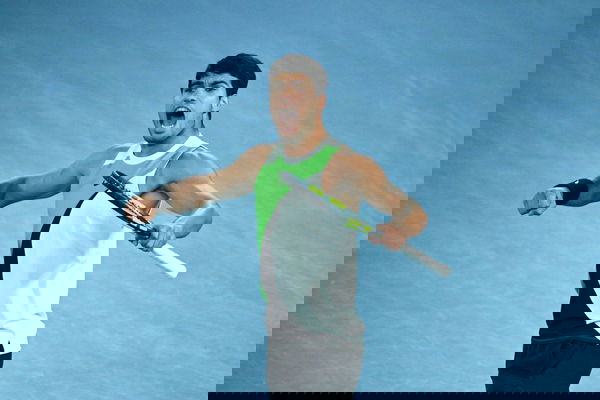
TENNIS AUSTRALIAN OPEN, Carlos Alcaraz of Spain reacts during the mens singles final against Novak Djokovic of Serbia on day 15 of the 2026 Australian Open tennis tournament at Melbourne Park in Melbourne, Sunday, February 1, 2026. NO ARCHIVING MELBOURNE VICTORIA AUSTRALIA PUBLICATIONxNOTxINxAUSxNZLxPNGxFIJxVANxSOLxTGA Copyright: xJAMESxROSSx 20260201178054921645
“While the players recognise that governance structures can play an important role, they are concerned that prioritising council formation over the core economic issues risks becoming a process discussion that delays rather than advances meaningful progress.”
Tensions have been growing elsewhere too. A number of female players are said to be losing trust in the sport’s leadership after the Australian Open. Alcaraz’s AUS$2.8 million (£1.43m) winner’s cheque came from a record AUS$85 million fund, yet that’s only 16 percent of total earnings. Wimbledon’s £50 million pool last year was just 12.3 percent of its £406.5 million revenue.
Three of the Slams (excluding Australia) contacted players in December to discuss forming a council, but ignored their demands on pay and welfare. Players are also fuming about cameras popping up in private spaces and Craig Tiley’s unapproved idea to make women play best-of-five from the quarters.
Australian Open director calls for WTA to play five-set tennis matches
After Elena Rybakina and Aryna Sabalenka’s electrifying three-set showdown for the title, the tennis world could hardly catch its breath. Even Australian Open chief Craig Tiley was buzzing when he faced the press, still riding high from one of the most dramatic weeks in Melbourne.
“I’m still getting chills just thinking about [the 2 men’s SFs],” Tiley told AAP. “Then you can’t replicate that final last night on the women’s side. It was unbelievable. One of the things I’ve been saying now is that I think there should be three out of five sets for women.”
The tournament boss wasn’t stopping there. He floated a bold idea, making the women’s quarterfinals, semifinals, and final best of five sets too. “We should look at the last few matches – QFs, SFs, and F – and make the women’s side three out of five. Certainly, if we’re going to do it and we think it’s the right thing, we’ll definitely go in 2027,” he added.
Not everyone agreed, though. Many players were quick to speak out, questioning if adding more sets was the kind of “equality” tennis really needed. One of the voices came from Madison Keys, who jumped into the debate.
“I think we are all capable of doing it. But I don’t think I would sign up to do more. I think if we were to do that, you also change the men as well, and they also only play three out of five from the quarterfinals on,” Keys said on The Player’s Box podcast.
“If you look at the men’s draw, the amount of times that top seeds would have ‘lost’ because they went down two sets to love or two sets to one, that would have been over and you would have had way more upsets and things like that.”
And just like that, the conversation around the future of match formats is heating up again. As the debate rolls on, players are catching their breath from a whirlwind fortnight. What’s your take on this issue? Tell us in the comments below!
