Imago
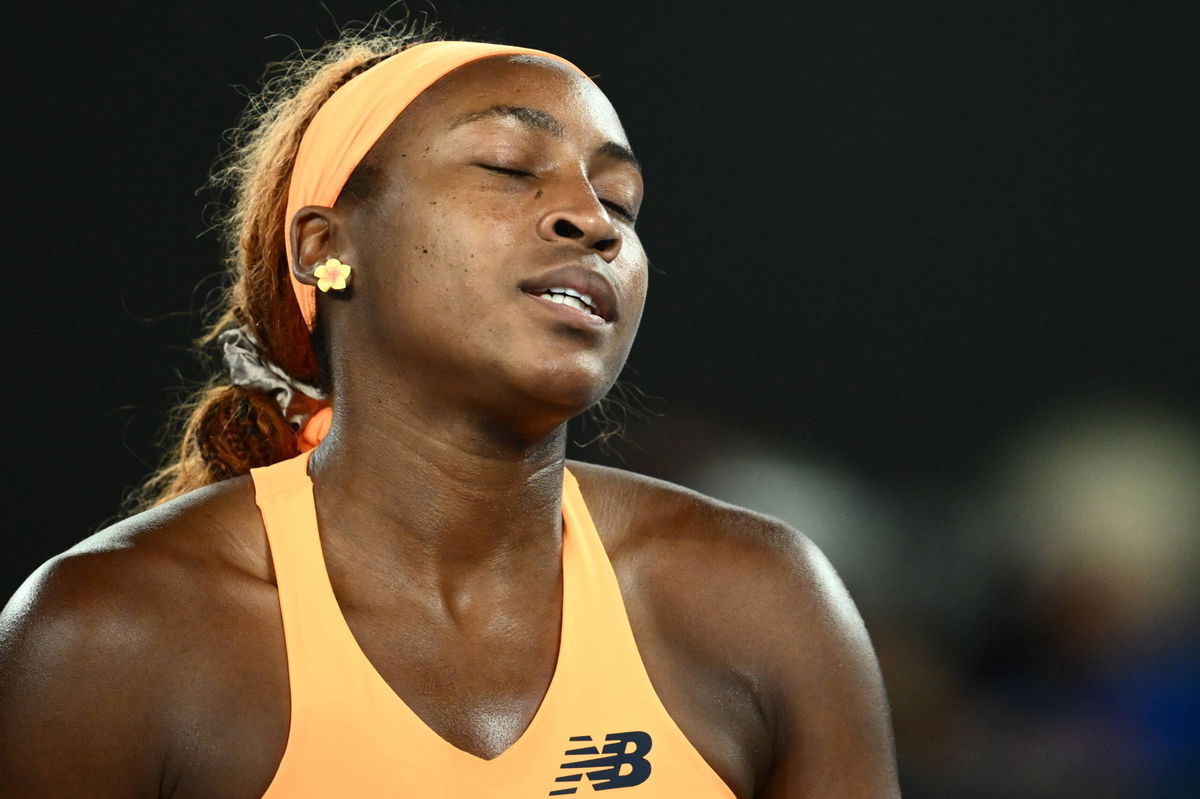
TENNIS AUSTRALIAN OPEN, Coco Gauff of USA reacts during the Womens quarter final match against Elina Svitolina of Ukraine on day 10 of the 2026 Australian Open tennis tournament at Melbourne Park in Melbourne, Tuesday, January 27, 2026. NO ARCHIVING MELBOURNE VICTORIA AUSTRALIA PUBLICATIONxNOTxINxAUSxNZLxPNGxFIJxVANxSOLxTGA Copyright: xJOELxCARRETTx 20260127193266056046
Imago
TENNIS AUSTRALIAN OPEN, Coco Gauff of USA reacts during the Womens quarter final match against Elina Svitolina of Ukraine on day 10 of the 2026 Australian Open tennis tournament at Melbourne Park in Melbourne, Tuesday, January 27, 2026. NO ARCHIVING MELBOURNE VICTORIA AUSTRALIA PUBLICATIONxNOTxINxAUSxNZLxPNGxFIJxVANxSOLxTGA Copyright: xJOELxCARRETTx 20260127193266056046
Tennis thrives on raw emotion, and Coco Gauff’s post-match racket smash captured that truth after her swift quarterfinal loss at the Australian Open. Filmed in a quiet area, the moment reignited debate over intrusive cameras and shrinking player privacy. While some argue everything is fair game, the WTA struck a different tone, publicly backing players and defending their right to off-court space.


In a recent statement, the women’s tennis tour addressed growing concerns around player privacy.
Watch What’s Trending Now!
“The WTA stands with our players and takes their concerns about privacy and cameras at the Australian Open seriously. Players deserve spaces away from competition where they can recover in private.” The tour made its position clear and firm.
The statement also highlighted steps already taken. “At WTA events, we have already taken steps to reduce camera presence in off-court player areas to ensure players have appropriate private spaces.” The tour explained that these measures were intentional and necessary.
New:
Statements from the WTA and WTA chair Valerie Camillo, backing their players’ complaints about invasive cameras in backstage areas of the Australian Open. https://t.co/XmM5nL5bMD pic.twitter.com/qVGf8DrG5l
— Ben Rothenberg (@BenRothenberg) January 29, 2026
It continued by stressing boundaries. “We moved to this standard because we agree that there should be clear, respectful boundaries in off-court areas.” The WTA said the conversation should now extend beyond players alone.
“We believe this issue should be reviewed by tournament organisers and broadcast partners to ensure appropriate boundaries are in place. We will undertake a dialogue with players and tournaments in an effort to shape a solution to this issue.” The focus is now on collaboration.
Even the new WTA Chair, Valerie Camillo, echoed the message. “Recent concerns raised by WTA players at the Australian Open about cameras in off-court player areas are completely valid. This is a very human and fair request – athletes need spaces where they can recover and not feel constantly under scrutiny.” She added,
“Providing that space is part of our responsibility as a sport. The WTA is committed to listening to its players and acting on concerns like this.”
Coco Gauff was among the first players to speak openly about privacy away from the tennis court. She raised the issue after her quarterfinal loss to Elina Svitolina, which lasted just 59 minutes.
During her post-match press conference, Gauff was asked about the video showing her smashing rackets in a tunnel. She explained that she tried to avoid being seen by cameras.
“I tried to go somewhere where there are no cameras. I kind of feel like I have a thing with the broadcast,” Gauff said, expressing clear frustration with constant coverage.
She later added, “I tried to go somewhere where they wouldn’t broadcast, but obviously, they did.” Her comments quickly resonated with players and fans alike.
Amanda Anisimova also shared her experience. After losing to Jessica Pegula in the quarterfinals, she spoke about how privacy fades as tournaments progress.
“You kind of know after a few days or 4 or 5 days that obviously you see on the internet you walking around,” Anisimova said, acknowledging the reality of being watched.
She added, “But I think this deep down into the tournament, I knew I didn’t have much privacy, so I just went to the locker room. I knew I was able to just be there.”
Even other players later echoed similar concerns about privacy at the Australian Open.
Novak Djokovic and Jessica Pegula respond to Coco Gauff’s privacy concerns
Extra cameras began appearing in player corridors and walkways in 2019. They gave rightsholders more access to behind-the-scenes moments. Fans could see players arriving on site, waiting to walk onto the court, or cooling down after matches.
Many felt Amanda Anisimova and other players had to navigate this constant scrutiny. While some criticised Coco Gauff for breaking her racket, others, like Novak Djokovic and Jessica Pegula, emphasised a deeper issue.
Novak Djokovic addressed the matter during a post-match press conference. He had just reached the Australian Open semifinals after Lorenzo Musetti retired.
“I see what happened with Coco after her match,” Djokovic said.
He added, “It’s really sad that you can’t move away anywhere and hide and fume out your frustration, your anger… in a way that won’t be captured by a camera. But we live in a society where content is everything. It’s a deeper discussion.”
Jessica Pegula shared her thoughts after beating Amanda Anisimova. She was asked about her fellow American.
“You’re under a microscope all day. The only place you’re not filmed is the locker room or the bathroom. Coco wasn’t wrong. It’s an invasion of privacy, it’s very intrusive,” Pegula said.
Iga Swiatek, who lost 7-5, 6-1 to Elena Rybakina in the quarterfinals, also weighed in.
“The question is, are we tennis players? Or are we animals in the zoo? Where they are observed even when they’re pooping,” Swiatek said.
She quickly clarified, “Ok, that was exaggerating, obviously, but it would be nice to have some privacy.”
Tennis Australia has responded to these concerns. The organisation said it wants to balance protecting players’ privacy with giving fans better insight.
“Striking the right balance between showcasing the personalities and skills of the players, while ensuring their comfort and privacy is a priority for the AO,” Tennis Australia said in a statement.
Tournament director Craig Tiley echoed that sentiment during an appearance on Tennis Channel. “It’s a good question, and the first thing that we do, we want to listen to the players. We want to really understand what their needs and what their wants are, so that’s the first question we’ll ask. We’ve heard you, and whatever adjustments we need to make, we will make.”
With the issue intensifying and the WTA and AO tournament organisers speaking up, it is now critical to see how tennis governing bodies will act to protect player privacy.
