
Imago
Alexander Zverev GER, Australian Open 2026, Melbourne Park, Melbourne, Victoria, Australia. *** Alexander Zverev GER , Australian Open 2026, Melbourne Park, Melbourne, Victoria, Australia Copyright: xJuergenxHasenkopfx
Imago
Alexander Zverev GER, Australian Open 2026, Melbourne Park, Melbourne, Victoria, Australia. *** Alexander Zverev GER , Australian Open 2026, Melbourne Park, Melbourne, Victoria, Australia Copyright: xJuergenxHasenkopfx
Life on the ATP Tour hasn’t always been smooth sailing for Alexander Zverev. From enduring injury setbacks to chasing an elusive first Grand Slam title, the German star has had to overcome multiple challenges to stay among the sport’s elite. But beyond the physical demands of professional tennis, Zverev has been fighting an even bigger personal battle since childhood – living with diabetes.


Despite the obstacles, Zverev has refused to let his condition define or limit him, instead turning his journey into a source of inspiration both on and off the court.
Watch What’s Trending Now!
Does Alexander Zverev have diabetes?
Yes, Alexander Zverev has Type 1 diabetes, a condition he was diagnosed with at a very young age. According to multiple accounts from Zverev himself, he was diagnosed when he was just four years old. Since then, he has had to manage the condition through regular insulin injections and careful monitoring of his blood sugar levels – even during the physically intense environment of professional tennis tournaments.
The German star has often been seen taking insulin between matches, highlighting the reality of competing at the highest level while managing a chronic health condition. For years, Zverev kept his diagnosis private, fearing judgment or being perceived as limited. However, in 2022, he publicly revealed his health condition, choosing transparency in hopes of raising awareness and helping others facing similar struggles.
“Becoming a professional tennis player was always my dream. Early on, I was told that competing at the highest level with diabetes was impossible, but my family and I refused to accept that.”

Imago
Australian Open – Melbourne Alexander Zverev GER during his quarter final round match at the 2026 Australian Open at Melbourne Park in Melbourne, AUSTRALIA, on January 27, 2026. Photo by Corinne Dubreuil/ABACAPRESS.COM Melbourne Australia PUBLICATIONxNOTxINxFRAxUK Copyright: xDubreuilxCorinne/ABACAx
Rather than letting diabetes derail his ambitions, Zverev used it as fuel to push harder. Becoming a professional tennis player was always his dream, and he refused to believe that his condition should dictate his future. That mindset helped him rise to extraordinary heights, including reaching a career-high ATP ranking of World No. 2, winning Olympic gold, and capturing two ATP Finals titles. His success stands as proof that Type 1 diabetes doesn’t have to limit athletic excellence.
“I was upset that these limits were placed on me as a kid; I didn’t think it was fair. And I don’t want any child to believe that about themselves.”
For years, Alexander Zverev struggled in silence, hiding his condition out of fear. Now, he has transformed that vulnerability into purpose. By openly sharing his journey, advocating for better support systems, and excelling at the sport’s highest level, he hopes to inspire millions worldwide.
How does Alexander Zverev manage diabetes during matches and tournaments?
Competing at the highest level of professional tennis while living with Type 1 diabetes requires constant vigilance, and Alexander Zverev has built a disciplined, highly personalized routine to ensure his condition never compromises his performance or health.
On tour, Zverev regularly monitors his blood sugar levels, checking glucose readings before matches, during changeovers, and after play when needed. Managing energy levels in a physically demanding five-set Grand Slam match can be unpredictable, making glucose tracking a critical part of his match-day preparation.
To stay in balance, Zverev relies on insulin injections, which he sometimes administers during matches. The German has been spotted injecting insulin on-court during changeovers, a necessary step to stabilize his blood sugar and prevent dangerous fluctuations that could lead to dizziness, fatigue, hypoglycemia, or even medical emergencies in extreme cases.
While ATP tournaments have generally accommodated Zverev’s medical needs, Grand Slam events haven’t always been as supportive.
In 2023, Zverev had a high-profile dispute with French Open organizers, who reportedly asked him not to inject insulin on court. Instead, he was told to leave the court and use one of his limited bathroom breaks to administer the shot – a suggestion he strongly opposed.
“At ATP tournaments, it is very easy. I inject the insulin on the court during the changeovers, like you all see it regularly. Here in Paris, it is not allowed for me on the court. They said I need to leave the court.”
He also highlighted the impracticality of the rule in longer matches: “I only have two toilet breaks in a match, but in a best-of-five match, sometimes I have to inject four or five times.” In another instance at the same tournament, Zverev revealed that he was even challenged while injecting insulin off-court, when a supervisor questioned whether a doctor should administer it, despite Zverev having managed his condition since early childhood.
“I have diabetes since I was three years old. I know exactly what to do. A normal doctor can’t help me if he doesn’t have the right data on how much insulin I need.”
Following backlash from organizations such as the International Diabetes Federation and Breakthrough T1D, French Open officials later confirmed that an agreement had been reached, allowing players to administer insulin on court. Since then, Alexander Zverev has again been seen injecting during matches at Roland Garros.
It’s also important to note that insulin appears on the World Anti-Doping Agency’s (WADA) banned substances list. However, athletes like Zverev who medically require it are granted a Therapeutic Use Exemption (TUE), allowing them to use insulin legally and transparently.
Beyond managing his own condition, Zverev has also used his platform to support other athletes with diabetes. Last year, he played an exhibition match against fellow diabetic player Patrick Zahraj, supported by the Alexander Zverev Foundation. The event highlighted the daily challenges diabetic athletes face, both physically and mentally.
Alexander Zverev said, “The first thing I check in the morning is my blood sugar level. The last thing I do at night is take my long-acting insulin injections. You can lead a normal life with diabetes and shouldn’t hide this disease.”
Has diabetes ever affected Alexander Zverev’s tennis career or performance?
Despite living with Type 1 diabetes since early childhood, there is no proven evidence that the condition has negatively impacted Alexander Zverev’s on-court performance. In fact, his career trajectory suggests the opposite. He has consistently competed at the very top of men’s tennis while managing a demanding medical condition behind the scenes.
Now 28 years old, Zverev turned professional in 2013 and has since built an elite résumé on the ATP Tour. The German has reached a career-high singles ranking of World No. 2, achieved on June 13, 2022, and currently sits among the world’s top players (currently ranked third in the world).
Across his career, Zverev has won 24 ATP singles titles and two doubles titles, establishing himself as one of the most consistent performers of his generation. His biggest career milestones include winning Olympic gold at the 2020 Tokyo Games and lifting the prestigious ATP Finals trophy twice, in 2018 and 2021 — both markers of dominance against the sport’s best.
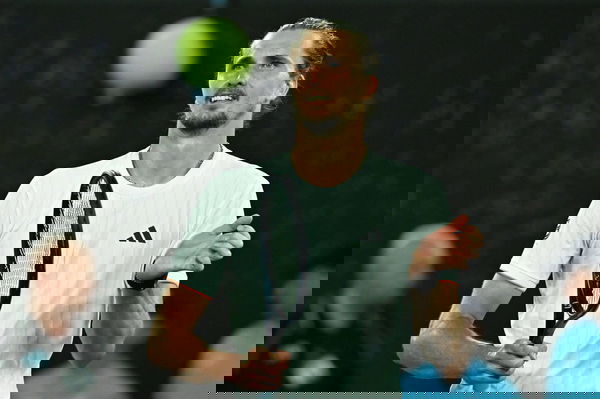
Imago
Australian Open – Melbourne Alexander Zverev GER during his quarter final round match at the 2026 Australian Open at Melbourne Park in Melbourne, AUSTRALIA, on January 27, 2026. Photo by Corinne Dubreuil/ABACAPRESS.COM Melbourne Australia PUBLICATIONxNOTxINxFRAxUK Copyright: xDubreuilxCorinne/ABACAx
Far from being limited by diabetes on the biggest stages, Zverev has delivered multiple deep Grand Slam runs, proving his endurance, mental resilience, and physical consistency over five-set battles. He finished as runner-up at three major tournaments, reaching the 2020 US Open final, the 2024 French Open final, and the 2025 Australian Open final. These performances highlight his ability to sustain peak-level tennis across long, high-pressure matches – even while managing blood sugar levels, insulin use, and energy fluctuations.
What is the Alexander Zverev Foundation, and why did he start it?
Alexander Zverev‘s decision to launch the Alexander Zverev Foundation is deeply rooted in his personal journey with Type 1 diabetes — a condition he publicly revealed in 2022, after being diagnosed at just three years old. Having lived with the daily realities of diabetes since childhood, Zverev has become one of the sport’s most prominent advocates for awareness, access to care, and empowerment for young patients.
Shortly after opening up about his diagnosis, the German star founded the Alexander Zverev Foundation in 2022, alongside his brother Mischa Zverev and parents Irina and Alexander Zverev Sr. The foundation is headquartered in Hamburg, his hometown, and focuses primarily on supporting children living with Type 1 diabetes worldwide.
Zverev has often spoken about how isolating and challenging it can feel to grow up managing diabetes, especially while pursuing elite-level sport. That lived experience inspired him to ensure that no child feels limited, unsupported, or defined by the condition. “I want to show that you can go a long way with this disease. I want to be a role model for children who already have the disease… and a support for people who can still avoid getting type 2 diabetes with an active life and the right prevention.”
His mission goes beyond motivation – it’s about practical, life-saving support. The foundation provides access to insulin and essential diabetes medications, particularly in developing countries where treatment can be limited or unaffordable.
The Alexander Zverev Foundation doesn’t just focus on medical aid. It also promotes healthy, active lifestyles through initiatives such as tennis and ski camps, helping children build confidence, athletic skills, and a sense of community.
How does the Alexander Zverev Foundation help children with diabetes?
The Alexander Zverev Foundation focuses on providing life-saving insulin, medical care, and long-term support for children living with Type 1 diabetes, especially in underprivileged and less-developed regions where access to treatment is limited. Speaking during his 2026 Australian Open on-court interview, Zverev emphasized that the foundation’s mission has expanded beyond athletes to children worldwide:
“I started my foundation, not only for athletes with diabetes but for kids with diabetes in general,” Alexander Zverev said. “Unfortunately, we live in a world where not every single country is as fortunate as Australia, the US, or Germany… Where everybody who’s a diabetic has all the medicine and technology.. we started the foundation to help kids. I say kids because most of the time in not-so-well-developed countries, if someone gets the sickness of diabetes, they don’t survive past a certain age.”
The foundation aims to deliver medicine, fund hospitals, and ensure children with diabetes can live normal, healthy lives, regardless of where they are born. “We want to give the opportunity to provide medicine, provide hospitals, and provide a normal life with diabetes all over the world, not only in well developed countries. If ever there would be a diabetic grand slam champion, even if it’s not me, I would be the happiest person in the world. If I made a difference for a parent or a kid, I’m the happiest person in the world,” he added.
With partner donations, the foundation has raised nearly $11 million to support children with Type 1 diabetes, turning Zverev’s personal battle into a global mission of hope. He now wants to encourage children with diabetes to never give up on their dreams.
Talking about fulfilling dreams, a win against the current world number one, Carlos Alcaraz, will take him one step closer to fulfilling his own wish to win his maiden Grand Slam title. Can he do it?
