Imago
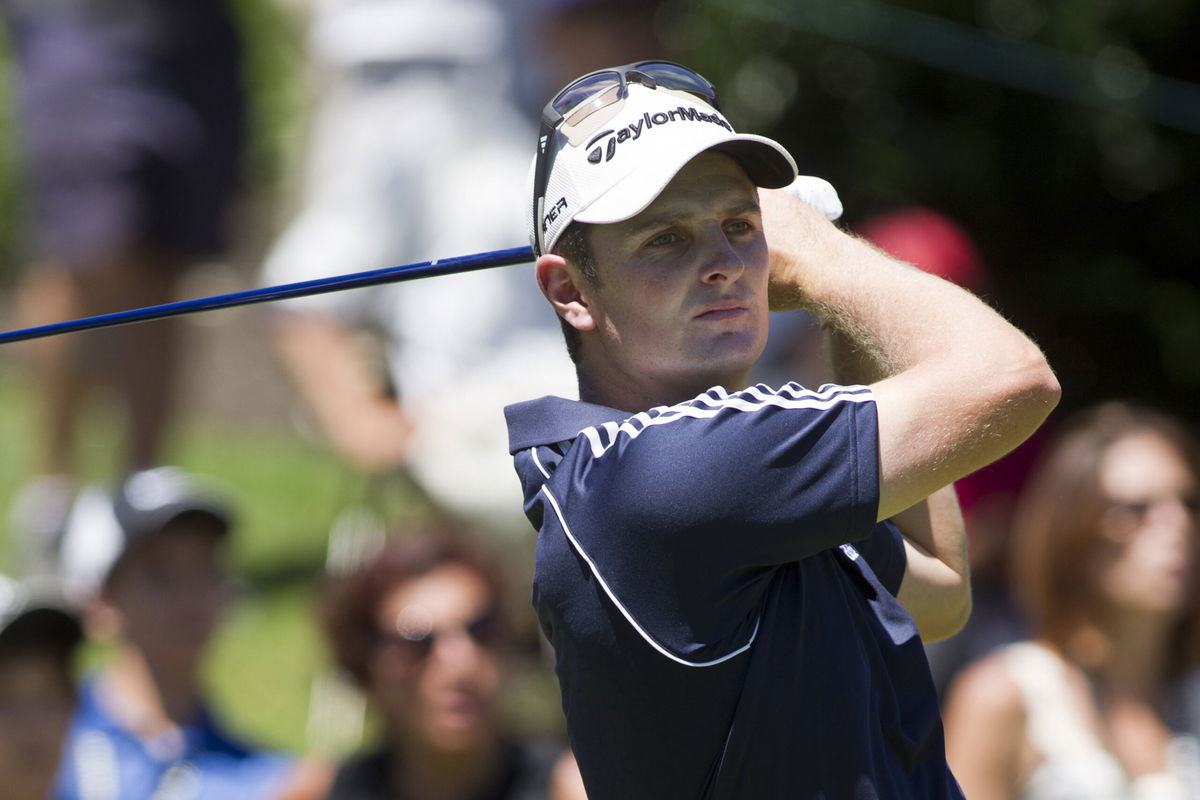
Golf Justin Rose ENG competing at the 2010 AT&T National Newtown Square Aronimink Golf Club PA USA Copyright: xPaulxJxSutton/PCNx GO1017-703058
Imago
Golf Justin Rose ENG competing at the 2010 AT&T National Newtown Square Aronimink Golf Club PA USA Copyright: xPaulxJxSutton/PCNx GO1017-703058
In 1998, a 17-year-old amateur finished fourth at The Open Championship. Twenty-eight years later, that teenager has accumulated one of golf’s most diversified fortunes.

Justin Rose’s estimated net worth sits between $50 million and $60 million as of early 2026—a figure built on career prize money, selective endorsements, venture capital, and the rare ability to remain elite deep into his mid-40s while purse inflation reshaped professional golf’s economics. The Englishman didn’t chase one massive payday. He engineered sustained accumulation across three decades.
Watch What’s Trending Now!
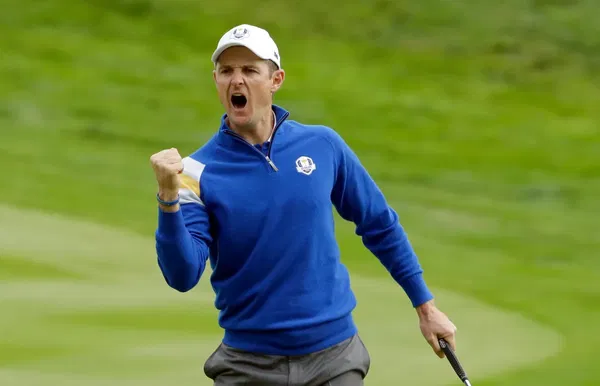
Rose’s 2025 season alone generated over $10.6 million in on-course earnings. The FedEx St. Jude Championship victory delivered $3.6 million after a playoff against J.J. Spaun, while a runner-up finish at the Masters—losing in sudden death to Rory McIlroy—added another $2.268 million. His first PGA Tour win at the 2010 Memorial Tournament paid $1.08 million. The 2025 St. Jude check paid 3.3 times that amount.
Career totals tell the compounding story. Rose ranks fourth all-time on the PGA Tour money list at $73.7 million, trailing only Tiger Woods, Rory McIlroy, and Scottie Scheffler. On the DP World Tour, he sits third all-time with €34.4 million, behind McIlroy and Lee Westwood. Major championships have contributed over $16 million to his lifetime haul, and the 2018 FedEx Cup title triggered a $10 million bonus—likely the single largest wire transfer of his career.
Modern purse structures explain why competing at 45 pays better than winning at 30 once did. Rose captured the tail end of golf’s financial explosion, converting consistency into returns that earlier retirements would have forfeited entirely.
But prize money funds the engine. The empire runs on something else.
Justin Rose’s endorsements, ventures, and the equipment free-agent gamble
Rose rejected the traditional 14-club manufacturer deal—where a single company pays a fixed retainer for full-bag exclusivity—in favor of equipment free agency. The sacrifice: guaranteed endorsement dollars. The gain: optimized performance with best-in-class tools from multiple brands. In 2025, that flexibility contributed to finishes worth millions more than suboptimal gear would have delivered.
His sponsorship portfolio reflects strategic selectivity over volume. Morgan Stanley anchors the lineup; Rose earns a reported $5 million annually from the partnership alone. Hublot, Bonobos, and Mastercard round out a stable of brands targeting affluent, internationally mobile consumers. The estimated annual endorsement value ranges between $4 million and $5.5 million, providing income independent of weekly performance.
Rose has also moved capital into venture territory. He invested in Mustard, an AI-powered coaching application that uses computer vision to analyze swing biomechanics. The $3.75 million seed round included co-investors like Mark Cuban, Drew Brees, and Nolan Ryan. Rose contributed more than money—he integrated his “Moment of Truth” swing philosophy into the algorithm, creating intellectual property value beyond the initial check.
The financial architecture extends beyond his playing days. Champions Tour eligibility arrives in December 2030. Broadcasting opportunities suit his articulate presence. Course design offers high-margin revenue in emerging markets. Twenty-one consecutive missed cuts after turning pro. A U.S. Open title. Olympic gold. World Number One. And now, a $60 million enterprise.
The teenager who chipped in at Royal Birkdale built something most careers never produce: a fortune that outlasts the swing.
