
Getty
BRISTOL, TN – AUGUST 17: Team owner, Richard Petty, stands on pit road during practice for the Monster Energy NASCAR Cup Series Bass Pro Shops NRA Night Race at Bristol Motor Speedway on August 17, 2018 in Bristol, Tennessee. (Photo by Sean Gardner/Getty Images)
Getty
BRISTOL, TN – AUGUST 17: Team owner, Richard Petty, stands on pit road during practice for the Monster Energy NASCAR Cup Series Bass Pro Shops NRA Night Race at Bristol Motor Speedway on August 17, 2018 in Bristol, Tennessee. (Photo by Sean Gardner/Getty Images)
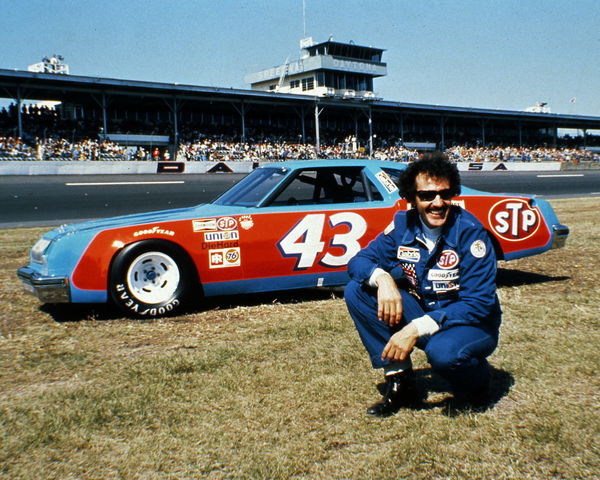
Before coming to terms with Ford in 1969, Richard Petty dominated the 1960s in an underpowered Plymouth. Crazy, right? What’s more crazy is that the roof was not what the other drivers on the grid had. The textured black paint beneath the #43 roof, proved to be a dominant force against Ford and instantly caught everyone’s attention.


With 10 victories in a row and a total of a whopping 27 wins out of 49 Cup Series races, Petty’s 1967 season was nothing short of extraordinary, all thanks to his modified Plymouth. Coming to the 1968 Daytona 500, behind Petty’s dominant display was a scientific approach that took Plymouth’s performance to another level.
Watch What’s Trending Now!
The golf ball aerodynamics of Richard Petty’s car that outsmarted Ford
The word around was that the roof is vinyl, which means a smooth surface, but the looks said otherwise. The textured rooftop was visible and resembled the application of aerodynamics on a golf ball. The Plymouth had a squared rooftop that caused the airflow to become less streamlined and, therefore, a larger area of low pressure, causing more drag.
Getty
DAYTONA BEACH, FL – 1979: Richard Petty rallied late in the season to gain the advantage and win an unprecedented seventh national title in NASCAR’s Cup Series. (Photo by ISC Archives/CQ-Roll Call Group via Getty Images)
The pockets in a golf ball capture air to retain its kinetic energy and, thus, the trajectory. Similarly, the textured top of Petty’s Plymouth resulted in retaining little air at high speeds, with air flowing through the roof line to the back, creating more downforce and better handling at higher speeds.
Plymouth’s dominance started way back in 1960 when Petty raked in three out of his first four NASCAR victories in the Road Runner. After the 1967 season’s banger, the “mysterious” black roof car was driven by Petty during the 1968 Daytona 500, and it cruised at speeds higher than ever and swiftly swooped past its opponents. David Pearson in his #17 Ford Torino, couldn’t help but see Petty’s lesser horsepower car overtaking his car and lose the lead.
Read More: The Daytona 500 Crash That Changed Juan Pablo Montoya’s Journey Forever
The experiment was showing positive signs as Petty’s rivals were having a hard time keeping up with him. However, the joy didn’t last as the Road Runner’s run was about to end.
The end moment trouble that put Petty’s dominance in Plymouth to an end
Due to heavy rains, the 1968 Daytona 500 became the only Daytona race in history to proceed without contesting the qualifying races. So, the team had to straightaway try it out in the main race.
Getty
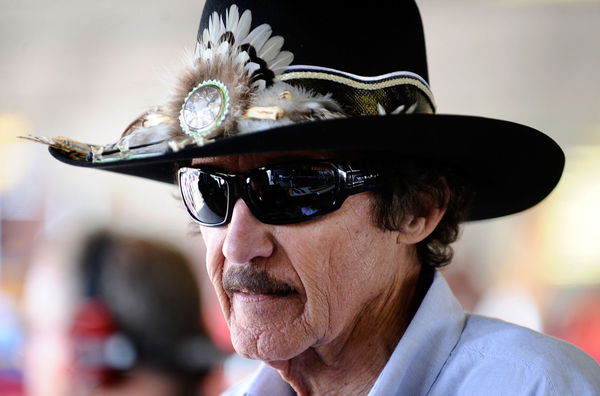
WATKINS GLEN, NY – AUGUST 06: Team owner Richard Petty stands in the garage during practice for the NASCAR Heluva Good! Sour Cream Dips at The Glen on August 6, 2010 in Watkins Glen, New York. (Photo by Jeff Zelevansky/Getty Images for NASCAR)
Under the textured roof, Richard Petty’s car became more sturdy and fast-paced, and he was leaving no stone unturned to clinch the Daytona 500 victory. However, a late race trouble ended Petty’s outperforming run.
In a bid to lighten up the weight, the metal sheet roof was thinned by dipping it into acid. However, the move proved detrimental for the 7X NASCAR Cup Series champion. The now lighter-in-weight roof couldn’t withstand the high-speed airflow and started giving up.
That’s when, during a yellow caution flag, Petty got out of his car at the pit stop and started hammering the roof. But it was duct tape that proved beneficial in that dire situation. Regardless of all the undying efforts, it was too late to recover from the damage as Petty lost the lead and finished 8th in the race.
Watch This Story: Noah Gragson Breaks Silence on NASCAR Suspension Amidst Snowball Derby Showing
Nevertheless, his #43 Plymouth Road Runner has been the hot topic of the 1960s era since as it proved heavy on the Fords despite being low on horsepower. Do you think if Petty stayed with Plymouth after 1968, he would’ve still overtaken the Ford or was his move to Ford the better option?
Written by

Edited by

Abhishek Ramesh