Imago
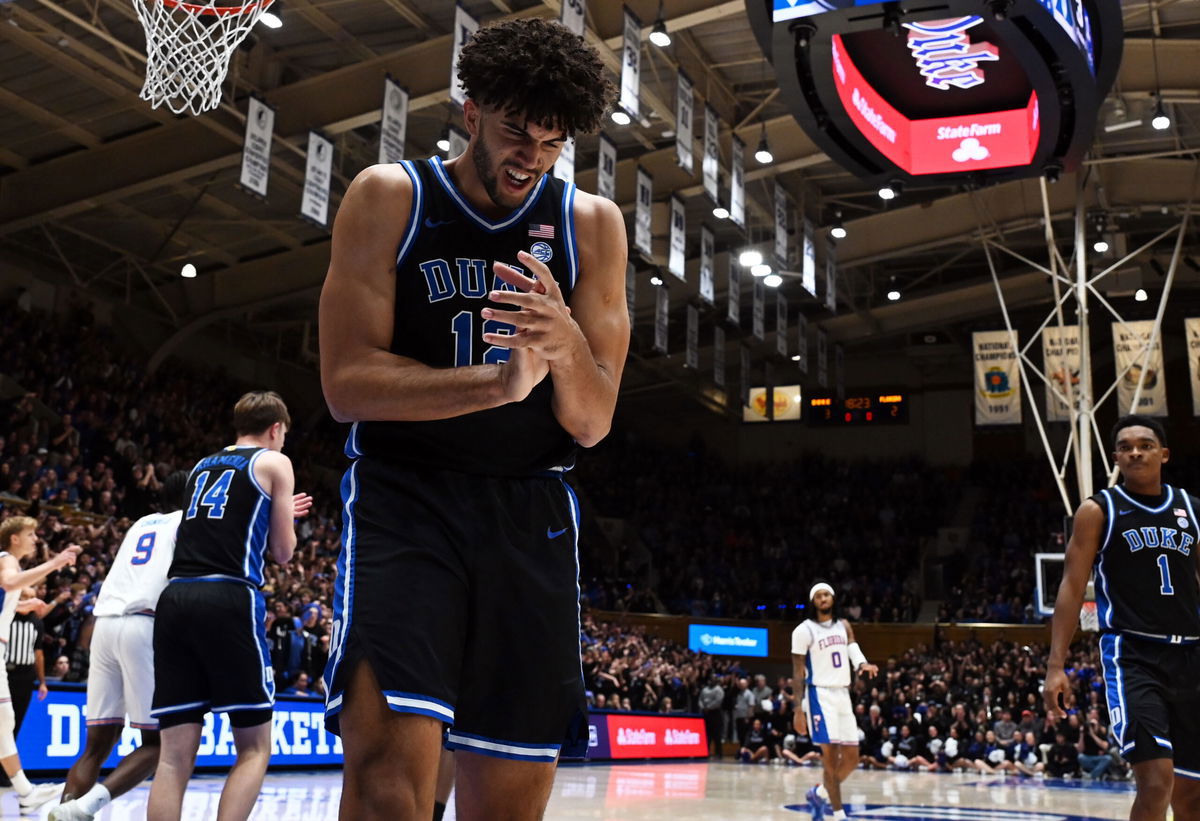
Dec 2, 2025; Durham, North Carolina, USA; Duke Blue Devils forward Cameron Boozer (12) reacts after forcing a turnover against the Florida Gators during the first half at Cameron Indoor Stadium. Mandatory Credit: Rob Kinnan-Imagn Images
Imago
Dec 2, 2025; Durham, North Carolina, USA; Duke Blue Devils forward Cameron Boozer (12) reacts after forcing a turnover against the Florida Gators during the first half at Cameron Indoor Stadium. Mandatory Credit: Rob Kinnan-Imagn Images
Cameron Boozer has separated himself from the rest of the college basketball field this season. Through 10 games, he has powered Duke to an unbeaten start while averaging 23 points, 9.9 rebounds, and 3.8 assists. His impact shows on both ends, from finishing at the rim to defending and hitting threes at a 37.2 percent rate, making him the clear early favorite for National Player of the Year.
There is a vibe of inevitability around him, the kind that surrounds generational talents and future No.1 picks. There has been no adjustment period from high school basketball to college, despite facing much older, more athletic, and skilled athletes. According to Boozer, this impressive start was a combination of two factors: guidance from veterans and Duke’s team composition.


“I think just the confidence everyone instilled in me, from the summer the vets did a great job bringing us, showing Duke culture,” Cameron Boozer said on The Brotherhood Podcast.
Watch What’s Trending Now!
“I mean, you two (Caleb Foster and Isiah Evans) were a huge part of that, telling me no one can really stop you from getting down the hill. Yeah, I think just building on that from the summer till now.”
Probably the most challenging aspect to maintain as players progress through levels is confidence. Players might overblow how much better the players they are playing against are. They don’t know if the same tricks and moves will work in college. Gauging your ability can only be done with external feedback. Since Boozer’s teammates immediately reaffirmed his ability in the preseason, the mental load was off, and Boozer just continued improving.
Imago
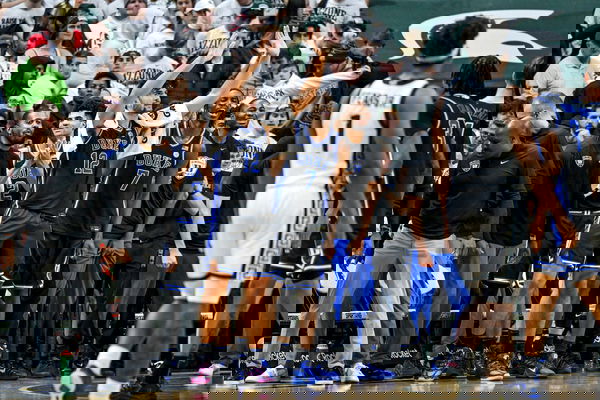
Duke’s Cameron Boozer, center, waves to Michigan State fans as the Blue Devils begin celebrating during the second half in the game against Michigan State on Saturday, Dec. 6, 2025, at the Breslin Center in East Lansing.
“All five of them, physically, are ready,” coach Jon Scheyer said regarding his freshman class before the season began.
The hardest adjustment for freshmen is understanding that, even though they’re physically ready, they don’t know how to play physically yet. Beyond just the psychological aspect, Boozer added that coach Jon Scheyer and Duke’s system have also played an important part.
“I think Jon Scheyer drove us some great actions, getting the ball in some great spots. And then I think our spacing, you know, having guys like, you know, we have a team that can shoot one through nine on our rotation, one through 10 with Bass, but so just the spacing on the floor allows me to get to my spots and knowing that someone comes, you know, I got great guys to kick out, too.”
Duke knows how to find and sharpen young stars. They have the youngest squad in college basketball this season, and it has been that way for multiple seasons over the course of history. In 2019, their starting lineup featuring Zion Williamson, R.J. Barrett, and Cam Reddish had an average starter age of just 18.8. In addition, this 2025-26 team is designed around Boozer, which has a deep rotation of at least 9 players.
Isiah Evans has been the secondary scorer so far, scoring 12.2 points per game. Patrick Ngonba provides size and defense. Maliq Brown complements Boozer as big. Maliq Brown is shooting 92.3% from 2, good for first in the nation per KenPom, while Patrick Ngongba II is shooting 77.6% inside.
Caleb and Evans are the best options on the outside, shooting above 40% from three. Cayden Boozer, coming off the bench, gives Cameron another sense of comfort and familiarity. While the offensive scoring has been all the rage, Duke and Cameron Boozer have tightened up their defense as well.
Defense Can Be The Differentiator For Cameron Boozer And Duke
Last season with Cooper Flagg, Duke fell painfully short in the final four. Duke leaked at the most important moment of the season as Houston rallied from a 14-point deficit to send the Devils packing. Duke’s defense was not bad. They conceded 62.8 points per game, which was the seventh least in the country. However, to go up against the top dogs, you need a seal, not a cap. This year, Scheyer might have set the stage to achieve that. (#= national rank)
| Year | Points Conceded/game | Opponent FG% | Opponent 3P% |
| 2025-26 | 59.0 #4 | .341 #1 | .267 #12 |
| 2024-25 | 62.8 #7 | .384 #4 | .311 #49 |
The team has improved on all counts despite its lack of experience. Defense is where it matters the most, and this performance so far is a testament to Jon Scheyer’s coaching. While things could change, Duke could have found the balance to finally get their hands on the National Championship for the first time since 2015. Cameron Boozer has also played a huge part in this improvement.
His rebound percentage of 17.5% stands among the best, and his 1.2 defensive shares are the most in the country. Boozer’s defensive box plus minus of 6.3 is among the top 10, per Barttorvik. His defensive Bayesian Performance rating (4.5) is fourth in the country on Evan Miya. In the race to the No.1 pick, his defensive solidity could propel him further.
Boozer’s prime competitors, AJ Dybantsa and Darryn Peterson, have yet to showcase that at the same level. Peterson has been injured for the majority of the time, while Dybantsa has been an offensive machine. For comparison, Dybantsa’s defensive box plus minus stands at 3.1. In such a close competition, it gives him an advantage if he maintains this level all season long.
Written by

Edited by

Md Saba Ahmed