Imago
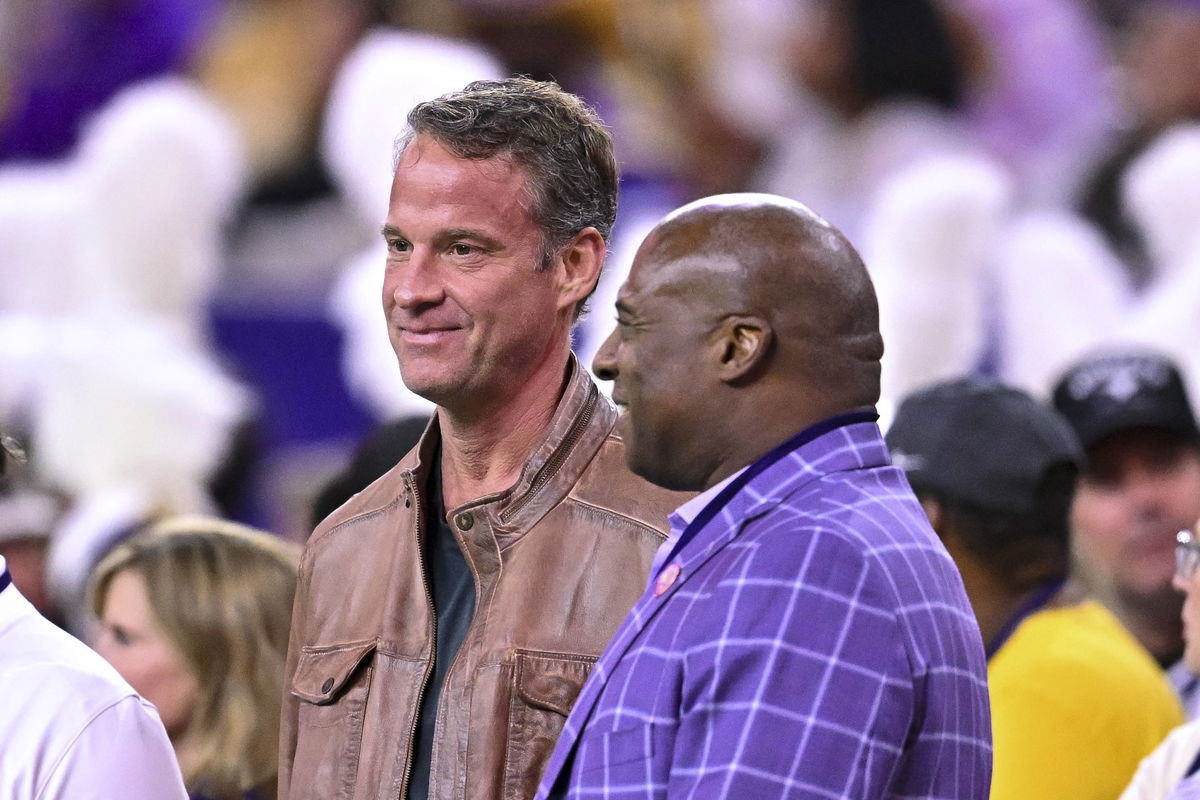
NCAA, College League, USA Football: Texas Bowl-Houston vs Louisiana State Dec 27, 2025 Houston, TX, USA Louisiana State Tigers head coach Lane Kiffin, left, stands next to Louisiana State Tigers athletic director Verge Ausberry, right, prior to the game against the Houston Cougars at NRG Stadium. Houston NRG Stadium TX USA, EDITORIAL USE ONLY PUBLICATIONxINxGERxSUIxAUTxONLY Copyright: xMariaxLysakerx 20251227_mcl_la6_044
Imago
NCAA, College League, USA Football: Texas Bowl-Houston vs Louisiana State Dec 27, 2025 Houston, TX, USA Louisiana State Tigers head coach Lane Kiffin, left, stands next to Louisiana State Tigers athletic director Verge Ausberry, right, prior to the game against the Houston Cougars at NRG Stadium. Houston NRG Stadium TX USA, EDITORIAL USE ONLY PUBLICATIONxINxGERxSUIxAUTxONLY Copyright: xMariaxLysakerx 20251227_mcl_la6_044
LSU’s identity is finally starting to come into focus. Strangely, it starts not with the players, but with a clear warning from Lane Kiffin. Before the Tigers figure out what it is on the field, the head coach is making sure his coaching staff knows what it cannot be. He’s been around long enough and even failed enough to know what derails a program from the inside. And according to him, two things can poison a coaching staff faster than anything else.
Watch What’s Trending Now!
“When it’s fractured to me and doesn’t work the best is when the coaches aren’t on the same page, and you have two things involved, egos and agendas,” Lane Kiffin told his team. “Now you can have all this talent in your staff that you don’t have on the same page, and people want this credit, they want to make sure they’re known for this, and they’re arguing about ideas instead of what is the best thing. Well, you’re going to teach that to your players, but we want a team and going to be team players and everything, but it starts with your staff.”
He’s talking about a power struggle among coaches. Players are the first to feel it when coaches aren’t aligned. According to Lane Kiffin, if the message isn’t delivered with belief, it doesn’t land. And if it doesn’t land, they’re not dealing with a team, but a collection of individuals. That’s what LSU is trying to avoid.
Top Stories






“I don’t think I did as a young coach,” he added, pulling back the curtain on his own early-career missteps. “Because they didn’t really learn it from me, because that was too much about credit to me, too much about how does it work for me.”
. @LSUfootball @Lane_Kiffin says two things in particular can poison a coaching staff – egos and agendas.
These things then trickle down to players, who will have a hard time buying into a team concept preached by the coaches.
“I was too much about credit to me.” #LSU pic.twitter.com/QyIsQCkRAa
— Jacques Doucet (@JacquesDoucet) April 10, 2026
You can see the response to how LSU has reshaped its entire operation this offseason. Staff roles have been reshuffled with intent. Jon Randall Belton slides into an Assistant GM role focused on external operations. Adam Clark comes in to manage internal operations. Carl St. Cyr shifts into player personnel. Dwike Wilson takes over recruiting and personnel. Then Lane Kiffin added Tee Martin, a veteran with NFL experience, who joins as an offensive analyst, working alongside Charlie Weis Jr.
If Lane Kiffin is serious about eliminating egos and agendas, it starts with putting the right voices in the room. LSU is dealing with a roster that’s undergone serious turnover with key departures like Mansoor Delane, AJ Haulcy, Harold Perkins Jr., and more.
But there’s hope with incoming transfers like Stephiylan Green and Malik Blocton, who join former 5-star Dominick McKinley. Spring practice also shows LSU doubling down on reps and effort.
Merging transfer portal additions with true freshmen requires a coaching staff that isn’t fighting over who gets the credit. If position coaches push their own agendas, these new pieces won’t buy into the intense practice structure Kiffin is trying to build.
Lane Kiffin is doubling down on effort in spring practice
Thursday’s practice has become longer and denser. As analyst Jacques Doucet pointed out, the Tigers are giving more players more reps this spring.
“Instead of one field running during team work, there is often two,” he wrote. “Instead of 22 players getting work at once, it’s 44. I’m told the volume of work each player is getting is exponentially higher than a season ago.”
Now, instead of breaking down 60-75 plays, coaches are reviewing close to 175 after a single session. LSU’s youth movement might also be accelerating faster than expected.
5-star freshman Richard Anderson is already taking reps with the first team. Coaches across LSU are calling the 6’3, 339-pounder one of the best defensive tackle prospects in decades. Then there’s Deuce Geralds, stacking first-team reps like a veteran. Even with Dominick McKinley in the mix, he’s forcing his way into the conversation.
Perhaps the most obvious change that every LSU player can feel this spring is the tempo. LB TJ Dottery says the pace is relentless and designed to give intentional discomfort. DB DJ Pickett echoed the same sentiment, saying it’s faster, sharper, and more demanding. And that’s the hidden layer of Lane Kiffin’s philosophy.
Meanwhile, offensive players like Jayce Brown and Harlem Berry are learning what that structure looks like from within. Still, none of that matters if the foundation isn’t right, but if LSU gets that part right, talent and tempo have a chance to fall into place.
Written by

Edited by

Himanga Mahanta