
Getty
PYEONGCHANG-GUN, SOUTH KOREA – FEBRUARY 15: Kjetil Jansrud of Norway makes a run during the Men’s Downhill on day six of the PyeongChang 2018 Winter Olympic Games at Jeongseon Alpine Centreon February 15, 2018 in Pyeongchang-gun, South Korea. (Photo by Clive Mason/Getty Images)
Getty
PYEONGCHANG-GUN, SOUTH KOREA – FEBRUARY 15: Kjetil Jansrud of Norway makes a run during the Men’s Downhill on day six of the PyeongChang 2018 Winter Olympic Games at Jeongseon Alpine Centreon February 15, 2018 in Pyeongchang-gun, South Korea. (Photo by Clive Mason/Getty Images)
“The possibility of having Winter Olympics is literally melting away,” said Kaitlyn Trudeau, a senior research associate for climate science at Climate Central. Still, the 2026 Winter Olympics are locked in from February 6 through February 22, promising more than two weeks of nonstop action across Milan and Cortina d’Ampezzo.


Picture the full winter lineup – snowboarding, skiing, ice hockey, bobsleigh, luge, all the cold-weather thrills fans wait years for. Even though Milan gets top billing as the main Olympic city, many of the big outdoor events will actually unfold in the mountain town of Cortina d’Ampezzo.
Watch What’s Trending Now!
It’s Italy’s fourth time hosting the Games, but with warmer winters and less reliable snowfall, there’s a big question hanging in the air – just how cold is it going to be?
What are the typical temperatures at the Alpine venues in February?
As the Winter Olympics get closer, the excitement around all those classic cold-weather sports is starting to come with a small layer of worry about the weather itself.
Right now, projections show a 50-60% chance of above-average temperatures in February at the Alpine venues, and that climbs to 60-70% in March, which isn’t exactly ideal for snow and ice. Because of that warmth, organizers are expected to lean heavily on artificial coverage, producing more than 3 million cubic yards of man-made snow, even high up in the Italian Alps.
How will the weather differ between Milan and Cortina during the games?
It’s wild to think how much things have changed over the years. Since Cortina first hosted the Winter Games back in 1956, February temperatures in the town have warmed by about 6.4°F (3.6°C). And it’s not just Cortina, every Winter Olympic city since 1950 has seen February temperatures rise too, by roughly 4.8°F (2.7°C) on average.
Still, when you picture the Milano Cortina 2026 Games, it should very much feel like winter. Milan in February usually sees daytime highs around 40°F (about 4°C). It’s cold enough for a jacket, but nothing too harsh, more brisk than brutal.
Head up into the mountains, though, and it’s a different story. Around Cortina, temperatures drop fast, with highs closer to 26°F (about -3°C).
Imago
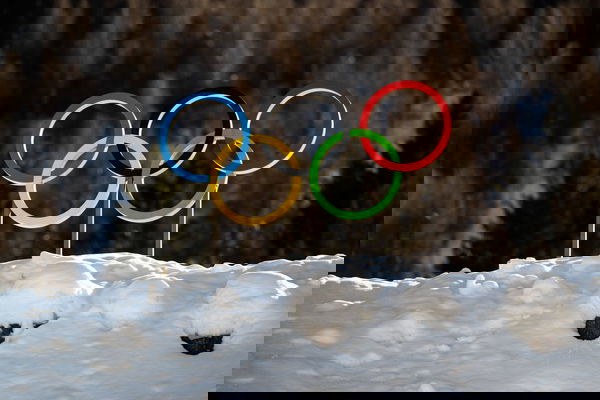
260201 The Olympic Rings are seen at Tesero Cross Country Stadium during day -5 of the 2026 Winter Olympics on February 1, 2026 in Tesero. Photo: Mathias Bergeld / BILDBYRAN / kod MB / MB1289 skidor cross-country skiing langrenn Olympic Games, Olympische Spiele, Olympia, OS olympics winter olympics os ol olympiska spel vinter-os olympiske leker milano cortina 2026 milan cortina 2026 milano cortina 2026 olympic games milano cortina 2026 winter olympic games milano cortina-os milano cortina-ol vinter-ol -5 bbeng Tesero Cross Country Stadium genre os-ringar os-ringarna olympic rings *** 260201 The Olympic Rings are seen at Tesero Cross Country Stadium during day 5 of the 2026 Winter Olympics on February 1, 2026 in Tesero Photo Mathias Bergeld BILDBYRAN kod MB MB1289 skidor cross country skiing langrenn olympic games olympics winter olympics os ol olympiska spel vinter os olympiske leker milano cortina 2026 milan cortina 2026 milano cortina 2026 olympic games milano cortina 2026 winter olympic games milano cortina os milano cortina ol vinter ol 5 bbeng Tesero Cross Country Stadium genre os ringar os ringarna olympic rings PUBLICATIONxNOTxINxSWExNORxFINxDEN Copyright: MATHIASxBERGELD BB260201MB020
March tells a similar story. Over the last 50 years, since the first Winter Paralympic Games in 1976, temperatures in both Cortina and Milan have climbed too, about 4.6°F (2.5°C) and 3.9°F (2.1°C), respectively. Spring may be on the calendar, but winter doesn’t just disappear overnight.
In Cortina, March brings only a slight warm-up. Average highs creep from around -1.3°C (29.7°F) to about 1.7°C (35.1°F). It’s a small change, and it still feels pretty icy, especially if you’re out watching snow sports for hours.
And once the sun goes down, it gets even colder. Nights and early mornings can dip to around -7.8°C (18°F), keeping things firmly below freezing. Up in the Alps, that steady chill is exactly what skiing, snowboarding, and sliding events need, a sharp contrast to the milder city weather, but perfect for true winter competition.
How does climate change affect cold conditions at the 2026 Winter Olympics?
When the very first Winter Olympics took place back in 1924, almost everything happened outdoors. But by the 1980s, things had already started to change. Events like ice hockey, figure skating, speed skating, and curling gradually moved indoors to refrigerated rinks, giving organizers more control over the conditions.
For the sports that still depend on the elements, though, warming temperatures have made life a lot tougher. Training and competing outdoors isn’t as predictable as it used to be. In fact, a 2022 study found that 94% of elite athletes and coaches were worried that climate change could hurt the future of their sport. And now, organizers are working hard to find ways to deal with those challenges.
Across Italy’s Alpine venues, the solution has been simple but intense – make more snow. With natural snowfall becoming less reliable, crews are leaning heavily on artificial snow to keep courses ready. That means cramming months of preparation into short windows of sub-zero weather, leaving very little room for mistakes.
Places like Livigno, Bormio, Cortina d’Ampezzo, and Antholz-Anterselva have stepped up their setups for the Games. Resorts have added reservoirs, pump stations, and rows of snow guns just to meet Olympic standards.
Imago
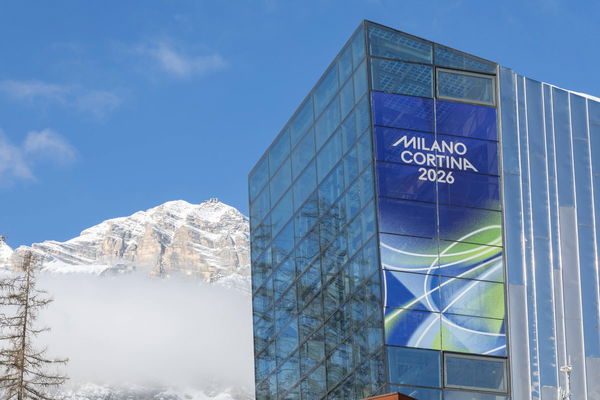
picture: Cortina360 / 02.02.2026 / Olympic Winter games, Winterspiele,Spiele, Summer games Milano Cortina 2026 / luge, Track Walk / Cortina Sliding Centre CSC, Cortina d Ampezzo, Italy ITA // photographer: FIL / Michael Kristen *** picture Cortina360 02 02 2026 Olympic Winter Games Milano Cortina 2026 luge, Track Walk Cortina Sliding Center CSC , Cortina d Ampezzo, Italy ITA photographer FIL Michael Kristen
In Livigno alone, more than 600,000 cubic meters of snow have already been produced since mid-December for freestyle and snowboard events, with crews speeding things up whenever a cold snap hits.
At the same time, the technology has gotten much better. Snowmaking today is faster and smarter, thanks to automation, better forecasts, and more efficient systems. Years ago, covering a key slope could take around 150 hours. By 2018, that dropped to 100 hours. Now, many resorts aim to finish in about 50 hours, cutting the time almost in half.
For the International Olympic Committee, all of this feels like a real test. The Winter Games have become proof of how much snowmaking can offset climate pressure.
But several studies suggest the number of cities that can reliably host the Olympics is shrinking, raising bigger questions about what the future of the Winter Games might look like.
Written by

Edited by

Janainah Fazlin Anam