Imago
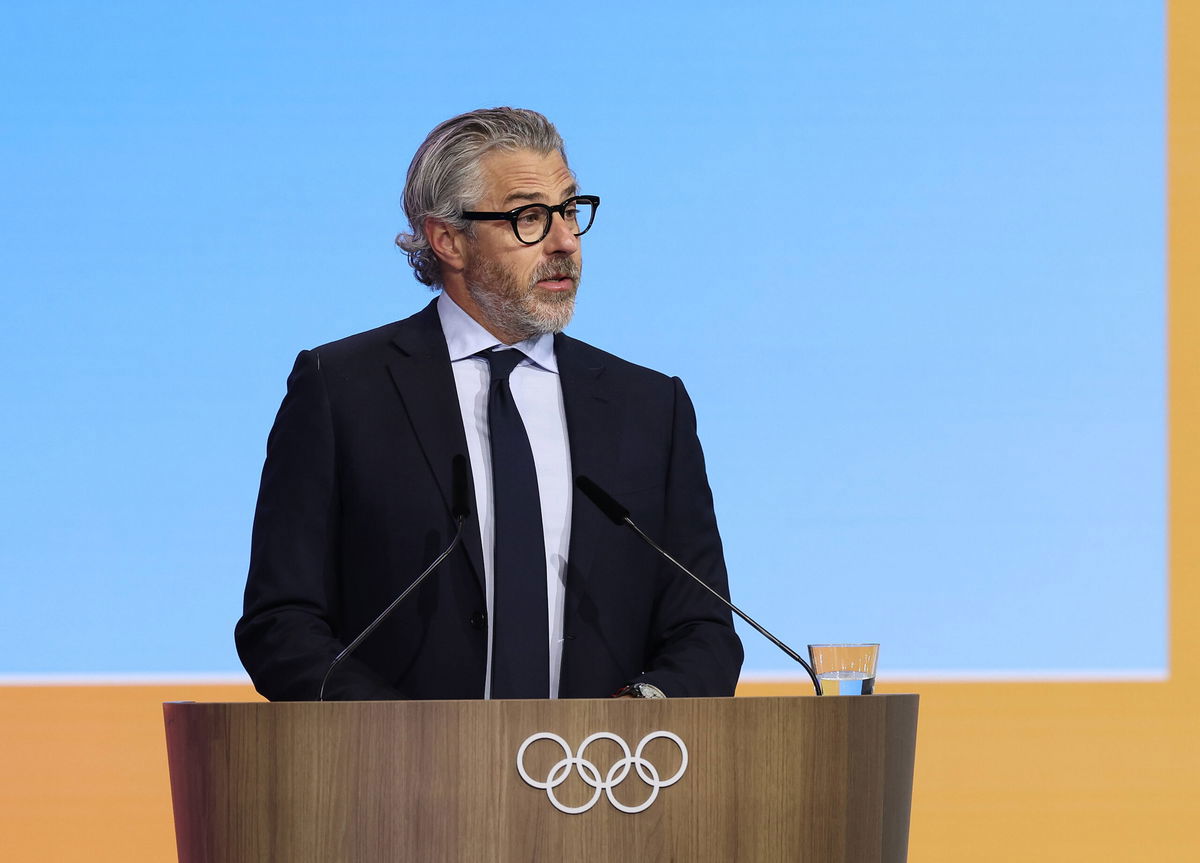
250320 — COSTA NAVARINO, March 20, 2025 — Casey Wasserman, chair of the 2028 Los Angeles Olympics Organizing Committee, speaks during the second day of the 144th International Olympic Committee IOC session in Costa Navarino, Greece, March 20, 2025. SPGREECE-COSTA NAVARINO-144TH IOC SESSION CaoxCan PUBLICATIONxNOTxINxCHN
Imago
250320 — COSTA NAVARINO, March 20, 2025 — Casey Wasserman, chair of the 2028 Los Angeles Olympics Organizing Committee, speaks during the second day of the 144th International Olympic Committee IOC session in Costa Navarino, Greece, March 20, 2025. SPGREECE-COSTA NAVARINO-144TH IOC SESSION CaoxCan PUBLICATIONxNOTxINxCHN
The Epstein files have now named a personality from the Olympic world. The case dating back more than 20 years has put Casey Wasserman, the chairman of the LA 2028 Olympics, in the public eye, though not for reasons he would welcome.


The attention followed the release of government documents linked to the Jeffrey Epstein investigation, which contained Wasserman’s name. Naturally, it drew public scrutiny, and Wasserman has now responded.
Watch What’s Trending Now!
Wasserman, who founded a sports and entertainment agency in 2002 and is a trustee of the non-profit Clinton Foundation, released his statement on Saturday:
“I deeply regret my correspondence with Ghislaine Maxwell,” adding that the exchanges took place “long before her horrific crimes came to light.” He stressed that he never had a personal or business relationship with Jeffrey Epstein.
“As is well documented, I went on a humanitarian trip as part of a delegation with the Clinton Foundation in 2002 on the Epstein plane. I am terribly sorry for having any association with either of them,” he said.
The documents that brought the matter back into attention include emails from 2003 between Wasserman and Maxwell. The messages were described as personal in nature and were released as part of a legally required disclosure of government files connected to Epstein and Maxwell.
Imago
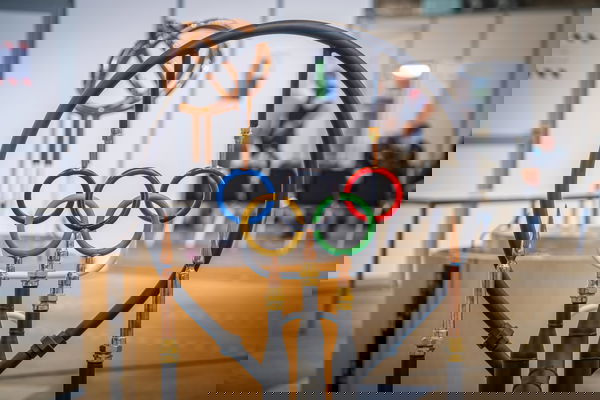
Dritter Wettkampftag der WorldSkills 2024 in Lyon. Olympia Logo und die Stahlbetonbauer World Skills 2024 – Tag 3 *** Third day of competition at WorldSkills 2024 in Lyon Olympic logo and the reinforced concrete workers World Skills 2024 Day 3
Maxwell was convicted in 2021 and is now serving a 20-year prison sentence, while Epstein died in federal custody in 2019 before his case could go to trial.
With old information now resurfacing, it has created controversy and debate, in large part due to Wasserman being the head of preparations for one of the largest sporting events globally.
Although the news may be generating some backlash, LA28 has also announced some positive steps that have been regarded as a forward move towards equality and transparency.
The IOC launches improved qualification systems for the LA28 Olympics
Following the controversial cases when some athletes had to deal with last-minute changes or lost their Olympic positions, measures are being taken to make the system better. For example, Tomas Llorenc Guarino Sabate had to change his short program at the 2026 Winter Olympics due to a copyright issue, affecting his competitive plans.
In light of these issues, the International Olympic Committee (IOC) Executive Board launched an initiative for the Los Angeles 2028 Olympics (LA28) to create clearer and more structured qualification systems.
After the first 26 systems were approved in December 2025, and now additional 22 systems have been confirmed. Only six systems remain to be presented at a future IOC meeting. All of these systems are developed according to the Qualification System Principles (QSP) established in March 2025.
They are built on well-established pathways from recent Olympics, including Paris 2024, and incorporate lessons learned from the debrief process involving National Olympic Committees, federations, and the IOC.
The reforms aim to give athletes clearer rules, multiple qualification opportunities, and fairer, more predictable pathways, reducing last-minute changes and ensuring smoother preparation for the LA28 Olympics.