Imago
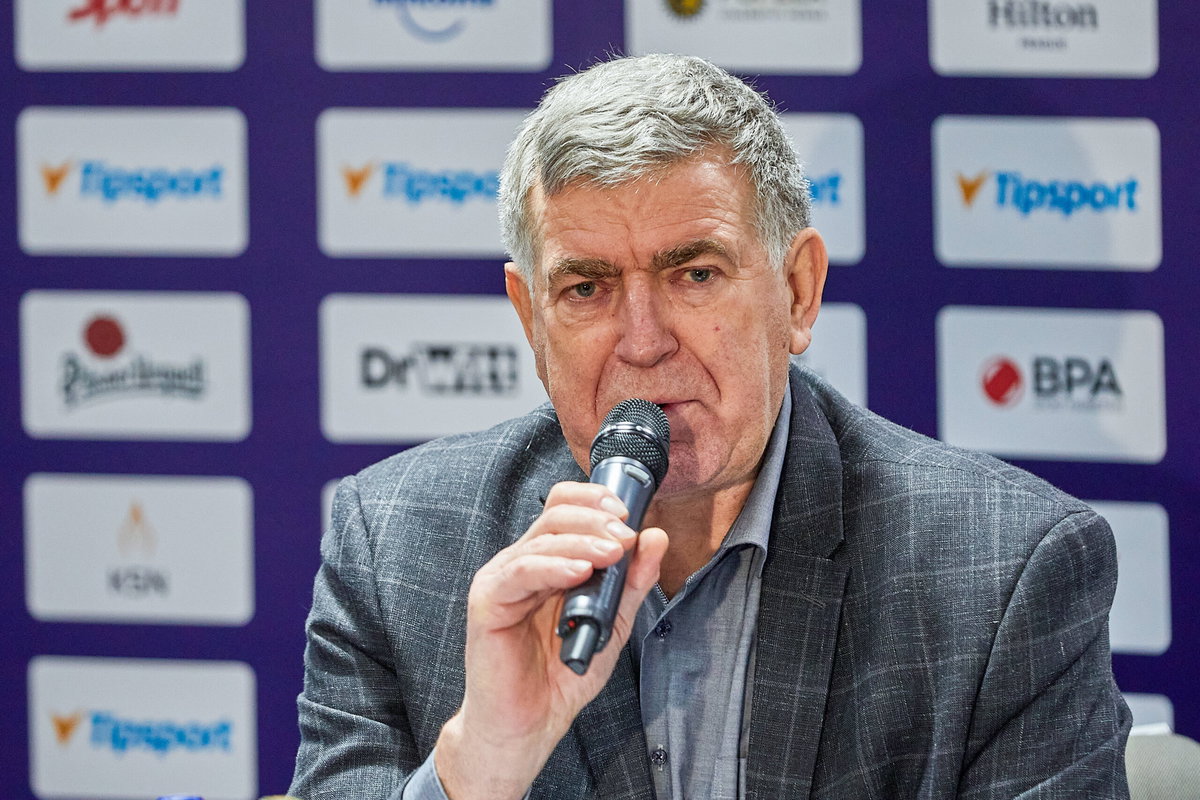
Former discus thrower Imrich Bugar speaks at a press conference, PK, Pressekonferenz where it was announced that he will receive the Emil Zatopek Award for Sports Legend, in Prague, Czech Republic, on December 15, 2025. The 1983 world champion will receive the award on 18 December at the ceremony to announce the results of the 67th annual Sportsman of the Year poll. CTKxPhoto/DorotaxHolubova CTKPhotoP2025121504307 PUBLICATIONxNOTxINxCZExSVK CTKPhotoP2025121504307
Imago
Former discus thrower Imrich Bugar speaks at a press conference, PK, Pressekonferenz where it was announced that he will receive the Emil Zatopek Award for Sports Legend, in Prague, Czech Republic, on December 15, 2025. The 1983 world champion will receive the award on 18 December at the ceremony to announce the results of the 67th annual Sportsman of the Year poll. CTKxPhoto/DorotaxHolubova CTKPhotoP2025121504307 PUBLICATIONxNOTxINxCZExSVK CTKPhotoP2025121504307
When the 1983 World Athletics Championships were held for the first edition, it opened a new phase in track and field history. But in that debut, the 28-year-old Czechoslovak discus thrower threw his way to gold and became the first men’s discus world champion. But years before that breakthrough, he had already won a silver medal at the 1980 Moscow Games. Now, the Olympic medalist and world champion has passed away at the age of 70 on April 8, 2026.
Watch What’s Trending Now!
Imrich Bugar‘s former club, Dukla Prague, where he spent around 21 years as an athlete, confirmed the death. However, the club did not disclose the cause of death.
Born near Dunajska Streda, Bugar grew up in a Hungarian-speaking environment in Czechoslovakia. His career in athletics started with Inter Bratislava before joining Dukla Prague, where he joined the Dukla system, which was the top sports club in the country at that time.
Top Stories






“I chose the discus because I really liked throwing things when I was young,” Olympic medalist Imrich Bugar once said. That simple beginning soon turned into real results. His rise began in the late 1970s with a bronze medal at the 1978 European Championships, followed by consistent progress on the international stage.
Imago
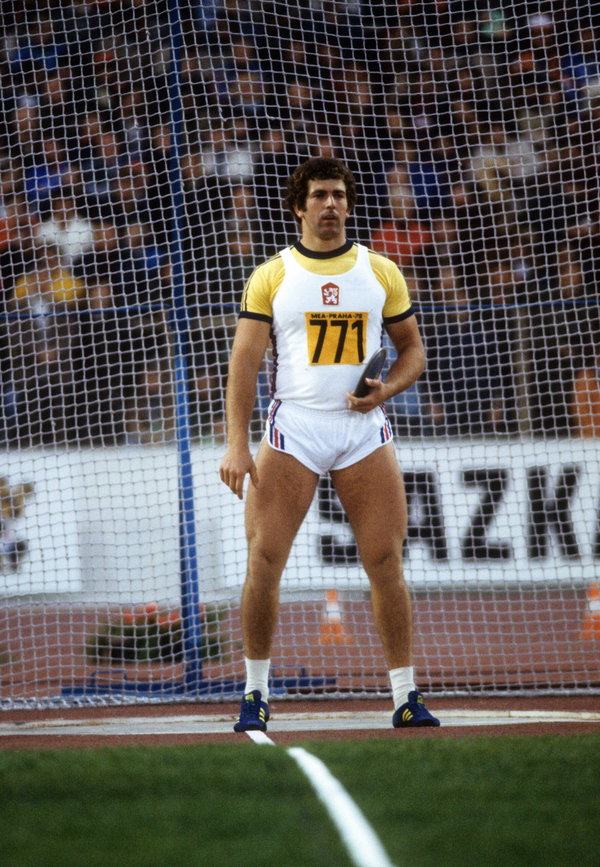
Bildnummer: 04599087 Datum: 03.09.1978 Copyright: imago/Sven Simon
Imrich Bugar (CSSR); Vdia, hoch, Nationaltrikot, Diskuswurf EM 1978 Prag Leichtathletik EM Herren Einzel Einzelbild Aktion Personen
Image number 04599087 date 03 09 1978 Copyright imago Sven Simon Imrich Bugar Czechoslovakia Vdia vertical National jersey Discus throw euro 1978 Prague Athletics euro men Singles Single Action shot Human Beings
He continued to grow through the early 1980s by reaching the podium at the 1981 World Cup and then winning gold at the 1982 European Championships. That same year, Czechoslovakia named him Sportsperson of the Year.
But his crowning achievement was in 1983 in Helsinki when Olympic medalist Imrich Bugar went on to win the world title in the World Athletics Championships with a throw of 67.72m. It was also around the same time that he made the 70-meter mark at major events, making him one of the best discus throwers in the world.
His own record of 71.26m in 1985 in San Jose remains the Czech record and is one of the top throws of all time. But his journey was not without a turning point that changed everything.
The 1984 Boycott that Olympic medalist’s career
In 1984, Imrich Bugar was at the top of his game and widely seen as a strong medal contender for the Los Angeles Olympics. But that opportunity never came. Czechoslovakia, aligned with the Eastern Bloc, joined the Olympic boycott and pulled its athletes out of the Games. At the time, he was training in California and only learned about the decision there. He later spoke about it with clear disappointment, saying, “I was not ready to take it… I was the best in the world then.”
That moment marked a turning point in his career. After his peak years, his results slowly lost their edge, and he was no longer a regular presence on the podium. Still, he continued competing at the highest level till the early 1990s, taking part in World Championships and Olympic Games before retiring in 1995. But retirement did not take him away from sport.
Even after retiring, Bugar did not step away from the sport, remaining in close contact with Dukla for the next 30 years. He worked in the club’s department of foreign sports relations. Interestingly, he also organized the Ludvik Danek Memorial in Turnov, continuing the tradition of Czechoslovak discus and ridging his generation with the next.
