Imago
Credits: Imago
Imago
Credits: Imago
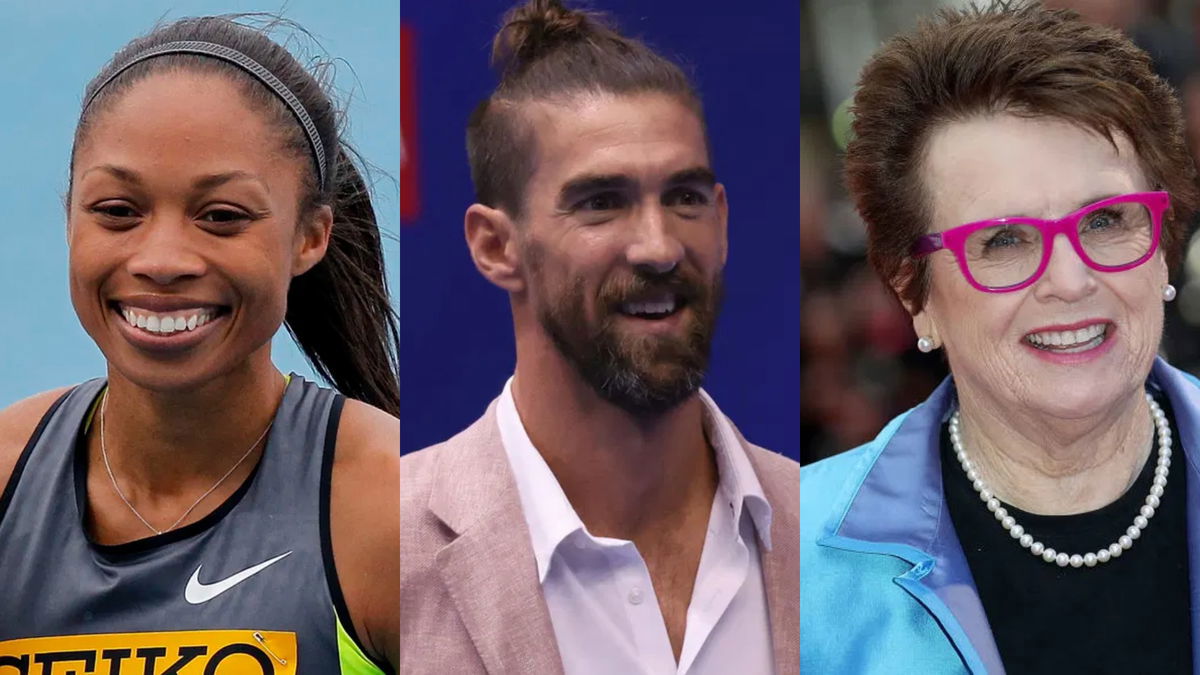
For years, Michael Phelps’ story was told in 23 gold medals. But today, his legacy is about far more than victory. Nine years after his retirement, Phelps has changed his influence to a new area of mental health advocacy, transparency, and impact, which is no longer within the pool. And it’s changed to such an extent that he is already joining an exclusive club of athletes, including Billie Jean King and Allyson Felix, who are already being seen as making a difference in sport and society.


Sports Illustrated recently announced that Phelps will receive the Muhammad Ali Legacy Award at the Sportsperson of the Year ceremony on January 6, 2026, at Wynn Las Vegas. This honor is reserved for athletes whose impact reshapes sport and society. So why Michael Phelps?
Watch What’s Trending Now!
Undoubtedly, Michael Phelps has been open about his struggles with depression and anxiety. Instead of hiding the difficulties, he used them as a platform to advocate for athletes and the public to talk openly about mental health. Through the Michael Phelps Foundation, established in 2008, he works to promote mental health, water safety initiatives, and provides resources to help young people through sport and life.
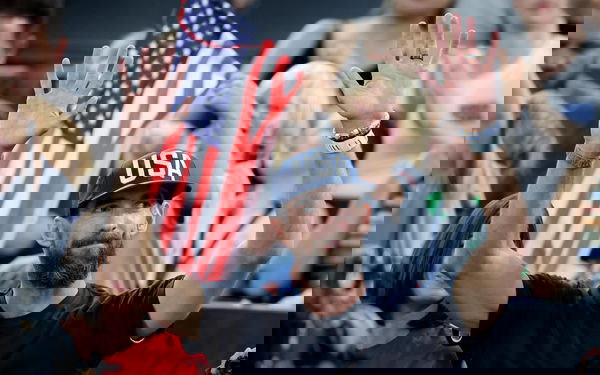
Imago
Michael Phelps at the USA victory over Nigeria 88 74 for the quarterfinals of the womens basketball tournament during the Paris 2024 Olympic Games JO , à lArena Bercy à Paris, France, le 7 aoà t 2024 Jacovides Perusseau Bestimage Personalities at the USA Nigeria womens basketball match during the Paris 2024 Olympic Games on august 7th 2024 PUBLICATIONxINxGERxAUTxSUIxONLY Copyright: xJacovides-Perusseaux/xBestimagexJacovides-Perusseaux/xBestimagex
And this award recognizes more than his 28 Olympic medals. It celebrates how Phelps used his platform after retiring, transforming personal challenges and public visibility into leadership and service, echoing Muhammad Ali’s legacy of courage and impact. And with it, he joins an elite company.
In 2022, Allyson Felix was awarded the Muhammad Ali Legacy Award. Following the birth of her daughter in 2018, Felix suffered from life-threatening preeclampsia. When her then sponsor, Nike, refused to offer sufficient maternity protections, Felix made her voice heard. Her advocacy led to global discussion on the treatment of female athletes when they build families, resulting in Nike and other companies agreeing to introduce greater maternity protections.
Felix didn’t stop there. She returned to top-tier competition only eight months after giving birth, went on to claim more world championships and Olympic medals, co-founded her own company, Saysh, to empower women athletes, and created programs to assist athlete mothers in not just competing but thriving.
Billie Jean King was also honored with the Muhammad Ali Legacy Award in 2021 for her lifelong advocacy work and trailblazing career in sports. She was also a co-founder of the Women’s Tennis Association, working towards equal pay and fair treatment, fought for LGBTQ rights and social justice, and established organizations, including the Women’s Sports Foundation, to provide access for girls and women around the world.
Michael Phelps is now a part of this elite club, not only due to his dominance in the pool, but also because he has made a name for himself by turning his own pain into activism. However, the question arises: How did Phelps cope and overcome depression?
Michael Phelps’ battle beyond the pool shows the power of speaking up
After the 2004 Olympic Games in Athens, Michael Phelps first experienced what he later termed as post-Olympic depression, where he won six gold and two bronze medals. Phelps said that he was lost, and he never knew what his purpose was. The emotional backlash of making it to the top left him wondering, “What the hell am I supposed to do?” He grappled with emptiness despite his success.
But still, he continued to compete at an elite level, including in the 2008 and 2012 Olympics, but these feelings followed him. After the 2012 London Olympics, where he won four golds and two silvers, Phelps later revealed that he stayed in his room for three to five days, barely eating or sleeping, and said, “I didn’t want to be in the sport anymore. I didn’t want to be alive.”
He also stated that during that period, he contemplated suicide. But he didn’t give up!
Michael Phelps’ turning point came after a particularly dark season in 2014, following his second DUI arrest. He has said he locked himself in his room for several days, feeling hopeless and thinking he should just end his life. Those days were a wake‑up call that things had to change. Recognizing he needed professional support, Phelps checked himself into an inpatient mental health treatment center in 2014, where he stayed for 45 days.
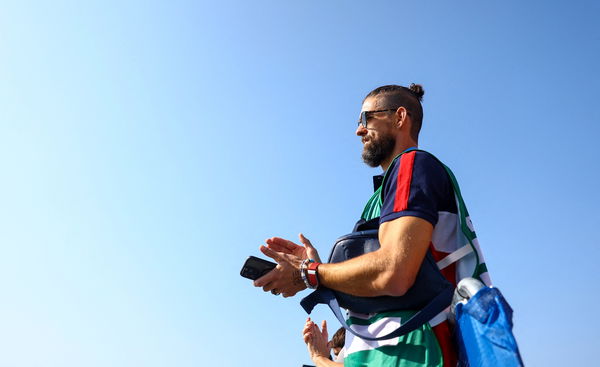
Reuters
Paris 2024 Olympics – Golf – Men’s Round 1 – Le Golf National, Guyancourt, France – August 01, 2024. Former swimmer and record Olympic medallist Michael Phelps is seen during round one. REUTERS/Matthew Childs
He later explained that entering treatment was frightening but transformative. “As soon as I came out, I continued the therapy that I had in my treatment center…When I first started it was kind of freaky, kind of scary, something that was new …I guess that was where vulnerability snuck in the first time,” Phelps said.
And within no time, he learned to confront long‑suppressed feelings and began to see himself as a whole person, not just a swimmer.
Before seeking help, Michael Phelps believed, “My depression and my anxiety is never going to just disappear. I’m never going to be able to snap my fingers and say ‘Go away. Leave me alone.’ It makes me. It is a part of me. It’s always going to be a part of me.”
Therapy didn’t erase those challenges, but it gave him the tools to manage them and live a healthier, more balanced life.
In 2015, Phelps came forward about his struggles and was one of the first high-profile athletes to talk openly about mental health. Instead of bottling emotions up, he opened the foundation’s Open Up campaign.
“It’s OK to not be OK,” Michael Phelps says, and his example has inspired many athletes: Simone Biles, Naomi Osaka, A.J. Brown, and many others, to share their own struggles with mental health